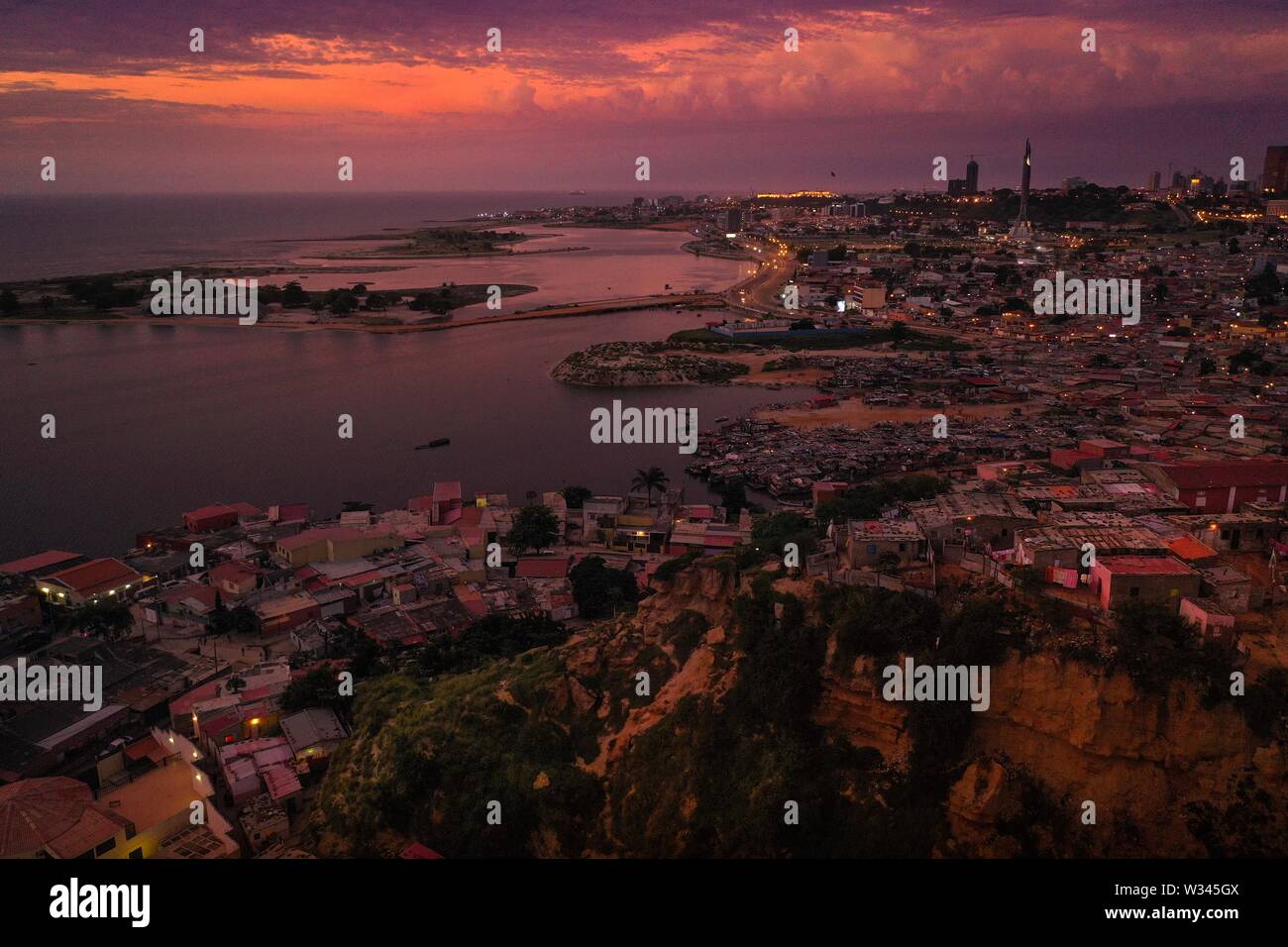
The red dust of Luanda has a way of clinging to everything it touches. It settles into the creases of a worker's palms, coats the windshields of idling SUVs, and drifts through the open windows of the makeshift tin shacks that line the city’s outskirts. It is the color of the earth that holds the world’s most coveted treasures—oil, diamonds, minerals—and yet, for the person breathing it in, that earth feels less like a bank and more like a graveyard.
When the white-robed figure stepped off the plane into the heat of the Angolan sun, he wasn't just a head of state or a religious icon. To the thousands gathered along the roads, Pope Leo was a mirror. In his eyes, the people of Angola hoped to see a reflection of their own dignity, a quality too often obscured by the shadows of international ledger sheets and the tall glass towers of Luanda’s "miracle" skyline.
He didn't speak in the cautious, sanitized language of a diplomat. He spoke like a man who had seen the same story play out across a dozen borders. He spoke of "despots." He spoke of "false promises." And in doing so, he touched the raw nerve of a continent that has been told for decades that its wealth is its greatest blessing, even as that wealth is used to build walls between the powerful and the ignored.
The Mirage of the Resource Boom
Imagine a father standing on a street corner in a neighborhood where the smell of salt spray from the Atlantic mixes with the heavy scent of diesel. Let’s call him Mateo. Mateo is not a real person, but his struggle is the reality for millions. He watches the convoys of blacked-out vehicles speed toward the government district. He knows that beneath the very ground he stands on, there is enough oil to light up a continent.
Yet, as the sun sets, Mateo returns to a home where the electricity flickers and dies. He carries water in plastic jugs because the pipes are dry. To Mateo, the "resource boom" is a ghost story. It is something he hears about on the radio, a series of mounting percentages and GDP growth figures that never seem to translate into a schoolbook for his daughter or a paved road to the clinic.
The Pope’s visit wasn't a standard ceremonial tour. It was a confrontation with this specific irony. When he spoke to the leaders of the nation, he was addressing a global phenomenon where the presence of natural wealth acts as a magnet for greed rather than a foundation for growth. This is the "resource curse" in its most human form: a country that is rich on paper but where the average citizen is forced to live on the crumbs of a feast they helped harvest.
The Architecture of False Promises
Political rhetoric is a cheap commodity in Luanda. Over the years, the promises have become a rhythmic background noise. The schools are coming. The healthcare system is being modernized. Foreign investment will lift us all. But promises are not bread.
The Pope looked at the shimmering horizon of the city—a skyline that rivals many European capitals—and saw the hollowness behind the glass. He pointed out that when a leader’s primary goal is the extraction of wealth for a small circle of loyalists, the "people" become an obstacle rather than a priority. The promises made during election cycles aren't meant to be kept; they are meant to pacify.
Consider the mechanism of the "despot" mentioned in the address. It is rarely just one person. It is a system. It is a network of middlemen, international corporations, and local enforcers who all benefit from a lack of transparency. If the people knew exactly how much the diamonds were worth, they might ask why their children are still learning under the shade of a baobab tree instead of in a classroom.
To keep that from happening, the despots create a culture of dependency. They offer small, high-profile handouts—a new stadium here, a paved boulevard there—while the structural poverty remains untouched. It is a sleight of hand performed on a national scale.
The Invisible Stakes of the Soul
While the economic critiques were sharp, the emotional core of the Pope’s message was something deeper: the erosion of hope.
When a society is built on exploitation, the first thing to break isn't the economy; it’s the social contract. Trust evaporates. If the person at the top is stealing, the person in the middle feels justified in taking a bribe, and the person at the bottom feels abandoned by God and man alike.
The Pope spoke of the "spiritual desert" that grows when material wealth becomes the only metric of success. He wasn't just talking about religion. He was talking about the psychological toll of living in a place where your value as a human being is tied to what you can extract from the dirt.
For a young Angolan looking at the future, the message from the "despots" is clear: You are a tool, not a citizen. By decrying this, Leo was attempting to flip the narrative. He was telling the crowds that they are the true owners of the land, not the men in the air-conditioned offices. He was reminding them that a promise is a moral debt, and that debt is currently unpaid.
Beyond the Pulpit
The real tragedy of the resource trade is how often the rest of the world looks away. We see the headlines about African corruption and we shrug, as if it is an inevitable weather pattern. We buy the smartphones and the jewelry, rarely pausing to think about the red dust of Luanda or the people who live in its path.
The Pope’s words were a demand for a different kind of vision. He wasn't just asking for better accounting or more transparent contracts. He was asking for a fundamental shift in how we perceive the "other."
If we see the people of Angola as stakeholders in a global family, then the exploitation of their resources is not a business transaction—it’s a theft from the table of a brother.
The visit ended as most do, with a motorcade and a flight back to Rome. The crowds eventually thinned, heading back to homes that still lack running water and consistent power. But something remained in the air, more stubborn than the dust.
It was the realization that the silence had been broken. The "despots" had been called by their names. The promises had been weighed and found wanting.
As the sun dips below the horizon in Luanda, casting long, golden shadows across the shanties and the skyscrapers alike, the true wealth of the nation remains. It isn't in the offshore oil rigs or the deep-vein mines. It is in the tired, defiant eyes of people like Mateo, who are beginning to understand that the earth beneath their feet belongs to them, no matter what the men in the SUVs say.
The red dust settles. But the questions it carries are just beginning to rise.