Twenty-two.
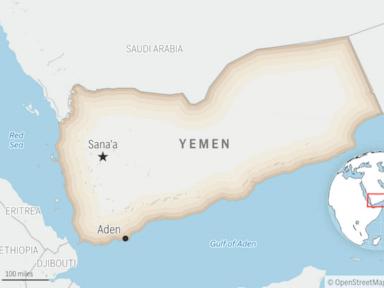
It is a number so small you can count it on the fingers and toes of two neighbors, yet heavy enough to collapse the roof of a world. When a wire service flashes a headline stating that an airstrike has killed at least twenty-two people near Yemen's capital, the global eye tends to glide right over the digits. We have grown dangerously accustomed to the arithmetic of distant grief. A Houthi official releases a tally, international observers note the coordinates outside Sanaa, and within six hours the news cycle has already moved on to an election in Europe or a market dip in New York. Don't forget to check out our previous article on this related article.
But numbers do not bleed. Numbers do not wake up at four in the morning to knead flatbread over a dying charcoal fire, nor do they worry about whether the corrugated tin on the chicken coop will survive another winter wind.
To understand what happened in the rocky outskirts of Sanaa, you have to strip away the sterile vocabulary of military briefings and geopolitical chessboards. You have to step into the fine, ochre dust of the Yemeni highlands, where the air tastes of dry stone, diesel exhaust, and cardamom, and where the sky is never truly empty. To read more about the context here, BBC News provides an in-depth summary.
The Architecture of an Ordinary Tuesday
Consider a hypothetical family living just beyond the northern rim of Sanaa—let us call them the al-Mansoors, a composite drawn from the documented realities of rural households across the Sanaa governorate. Nothing about them is strategic. They do not own anti-ship missiles, they do not draft foreign policy, and they do not command militias.
Tariq, the father, spends his mornings coaxing water from a deep, shared borehole to keep a modest grove of qat and almond trees alive. His sister, Samira, teaches basic arithmetic to thirty children in a cinderblock room whose windows are taped with blue plastic sheeting to keep out the draft. At dusk, the family gathers in a low-ceilinged room built from dark volcanic basalt—the traditional stone of the highlands, thick enough to hold the day's warmth against the biting mountain chill.
They know the sound of the sky better than they know the roads to the coast. Everyone in the Sanaa basin becomes an involuntary acoustic engineer after a decade of war. You learn to distinguish the high, thin whine of a commercial airliner miles above international airspace from the low, vibrating thrum of a reconnaissance drone circling in lazy figure-eights. You learn the difference between outgoing artillery thuds echoing off Mount Nuqum and the sudden, tearing whistle that means something heavy is falling directly toward your roof.
On the night the strike hit near the capital, there was no warning siren. Modern aerial warfare rarely offers the courtesy of a countdown.
First comes the pressure wave, arriving a fraction of a second before the sound—a physical wall that flattens the chest and shatters every pane of glass within a kilometer. Then comes the roar, a concussive detonation so absolute that the human brain briefly refuses to register it as noise, interpreting it instead as a blinding flash of white light behind the eyelids. And finally, worst of all, comes the silence that follows, broken only by the dry patter of falling plaster and the first tentative cries from beneath the rubble.
The Fog Between the Headline and the Morgue
When local health authorities affiliated with the Houthi movement reported that at least twenty-two people had died in the strike, seasoned readers immediately reached for their skepticism. That instinct is understandable, even necessary. In any active conflict zone, casualty figures are among the first weapons deployed.
Who were the twenty-two? Were they fighters stationed at a concealed radar installation, or were they laborers sleeping in an adjacent warehouse? Were women and children among the dead, or did the munition strike a compound used exclusively by armed operatives?
Here is the uncomfortable truth that rarely survives the rush to publish: in the immediate aftermath of an airstrike near Sanaa, nobody possesses the complete picture, not even the people counting the bodies.
Yemen's information ecosystem is fractured by years of blockade, frontlines, and political control. Since 2014, when the Houthi movement—formally known as Ansar Allah—seized control of Sanaa and forced the internationally recognized government into exile, independent international journalists have faced immense hurdles gaining access to strike sites. Local reporters operate under intense scrutiny, knowing that straying from official narratives carries severe consequences. Meanwhile, the foreign militaries conducting strikes in the region rely heavily on aerial surveillance, signals intelligence, and automated target recognition—technologies that can spot a heat signature through a roof at thirty thousand feet, yet remain fundamentally blind to whether a wedding party or a weapons cache occupies the room below.
Think of it like trying to read a letter through a frosted bathroom window during a rainstorm. You can see the dark shapes of the ink. You can make out the rough size of the paragraphs. Yet you cannot tell a love letter from a final will until someone steps inside and turns on the light.
And when a two-thousand-pound precision-guided munition turns on the light, there is rarely much left to read.
Why the Sky Over Sanaa Never Cleared
To grasp why bombs are still falling on the periphery of Yemen's capital, you have to trace a chain of events that stretches from the dusty alleys of Saada in the far north to the busy shipping lanes of the Red Sea.
For years, the outside world framed Yemen's war as a localized proxy struggle—a bitter, exhausting stalemate between the Iran-backed Houthis and a Saudi-led military coalition that intervened in 2015 to restore the ousted government. That phase of the war alone killed hundreds of thousands of people, mostly through preventable hunger, cholera, and the systematic collapse of hospitals and water networks. By 2022, a fragile, United Nations-brokered truce had brought a tentative quiet to the skies over Sanaa. For the first time in seven years, families dared to repair cracked walls and reopen shuttered storefronts.
Then the regional fault lines shifted.
Following the eruption of war in Gaza in late 2023, the Houthis transformed themselves from a domestic insurgency into a maritime disruptor, launching drones and ballistic missiles at commercial vessels transiting the Bab el-Mandeb Strait—the narrow chokepoint through which roughly twelve percent of global trade passes. Suddenly, a movement that Western capitals had largely treated as a regional containment problem was dictating global shipping insurance rates and forcing container ships to detour thousands of miles around the southern tip of Africa.
The response was swift and kinetic. The United States, the United Kingdom, and later Israel began launching retaliatory airstrikes against Houthi military infrastructure across northern Yemen, targeting radar sites, underground storage depots, and launch pads clustered around Hodeidah, Taiz, and the rugged ring of hills surrounding Sanaa.
From a purely military standpoint, the logic seems straightforward: degrade the capability to strike ships at sea by destroying the launchers on land.
Yet on the ground in Sanaa, military geography collides violently with human geography. Sanaa sits in a high-altitude basin surrounded by jagged mountains—precisely the kind of terrain where radar stations, communication towers, and fortified tunnels are tucked into hillsides just a few hundred meters from sprawling residential neighborhoods, livestock markets, and brick factories. In a city of nearly four million people, there is no clean dividing line between a strategic target and a civilian neighborhood. They share the same power grids, the same gravel roads, and the same dry air.
What Precision Actually Looks Like at Ground Level
Military spokespeople love the word "precision." It suggests surgical cleanliness, a scalpel removing a tumor while leaving healthy tissue untouched.
I have spoken with emergency physicians who have worked shifts in Sanaa's Al-Thawra Hospital during periods of heavy bombardment, and their description of precision looks nothing like a diagram in a defense contractor's brochure. Even when a bomb lands squarely on its intended coordinates—even when the guidance fins steer it through a specific doorway—physics does not respect perimeter fences.
Blast overpressure travels outward at supersonic speeds. Concrete walls turn into clouds of razor-sharp shrapnel. Secondary explosions occur when fuel drums or stored munitions ignite, sending burning debris arcing across neighboring rooftops. If a family happens to be living three hundred meters downwind in a house built without reinforced steel rebar, "precision" still means your ceiling collapses while your children are asleep.
Consider what happens in the hours after the ambulance sirens fade.
In a wealthy capital, a disaster triggers an immediate, choreographed response: heavy cranes roll in within the hour, trauma surgeons work in brightly lit operating theaters with unlimited blood supplies, and trauma counselors arrive at schools the next morning.
In Sanaa, recovery happens with bare hands and borrowed flashlights.
Fuel shortages mean municipal excavators often lack the diesel to reach outlying districts until dawn. Hospitals operate on sputtering backup generators, rationing antibiotics, surgical gauze, and anesthetic drugs that have been choked off by years of economic warfare and currency collapse. When twenty-two people die in a single strike, another forty or fifty typically survive with crush injuries, shrapnel wounds, and ruptured eardrums—survivors who will spend the rest of their lives navigating a healthcare system that is itself on life support.
The Invisible Economy of Grief
There is a cruel secondary ripple to every fatal strike that never makes it into the casualty wire: the quiet erasure of breadwinners.
In Yemen's deeply traditional, extended-family structure, a single working adult often supports ten or twelve dependents—elderly parents, unmarried sisters, nieces, and nephews. When a man driving a water truck or guarding a warehouse gate is killed in the night, the strike does not just end one life. It severs the sole financial artery keeping an entire household above starvation.
Imagine Samira, our hypothetical schoolteacher in the hills north of Sanaa, standing at the edge of a crater the morning after the blast. Her brother Tariq was among those killed while checking the irrigation pump near the ridge. She does not have the luxury of private, uninterrupted mourning. By afternoon, she must calculate how many sacks of wheat flour remain in the pantry, whether her meager, irregularly paid teaching stipend can cover her mother's blood pressure medication, and how she will explain to her eight-year-old nephew why his father is wrapped in white cotton cloth instead of bringing home warm bread from the market.
Multiply that quiet arithmetic by twenty-two households. Then multiply it by ten years of war.
What emerges is not merely a humanitarian crisis—a phrase so overused it has lost its teeth—but a generational dismantling of human potential. Children pulled out of school to scavenge scrap metal from bomb craters. Farmers abandoning ancestral terraces because unexploded ordnance lies buried beneath the topsoil. Whole neighborhoods learning that permanence is an illusion, that anything built with pride can be reduced to grey powder in the span of a heartbeat.
The Question Nobody in the Briefing Room Asks
Whenever a strike kills dozens of people near Sanaa, a predictable ritual unfolds in international capitals. Spokespeople express regret over any loss of civilian life, reiterate the right to self-defense and freedom of navigation, and emphasize that targets are carefully vetted to minimize collateral damage. On the other side, Houthi officials broadcast footage of mangled concrete and grieving relatives, using the bloodshed to rally domestic anger, recruit young men from impoverished villages, and justify further escalations at sea.
Both sides speak the language of deterrence. Both sides insist that force is the only dialect their adversary understands.
Yet a decade of craters across the Yemeni highlands offers a sobering verdict on that assumption. Airstrikes have destroyed bridges, ports, factories, radar arrays, and thousands of human lives, yet they have never once compelled the Houthis to surrender political control or abandon their regional ambitions. If anything, external bombardment has repeatedly handed a deeply unpopular, authoritarian ruling group its most potent domestic unifying tool: a shared enemy in the sky.
Meanwhile, the people paying the highest price for this stalemate are the ones who never had a vote in starting it and hold zero leverage in ending it. They are trapped between a domestic leadership that governs through coercion and ideological mobilization, and foreign powers that view their homeland primarily as a launchpad that must be suppressed.
As dusk settles over the Sanaa valley once again, the evening call to prayer rises from hundreds of minarets, echoing off the same basalt cliffs that absorbed the shockwaves the night before. Women sweep broken glass from stone thresholds with stiff palm brooms. Men haul buckets of water up narrow stairwells where the pipes have cracked. Above them, the high mountain sky turns a deep, bruised violet, clear and cold and impossibly vast, while twenty-two freshly dug graves wait in the red earth at the edge of town.