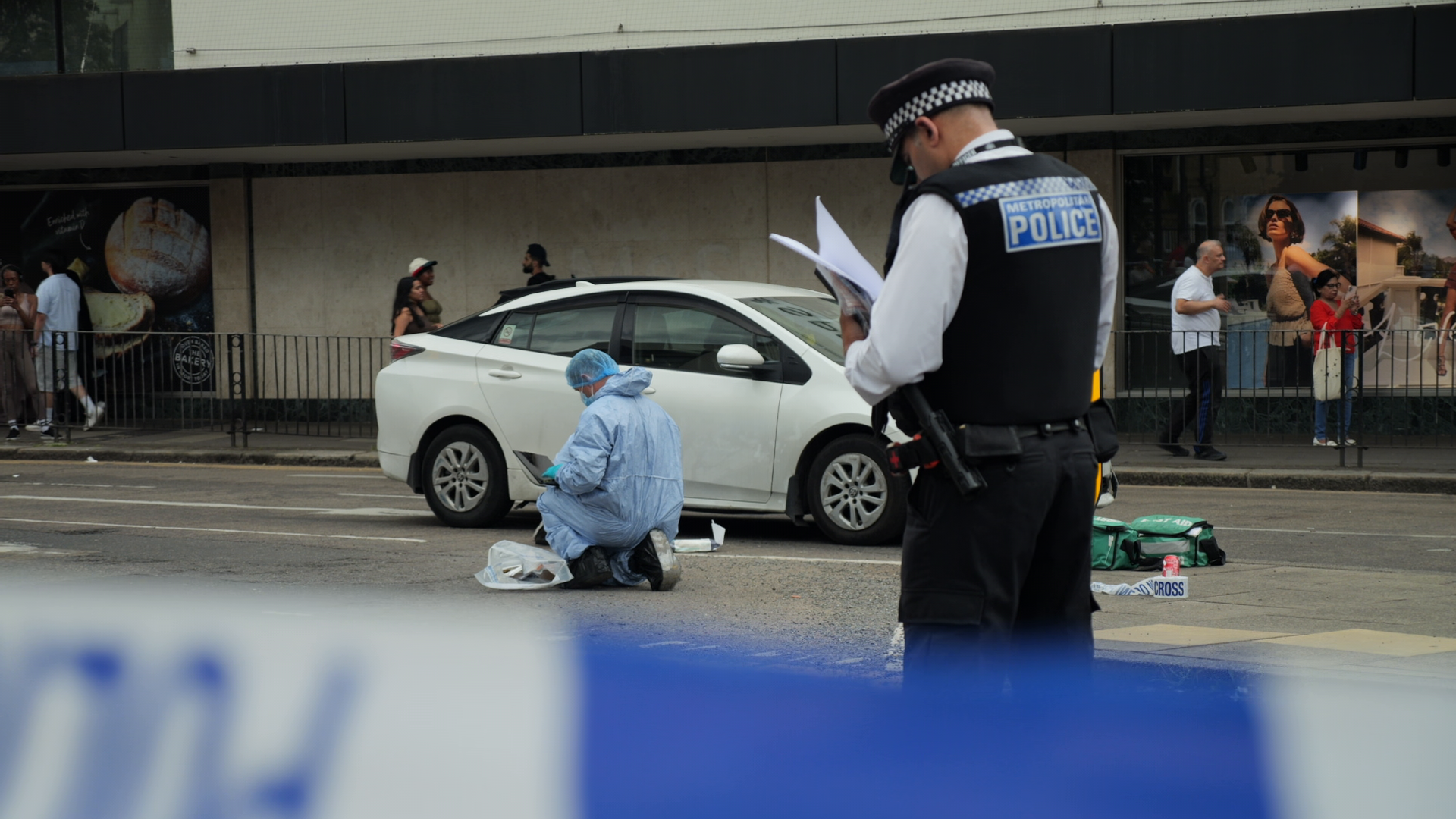
A busy Saturday afternoon in west London instantly turned into chaos when a vehicle slammed into a crowd of shoppers on Ealing Broadway. It’s the kind of scenario that sends a shiver down the spine of any city dweller. Five people were left injured on the pavement while the driver sped away.
The Metropolitan Police moved fast. By Sunday, they officially charged 34-year-old Timir Ahmed Mohamed with five counts of attempted murder. This wasn't treated as a standard traffic accident. When a driver hits multiple people and leaves the scene, the legal stakes skyrocket.
The immediate question everyone asks when a car mounts a pavement in London is simple. Was it terrorism? Because of how the event unfolded, local police immediately looped in Counter Terrorism Policing London to run preliminary checks. They've since made it clear that while they're keeping an open mind about why this happened, they are not treating this as a terrorist attack.
Inside the Ealing Broadway Crash
The incident kicked off right around 2:30 pm on Saturday, June 27, 2026. Ealing Broadway was packed with weekend foot traffic, particularly around local hubs like the Marks and Spencer store. Out of nowhere, a white vehicle hit five pedestrians.
Footage circulating on social media caught the immediate panic. Witnesses tried to intervene, with some running alongside the moving car, kicking the bodywork and frantically attempting to rip open the driver-side door. Instead of stopping, the driver accelerated and fled the area.
Emergency responders flooded the scene within minutes. The London Ambulance Service dispatched specialized crews, fast response cars, and even scrambled London's Air Ambulance. Paramedics treated two people on-site for minor injuries. They rushed three others to local hospitals, including one patient taken to a major trauma centre as a priority.
Thankfully, the medical updates offer some massive relief. The Met Police confirmed that none of the victims sustained life-threatening or life-changing injuries. Given the physical weight of a vehicle versus a human body, they got incredibly lucky.
The Charges Facing Timir Ahmed Mohamed
Police tracked the suspect down to Grange Park, a nearby residential area, just a short time after the crash. Timir Ahmed Mohamed, a Somalia-born British national who lives locally in Grange Park, was hauled into custody.
The Crown Prosecution Service didn't hold back on the legal filings. Mohamed faces a heavy sheet of criminal charges:
- Five counts of attempted murder
- Dangerous driving
- Failing to stop at the scene of an accident
- Failing to provide a specimen of breath for analysis
- Criminal damage
The refusal to provide a breath sample is a detail worth noting. Legally, failing to provide a specimen when suspected of an driving offense carries penalties that are often just as severe as driving over the limit itself. It prevents drivers from trying to time out the system to lower their blood-alcohol readings. Mohamed has been remanded in custody and is booked to appear before Willesden Magistrates' Court on Monday, June 29, 2026.
Why Attempted Murder Charges Apply to Driving Cases
People often get confused when a car crash results in attempted murder charges instead of dangerous driving or causing grievous bodily harm. Under English law, the distinction comes down to intent.
To secure an attempted murder conviction, the prosecution has to prove beyond a reasonable doubt that the defendant deliberately intended to kill the victims. Using a car as a weapon is legally viewed no differently than using a knife or a firearm. If investigators find evidence that a driver intentionally steered into human targets, the vehicle is classified as a deadly weapon.
The fact that Mohamed faces five distinct counts means prosecutors believe each specific strike was an intentional act rather than a loss of vehicle control. Defending against these charges usually requires the defense to prove a medical emergency, a mechanical failure, or a total lack of intent to cause death. The lack of a breath sample will likely form a major pillar of the prosecution's timeline.
Protecting Pedestrians on London High Streets
This incident reopens a fierce, ongoing debate about urban design and pedestrian safety across London. High streets like Ealing Broadway see intense pedestrian density, yet they remain tightly shared with heavy vehicular traffic.
Over the last few years, Transport for London (TfL) has pushed to install heavy bollards and hostile vehicle mitigation barriers around high-risk zones like Westminster and London Bridge. However, outer London town centres rarely get those same architectural protections.
Local councils face a tricky balancing act. Shop owners often fight against closing streets to cars because they worry it kills business. On the flip side, leaving busy shopping pavements exposed to reckless drivers creates permanent vulnerabilities. If you want to see changes in your own neighborhood, keeping tabs on local council traffic management consultations is the best way to voice support for permanent pedestrian barriers.