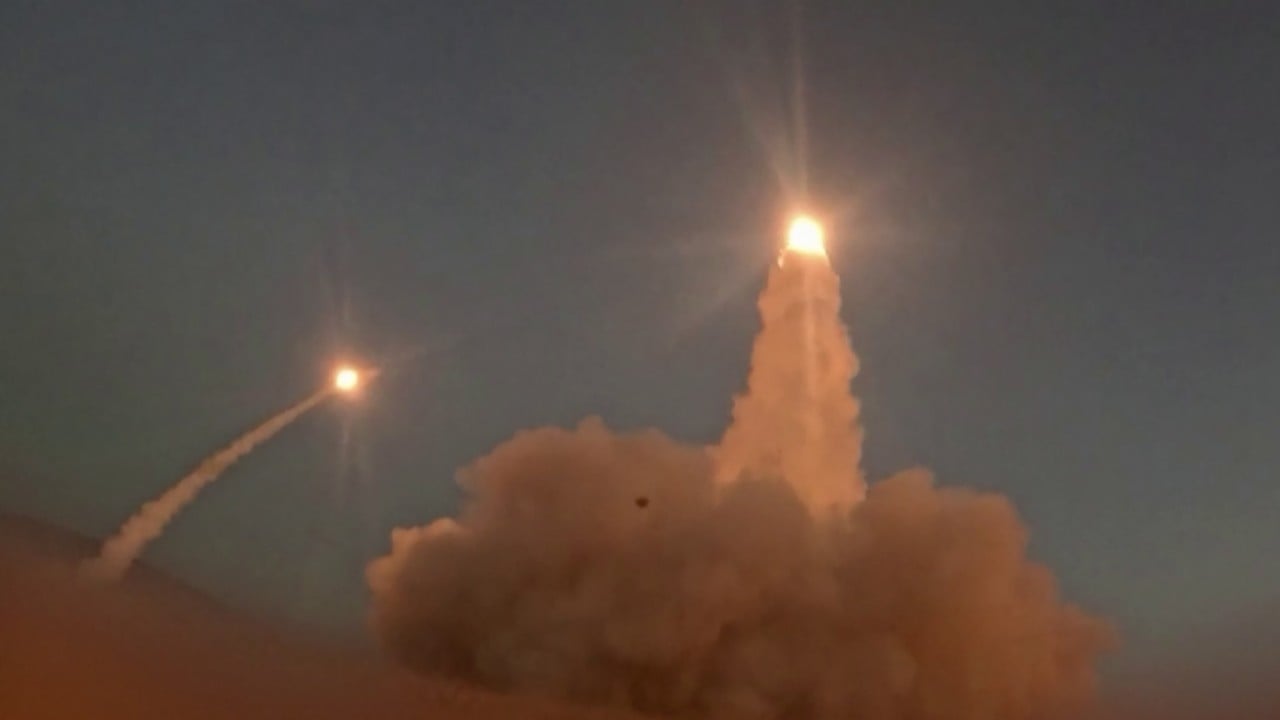
The air inside the Combat Direction Center of a U.S. Navy destroyer transiting the Strait of Hormuz does not feel like the prelude to a grand geopolitical victory. It smells of copper, stale coffee, and sweat trapped under heavy fire-retardant overalls.
On the glowing blue screens of the Aegis combat system, the world is reduced to vector lines and blinking symbols. To the green young officers watching those screens, every high-speed Iranian patrol boat buzzing three hundred yards off the starboard beam is not an abstract chess piece. It is a potential disaster. A single nervous finger on a trigger, a misunderstood radio transmission, or a sudden mechanical failure could ignite a conflagration that no one in the room actually wants.
This is where foreign policy meets the messy, terrifying reality of human friction.
Decades ago, a similar tension hung over the Gulf of Tonkin. The humidity was different, and the screens were cruder, but the psychological trap was identical. We look back at the Vietnam War as a slow-motion descent into a swamp, a tragedy defined by the word quagmire. Yet, we rarely examine how the swamp was built, brick by brick, by leaders who believed they were merely exercising firm deterrence.
When the Trump administration set its "maximum pressure" campaign against Iran into motion, withdrawing from the nuclear deal and layering on crushing economic sanctions, the stated goal was negotiation. The unstated risk was an old, familiar American ghost.
The Illusion of the Dial
In the wood-paneled briefing rooms of Washington, policymakers often speak of military pressure as if it were a thermostat. Turn it up a notch to make the adversary uncomfortable. Turn it down when they agree to talk.
This is a dangerous fantasy.
Pressure in international relations is not a dial; it is a spring. You compress it, and compress it, and compress it, believing you are controlling the tension. But springs do not negotiate. They resist, and then they snap.
Consider a hypothetical mid-level Iranian commander stationed on a barren island in the Persian Gulf. Let’s call him Reza. Reza does not read the op-eds in the New York Times. He does not care about the subtle diplomatic signaling behind a new round of Treasury Department sanctions. What Reza knows is that his country’s economy is collapsing, his family is struggling to buy basic medicine, and his commanders have told him that the American aircraft carriers sitting just over the horizon are an existential threat.
Reza has a command. He has speedboats, sea mines, and shoulder-fired missiles. He has been trained to believe that martyrdom is a victory, not a defeat.
When a U.S. drone drifts near Iranian airspace, or when an oil tanker flying a Western flag moves through the shipping lanes, Reza is not thinking about a grand grand-strategy. He is thinking about honor, survival, and the orders of a highly suspicious, besieged regime.
If Reza fires, Washington does not see a terrified, desperate local commander. They see a direct, coordinated provocation from Tehran.
The spring snaps.
The Ghost of Tonkin
We have been here before.
In August 1964, the destroyer USS Maddox reported being attacked by North Vietnamese torpedo boats in the Gulf of Tonkin. A second incident was reported two days later, though later analysis showed it was likely a ghost on the radar, a misinterpretation of sonar signals by jumpy crewmen in rough seas.
It did not matter.
The presidency of Lyndon B. Johnson did not want a full-scale land war in Asia. Johnson was focused on his Great Society programs. He wanted to fight poverty, not a guerrilla insurgency in the jungle. But the political pressure to look strong, to avoid being labeled "soft on communism," overrode caution. The Gulf of Tonkin Resolution passed almost unanimously.
The rest of the story is written in fifty-eight thousand American names carved into black granite, and millions of Vietnamese lives lost in the mud.
The parallel to modern tensions with Iran is not about geography. Iran is a mountainous, arid plateau, not a triple-canopy jungle. The parallel lies in the mechanism of escalation.
During the height of the modern US-Iran standoff, the assassination of Major General Qasem Soleimani was celebrated by proponents of maximum pressure as a decisive blow. It was framed as a bold move that would restore deterrence.
But look closer at the immediate aftermath.
Iran responded with a barrage of ballistic missiles aimed at Al Asad airbase in Iraq. Over one hundred American service members suffered traumatic brain injuries. We came within a hair’s breadth of a massive retaliatory strike that would have triggered a full-scale war.
It was a roll of the dice. We got lucky.
To base a superpower’s national security strategy on luck is a form of madness.
The Cost of the Invisible War
When we debate foreign policy, we tend to use grand, sweeping terms. We talk of "hegemony," "regional proxies," and "red lines."
These words are too clean. They mask the visceral reality of what a war with Iran would actually look like.
Iran is not Iraq in 2003. It is three times larger, both in landmass and population. Its terrain is a natural fortress, ringed by rugged mountain ranges that would make a ground invasion an logistical nightmare that would dwarf the campaigns of the past fifty years.
More importantly, Iran has spent three decades preparing for an asymmetric war with the United States.
They know they cannot match a supercarrier strike group plane-for-plane or ship-for-ship. So, they built thousands of precision-guided cruise missiles, swarming speedboats, and a sophisticated cyber-warfare apparatus.
Imagine the first forty-eight hours of such a conflict.
It would not start with a marching band. It would start in the dark.
A sudden cyberattack disables municipal water systems in a major American city, or knocks out a portion of the electrical grid in the Northeast.
In the Persian Gulf, a swarm of low-cost, explosive-laden drones strikes a commercial supertanker, blocking the Strait of Hormuz—the choke point through which twenty percent of the world’s petroleum passes.
Global oil prices do not just rise; they spike. The stock market plunges.
Meanwhile, inside the Pentagon, the maps of the Middle East light up with red icons. Allied bases in Iraq, Syria, and the Gulf states come under sustained missile fire from local militias.
This is not a hypothetical nightmare. It is the baked-in, highly predictable opening gambit of a war that began because someone wanted to look tough at a press conference.
The Trap of the Exit Strategy
The most seductive lie in military history is the promise of a short, decisive campaign.
"We will be greeted as liberators."
"Shock and awe."
"Home by Christmas."
Every generation of leaders falls prey to the belief that their technology, their intelligence, and their righteousness will exempt them from the laws of unintended consequences.
The architects of the Vietnam War were the "Best and the Brightest"—the technocrats of the Kennedy and Johnson administrations who believed that war could be managed like a corporate balance sheet. They used systems analysis, body counts, and statistical modeling to measure progress.
They missed the human element entirely. They did not understand the sheer, stubborn will of an adversary fighting on their own soil, defending their own sovereignty, regardless of the ideological flavor of their government.
If the United States slides into a war with Iran, there is no plausible exit strategy.
Suppose the goal is not invasion, but a limited campaign of airstrikes to destroy Iran's nuclear infrastructure and military capability.
What happens on day three?
Does the Iranian regime simply capitulate, apologize, and invite American inspectors back in?
Or do they rally a deeply nationalistic population around the flag, dig their remaining assets deeper into the mountains, and launch a relentless, low-visibility campaign of sabotage and terrorism across the region that lasts for a generation?
The answer is obvious to anyone who has spent five minutes studying Persian history.
War is an entity with its own momentum. Once you set it free, it laughs at your plans, your spreadsheets, and your carefully calibrated exit strategies.
The Men on the Deck
The sun sets over the Persian Gulf, painting the hazy sky in shades of bruised purple and orange.
On the flight deck of the carrier, the air is thick with the smell of jet fuel. Sailors in yellow, red, and green jerseys move through a choreographed dance, launching and recovering aircraft that fly missions to keep a fragile peace.
These young men and women are the ones who pay the bill for the rhetoric generated in air-conditioned offices thousands of miles away.
They do not have the luxury of debating the fine points of deterrence theory. They simply trust that the people who hold their lives in their hands are acting with wisdom, caution, and a deep respect for the terrible gravity of war.
The real quagmire is not a place. It is a state of mind.
It is the arrogance that believes we can control the uncontrollable. It is the fear of looking weak that drives us to make choices that are demonstrably foolish.
Until we learn to recognize the ghosts of our past, we are doomed to keep marching toward the same edge, wondering why the ground beneath our feet always feels so familiar, and so wet.