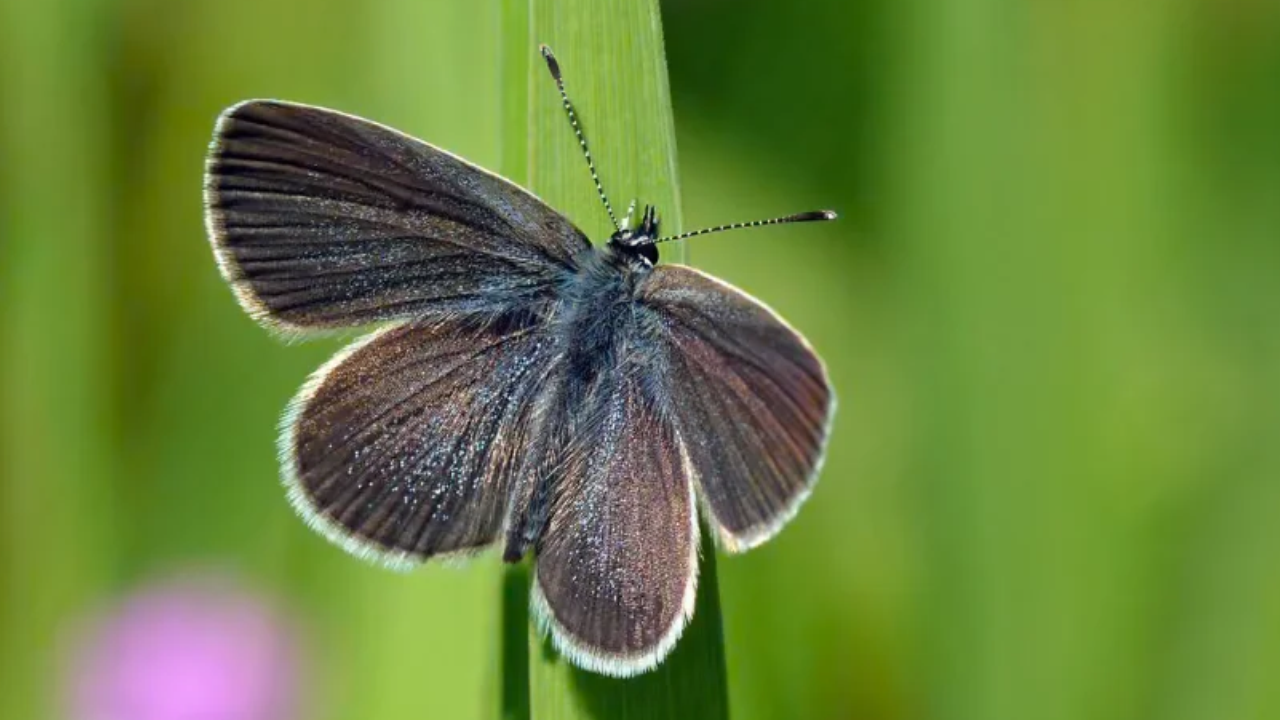
Ecosystem restoration projects frequently lack rigorous quantitative tracking, relying instead on qualitative impressions of ecological return. When an agricultural conversion site—specifically a former wheat monoculture—registers an absolute abundance of 5,290 individual butterflies accompanied by the emergence of rare specialist species, it provides a rare empirical dataset for testing succession models. Evaluating this rebound requires shifting from anecdotal observation to structural ecosystem analysis, isolating the variables that drive rapid colonization versus those that stall long-term stability.
Habitat conversion from intensive industrial agriculture to native floral matrices represents a shift in trophic energy flow. A wheat field functions as a high-disturbance, low-diversity biological desert maintained by artificial chemical inputs and mechanical disruption. Once management ceases, the system initiates primary or secondary succession. The speed of the butterfly rebound at the ex-wheat farm site is governed by three primary ecological constraints: subterranean seed-bank viability, soil microbial community re-inoculation, and the spatial isolation of local source populations. Discover more on a similar topic: this related article.
The appearance of rare species indicates that passive restoration alone is insufficient; specific micro-topographical variations and host-plant patch dynamics must align with the dispersal capabilities of target lepidopteran taxa. Generalist species colonize rapidly via high dispersal rates and broad larval host requirements. Specialists, conversely, face strict physiological and ecological filters. Their presence confirms that the restored matrix has crossed a structural threshold where larval host plants and adult nectaring sources are available simultaneously within the flight range of the organisms.
Soil organic matter accumulation and mycorrhizal network restoration dictate floral community composition. In a former wheat farm, residual nitrogen and phosphorus levels often favor ruderal weeds over native perennial forbs required by specialized butterflies. Management interventions that accelerate nutrient drawdown or selectively favor native plant establishment shorten the transition timeline from a monocultural weed state to a high-diversity butterfly habitat. The 5,290 count metric, while indicative of high gross abundance, must be disaggregated by species richness and evenness indices to determine functional ecosystem stability. High counts driven by a handful of disturbance-tolerant generalists signify early-stage ecological volatility rather than mature biodiversity. More reporting by The New York Times explores similar perspectives on this issue.
Landscape connectivity remains the ultimate bottleneck for regional species recruitment. Isolated restoration patches act as biological islands; species with low vagility or strict habitat specificity cannot traverse surrounding intensive agricultural matrices to reach the site. The presence of rare species at this specific location suggests either unexpected regional connectivity corridors, such as unmanaged riparian buffer strips, or successful reintroduction vectors operating independently of natural dispersal.
Future monitoring protocols must abandon aggregate population counts in favor of demographic matrix modeling, tracking oviposition success, larval survival rates, and adult sex ratios across seasonal cycles. Land managers should prioritize targeted seed-mix adjustments that match the phenology of larval host plants with the metabolic demands of specialist lepidoptera, transforming passive agricultural retirement into an active, predictable ecological engineering framework.