Extreme endurance athletics functions as an asymmetric media weapon when traditional diplomatic and scientific reporting fails to penetrate public attention deficits. When an ultra-distance swimmer crosses the Strait of Hormuz to draw attention to the ecological fallout of regional warfare, the event operates across three distinct systems: physical human physiology under extreme maritime stress, geopolitical chokepoint mechanics, and marine ecosystem degradation. Most coverage treats such an event as a human-interest anomaly. A rigorous structural analysis reveals it instead as a deliberate intervention designed to translate invisible, slow-moving environmental destruction into an immediate, visceral narrative.
The Geopolitical and Ecological Chokepoint
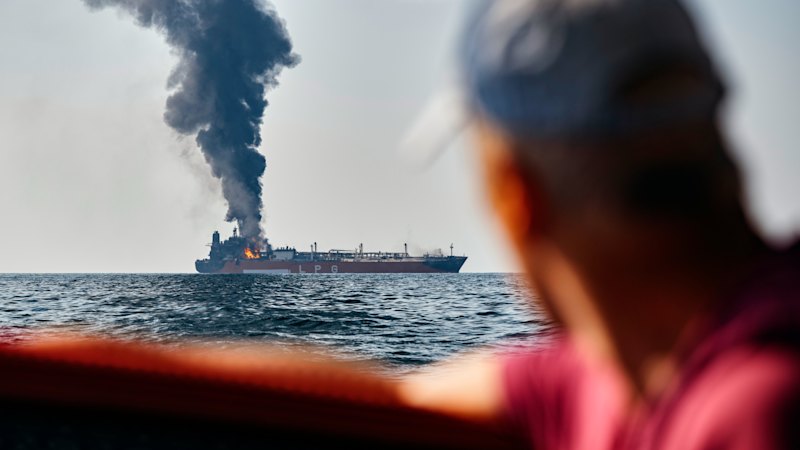
The Strait of Hormuz is a narrow maritime corridor connecting the Persian Gulf to the Gulf of Oman and the Arabian Sea. At its narrowest point, the channel spans roughly 33 kilometers, with shipping lanes compressed into two-mile-wide corridors in either direction separated by a two-mile buffer zone. Roughly one-fifth of global petroleum liquids consumption passes through this bottleneck. Because the economic stakes are absolute, military posturing, naval blockades, asymmetrical drone strikes, and vessel seizures occur within a hyper-concentrated geographic footprint.
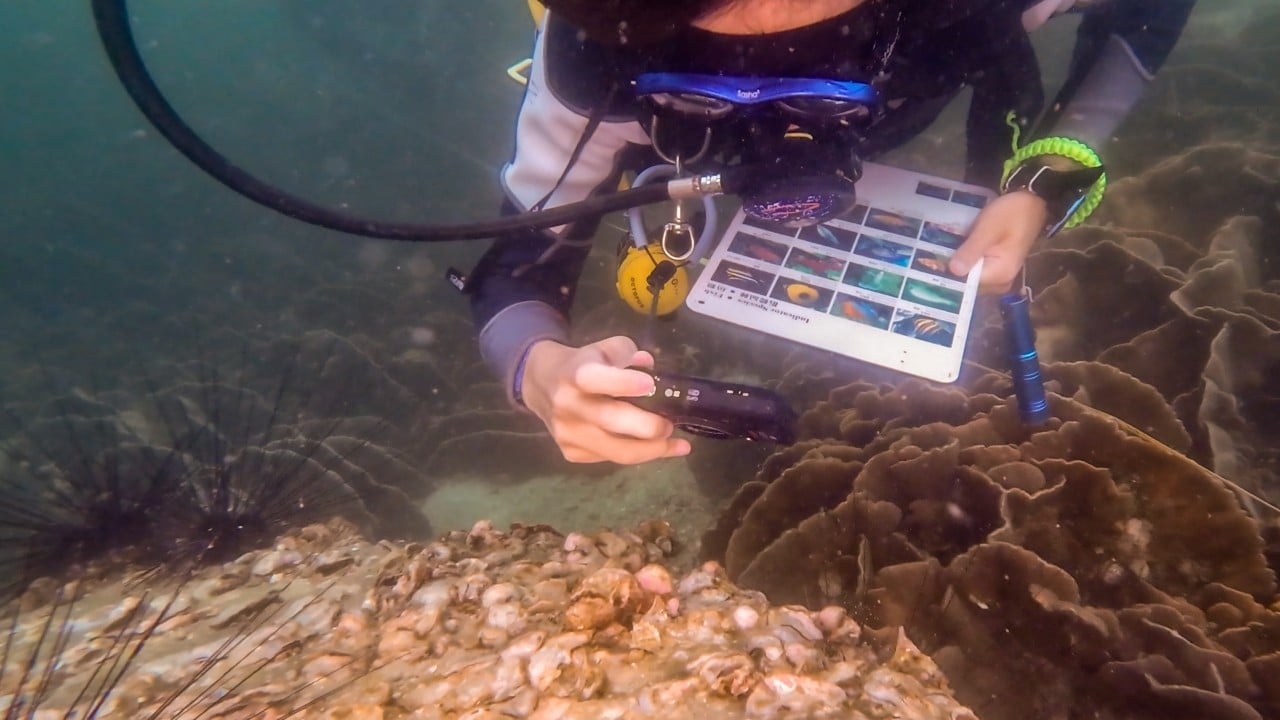
Standard conflict reporting tracks hull damage, insurance premiums, and crude oil futures. It rarely accounts for the benthic and pelagic zones directly beneath the shipping lanes. Yet the Persian Gulf is a semi-enclosed, shallow sea with an average depth of just 50 meters and a flushing time—the period required for water to exchange completely with the open ocean—of three to five years. Unlike deep-ocean environments where currents disperse contaminants rapidly, pollutants introduced into the Strait of Hormuz and the adjacent gulf remain trapped in a closed thermodynamic and hydrological loop.
When military escalations strike tankers, naval vessels, or coastal energy infrastructure, the ecological impact is not linear; it is compounding. The system already operates near its physiological threshold due to hypersalinity (often exceeding 40 parts per thousand), extreme summer surface temperatures reaching 35 degrees Celsius, and chronic industrial discharge from desalination plants. Introducing acute warfare stressors pushes endemic species past their survival limits.
The Four Mechanisms of Conflict-Driven Marine Degradation
To understand what an endurance swim highlights, one must separate vague notions of "environmental harm" into four specific, measurable ecological mechanisms resulting from maritime hostilities.
1. Acute Hydrocarbon and Chemical Spills
Kinetic strikes on crude carriers, bunker fuel tanks, and offshore platforms release polycyclic aromatic hydrocarbons (PAHs) and heavy metals directly into the water column. Because surface temperatures in the Strait of Hormuz are exceptionally high, lighter volatile organic compounds evaporate rapidly, creating toxic atmospheric plumes that affect seabirds and air-breathing marine mammals. The heavier fractions emulsify into dense tar balls or sink to smother benthic habitats. Seagrass beds—the primary foraging grounds for the region's vulnerable dugong populations—suffer immediate photosynthetic inhibition when coated in weathered crude. Once a seagrass meadow dies off, the sediment destabilizes, triggering localized turbidity that chokes adjacent coral reefs.
2. Acoustic Trauma and Sonar Disruption
Modern naval conflict relies heavily on active sonar, subsurface detonations, unmanned underwater vehicles (UUVs), and high-speed patrol craft. Sound travels roughly four times faster in water than in air, and acoustic energy propagates efficiently across the shallow, hard-bottomed shelf of the Strait. High-intensity mid-frequency active sonar and explosive shockwaves induce acoustic trauma in cetaceans, including Indo-Pacific humpback dolphins, bottlenose dolphins, and Bryde's whales. The physical mechanisms include:
- Temporary or permanent threshold shifts in hearing, rendering animals unable to echolocate prey or navigate.
- Behavioral panic responses, causing deep-diving species to ascend too rapidly and suffer decompression sickness (gas embolism).
- Masking of low-frequency communication calls, fracturing pod cohesion and disrupting breeding cycles during critical migratory windows.
3. Heavy Metal Bioaccumulation and Munitions Leaching
Naval engagements deposit unexploded ordnance, depleted uranium penetrators, shattered hull plating, and synthetic polymers onto the seabed. As saltwater corrodes metallic casings, lead, mercury, cadmium, and energetic compounds like RDX and TNT leach into the sediment. Filter-feeding bivalves and bottom-dwelling crustaceans absorb these toxins. Through trophic transfer, concentrations magnify up the food web, accumulating in apex predators such as bull sharks, king mackerel, and sea turtles. Because commercial fishing remains a primary protein source and economic pillar for coastal communities across Oman, Iran, and the United Arab Emirates, benthic contamination directly compromises human food security.
4. Conservation Governance Paralysis
Perhaps the most destructive consequence of regional warfare is institutional. Effective marine conservation requires transboundary data sharing, joint vessel monitoring, oil-spill response treaties, and coordinated fishing quotas. When geopolitical hostility escalates into kinetic conflict, diplomatic channels freeze. Coast guards shift exclusively from environmental enforcement and illegal-fishing interdiction to force protection and mine countermeasures. International scientific vessels cannot secure insurance or military clearance to enter contested waters. Conservation shifts from proactive ecosystem management to total operational blindness, allowing illegal, unreported, and unregulated (IUU) fishing fleets to strip-mine reef ecosystems while state actors focus on naval defense.
The Mechanics of Endurance Advocacy
Why deploy an ultra-distance swimmer into a contested maritime zone? From a communications and risk-management perspective, endurance sports serve as a high-leverage translation engine. Scientific papers detailing a 15 percent decline in coral calcification or elevated PAH levels in sediment cores generate zero public pressure on belligerents. A human body navigating open water across a militarized chokepoint generates immediate narrative friction.
To execute a crossing of the Strait of Hormuz, an athlete and their support team must solve an intricate operational matrix:
- Hydrodynamic Navigation: The Strait is governed by complex tidal streams driven by the Indian Ocean monsoon system and evaporation gradients in the Persian Gulf. Currents frequently exceed two to three knots, creating standing waves and eddies around headlands like the Musandam Peninsula. A swimmer cannot fight these currents head-on; they must calculate vector angles, timing entry to ride tidal shifts rather than being swept into shipping lanes or territorial waters.
- Thermoregulatory Management: Depending on the season, water temperatures fluctuate wildly. High-salinity, warm water induces rapid core overheating during sustained anaerobic and aerobic exertion, leading to hyperthermia and severe electrolyte depletion. Conversely, winter crossings risk cold-water immersion shock and hypothermia over multi-hour durations.
- Biological Hazards: The waters contain high densities of venomous jellyfish, sea snakes, and pelagic predators. Without shark cages—which invalidate standard marathon swimming rules—swimmers rely on electronic deterrent fields, support kayaks, and constant visual spotting.
- Geopolitical Deconfliction: This is the decisive variable. Crossing between Omani and Iranian territorial waters requires navigating overlapping Exclusive Economic Zones (EEZs), naval exclusion zones, and active patrol grids. A support boat deviating from an approved transit corridor risks interception, seizure, or kinetic engagement. Securing passage requires back-channel diplomatic clearances, real-time Automatic Identification System (AIS) broadcasting, and strict adherence to maritime right-of-way protocols alongside massive Very Large Crude Carriers (VLCCs).
By subjecting a human athlete to the exact same physical medium—the water column, the surface currents, the thermal load, and the maritime traffic—that marine megafauna inhabit, the swim establishes an immediate physiological equivalence. If a trained, supported human struggles to survive a 10-to-15-hour transit through those waters, the vulnerability of resident sea turtles, dolphins, and reef systems becomes intuitively legible to a global audience.
Evaluating the Strategic Efficacy and Limitations
While extreme advocacy campaigns excel at capturing initial media cycles, an objective evaluation reveals strict structural limitations. Awareness is not policy, and media attention does not neutralize naval mines or scrub hydrocarbons from seagrass beds.
First, attention decay is rapid. News cycles driven by human-interest feats peak within 48 to 72 hours. Without an attached institutional mechanism—such as a funded scientific expedition, a legal petition to the International Maritime Organization (IMO), or a corporate liability framework—the narrative dissipates before influencing military rules of engagement.
Second, asymmetric accountability distorts impact. Open-water advocacy relies on democratic media ecosystems and international reputational pressure. State actors and non-state militant groups operating in the Strait of Hormuz calculate risk based on regime survival, deterrence, and energy leverage, not Western environmental sentiment. Embarrassment does not alter naval doctrine.
Third, ecological baseline data remains missing. Highlighting the threat to wildlife is distinct from quantifying the damage. Because conflict restricts access for marine biologists, conservationists often lack the pre-war and post-strike empirical datasets required to prove causation in international environmental courts or to structure targeted ecological restoration projects once hostilities subside.
Tactical Integration for Future Environmental Interventions
To convert extreme endurance feats from symbolic spectacles into durable ecological leverage, organizers, scientists, and maritime stakeholders must restructure how these operations are designed and executed. Relying solely on press releases guarantees diminishing returns.
- Embed Autonomous Telemetry on Support Vessels: Every escort boat accompanying a marathon swim through a contested zone must function as a mobile oceanographic laboratory. Equipped with towed conductivity-temperature-depth (CTD) sensors, fluorometers to detect dissolved hydrocarbons, and hydrophones to log ambient acoustic decibel levels, the support fleet can gather high-resolution baseline data along the exact transect of the swim. This converts a media event into a peer-reviewed data-collection mission.
- Establish Pre-Negotiated Scientific Corridors: Rather than treating diplomatic clearance as a one-off favor for an athlete, organizers should partner with neutral regional academic institutions—such as marine science departments in Oman or the UAE—to formalize the transit route as a recurring ecological monitoring transect. Precedent creates operational space for future non-military scientific access.
- Target Maritime Insurance and Reinsurance Underwriting: Public protests rarely move naval commanders, but financial risk pricing moves global shipping instantly. Data gathered during these crossings regarding unmitigated pollution, acoustic hazards, and wreck degradation should be fed directly into Environmental, Social, and Governance (ESG) risk models used by maritime insurers like Lloyd's of London. When ecological degradation increases underwriting costs for transit through a conflict zone, commercial pressure forces state actors to implement stricter spill-containment and corridor-protection protocols.
- Deploy Acoustic and Visual Megafauna Surveys Simultaneously: Pair the human transit with aerial drone photogrammetry and passive acoustic monitoring to document real-time behavioral responses of cetaceans and sea turtles to surrounding vessel traffic. Publishing synchronized data showing the swimmer's physiological stress metrics alongside real-time marine mammal displacement creates an undeniable, dual-track narrative that satisfies both mass media editors and international regulatory bodies.
Symbolic endurance crossings prove that a single human can navigate a militarized chokepoint, but the enduring value of the operation depends entirely on the hard scientific data and institutional pressure left behind in the wake of the support boats.