Friday the 13th is not a curse. It is a massive, recurring drain on the global economy fueled by a specific psychological glitch known as paraskevidekatriaphobia. While casual observers treat the date as a quirky social media trend or a reason to marathon horror movies, the cold reality is written in blood-red ink on balance sheets. Businesses lose hundreds of millions of dollars every time the thirteenth day of the month falls on a Friday. This happens because human beings are fundamentally irrational when faced with ancient, baseless patterns.
The primary query for anyone looking at this date is simple. Does anything actually happen? The data says yes, but not because of malevolent spirits. It happens because of us. People stay home. They cancel flights. They postpone the closing of real estate deals. They avoid the stock market. The "unluckiness" of the day is a self-fulfilling prophecy driven by collective anxiety. It is a fascinating study in how a medieval superstition can still reach out from the past to throttle modern commerce.
The Cost of Collective Hesitation
Economists have spent decades trying to put a hard number on the "superstition tax" paid on Friday the 13th. Donald Dossey, a behavioral scientist and founder of the Stress Management Center and Phobia Institute, once estimated that the U.S. economy loses between $800 million and $900 million every time this date rolls around.
This isn't because of a spike in freak accidents. It is the result of what doesn't happen.
- Travel and Hospitality: Airlines often see a dip in bookings. While modern pricing algorithms try to mask this by lowering fares to entice the brave, the load factors on these days frequently underperform compared to the Fridays immediately preceding or following them.
- Real Estate: Closing a mortgage on Friday the 13th is a non-starter for a surprising percentage of the population. Buyers fear that a home purchased on an "ill-omened" day will harbor hidden structural issues or lead to future financial ruin.
- Retail and Dining: Foot traffic in high-end shopping districts often softens. People choose to stay in, opting for the perceived safety of their own four walls rather than risking the "chaos" of the outside world.
The irony is thick. By withdrawing from the world to avoid bad luck, the public creates a genuine economic contraction. We manufacture a mini-recession for twenty-four hours based on a number and a day of the week.
Anatomy of a Cultural Infection
Where did this start? To understand the grip this date has on the throat of the 21st century, we have to look at the wreckage of history. It isn't one single event, but a messy layering of cultural traumas.
The most common theory points to the Last Supper. There were 13 guests at the table, and the 13th guest was Judas Iscariot. Jesus was crucified on a Friday. For centuries, this combination was enough to keep the superstitious from starting a journey, getting married, or even cutting their fingernails on this specific day.
Then there is the collapse of the Knights Templar. On Friday, October 13, 1307, King Philip IV of France ordered the mass arrest of the Templars. This was a brutal, coordinated strike that involved torture and execution. While historians argue about whether this specific event birthed the modern superstition, the narrative has been cemented by popular fiction and "true crime" history buffs.
The fact that these stories still hold weight in an era of quantum computing and global satellite networks is a testament to the stubbornness of the human brain. We are hard-coded to look for patterns. If a man trips and breaks his arm on a Tuesday, he blames his own clumsiness. If he does it on Friday the 13th, he blames the date. This confirmation bias is the engine that keeps the myth alive.
The Statistical Reality of Risk
If you want to find the truth, look at the insurance actuaries. These are the people who get paid to accurately predict disaster. If Friday the 13th were truly more dangerous, insurance premiums would reflect that. They don't.
In fact, some studies suggest that Friday the 13th is actually safer than your average Friday. The Dutch Centre for Insurance Statistics analyzed data over a two-year period and found that there were fewer accidents, fires, and thefts on Friday the 13th.
Why? Because people are terrified.
When you believe the world is out to get you, you drive more slowly. You double-check the stove. You don't take risks. You are hyper-vigilant. The collective fear of the day acts as a bizarre safety net. The only "bad luck" that actually manifests is the mental stress of waiting for something to go wrong.
However, there is a dark side to this hyper-vigilance. Stress causes mistakes. If a surgeon or a pilot is genuinely rattled by the date, their performance can suffer. The danger isn't in the date itself; the danger is in the person who believes the date has power.
The Commercialization of Fear
While some sectors suffer, others have learned to harvest the anxiety. The entertainment industry has turned Friday the 13th into a multi-billion dollar brand.
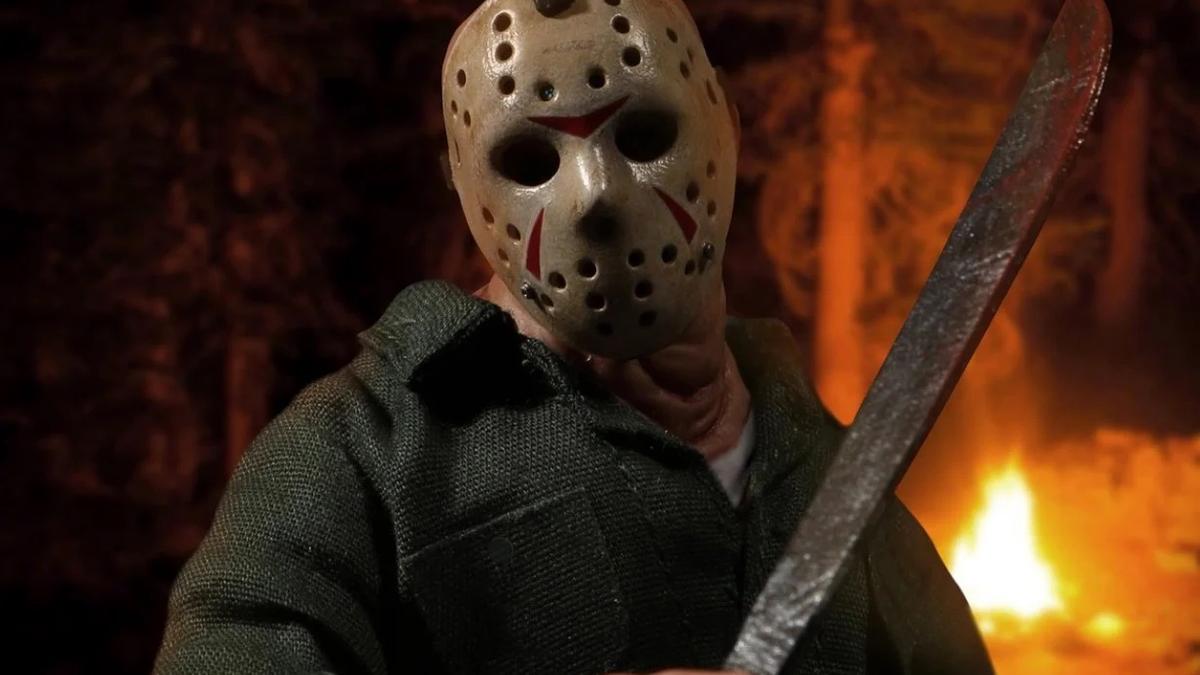
The 1980 release of the film Friday the 13th fundamentally changed the cultural conversation. It took a fading religious and historical superstition and turned it into a permanent fixture of pop-culture horror. Jason Voorhees became the mascot of the date. Now, every time the 13th falls on a Friday, streaming platforms, cinemas, and haunted attractions see a massive spike in revenue.
They aren't selling safety; they are selling the thrill of the "unlucky" day. It is a brilliant pivot. If you can't stop the superstition, you might as well put a price tag on it. Tattoos are another growth area. Many tattoo shops offer "Friday the 13th Specials," where customers can get small, pre-designed tattoos for $13 (plus a mandatory tip). These events draw massive crowds, turning a day of dread into a day of high-volume sales.
The Myth of the Unlucky Number 13
To truly dissect this issue, we have to address the "13" itself. Triskaidekaphobia (the fear of the number 13) is so prevalent that it has shaped the physical world around us.
Walk into almost any high-rise hotel or office building in a major city. Check the elevator panel. You will often see the buttons jump from 12 to 14. Architects and developers aren't stupid. They know that a significant portion of their potential tenants or guests will refuse to stay on the 13th floor.
- The 13th Floor: It doesn't exist in roughly 80% of U.S. high-rises.
- Row 13: Many airlines, including Lufthansa and Ryanair, skip Row 13 in their cabin layouts.
- The 13th Guest: In France, if a dinner party accidentally has 13 guests, you can hire a "quatorzième"—a professional 14th guest—to fill the seat and break the curse.
This isn't just "flavor." This is a tangible modification of our environment to accommodate a collective delusion. We have literally built our cities to avoid a number.
Breaking the Cycle of Irrationality
The only way to win against Friday the 13th is to recognize it for what it is: a social construct with a heavy price tag.
We are living in an age that prides itself on logic and data-driven decision-making. Yet, we still allow a calendar alignment to dictate our travel plans and investment strategies. The "unlucky" nature of the day is a ghost in the machine of human progress. It is a glitch we refuse to patch because the story is too compelling to give up.
Next time this date rolls around, look at the stock market. Look at the empty seats on a plane. Look at the missing button in the elevator. You aren't seeing evidence of a curse. You are seeing the visible scars of a society that is still, deep down, afraid of the dark.
Stop checking the calendar for permission to live your life. The only thing waiting for you on Friday the 13th is the same set of risks and rewards that exists on any other day of the year. The superstition only has the power you choose to feed it.
The most productive thing you can do on Friday the 13th is to ignore it. Buy the house. Take the flight. Sign the contract. The "luck" you experience will be the direct result of your own competence, not the positioning of a number on a grid. Any other belief is just expensive fiction.