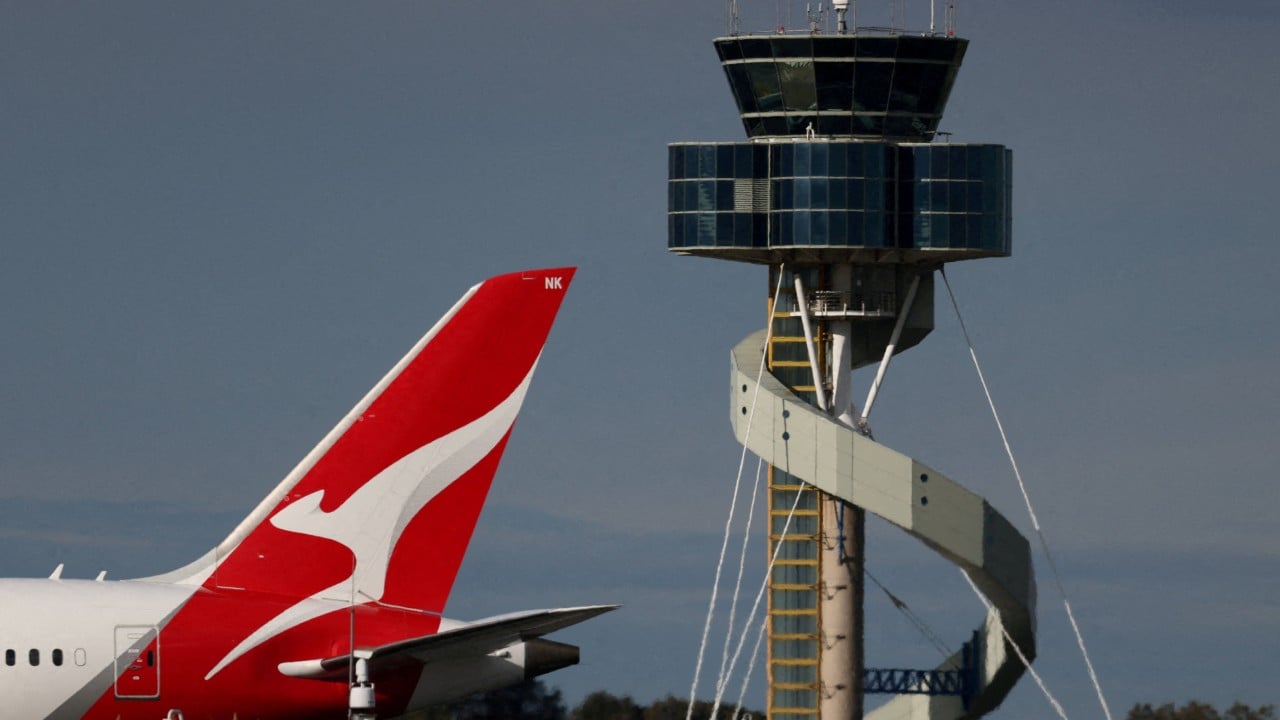
The proposal to shutter Sydney Kingsford Smith Airport's air traffic control tower during overnight hours is not merely an operational adjustment; it is a structural symptom of chronic labor rationing within critical national infrastructure. When air navigation service providers weigh reduced night-window coverage against mandatory fatigue management thresholds, the underlying calculus exposes the vulnerability of relying on depleted headcounts to maintain continuous service.
The Labor Deficit Equation
Air traffic control is a high-fixed-cost, zero-margin-for-error system governed by rigid human capital constraints. The bottleneck at Sydney Airport stems from a persistent divergence between operational capacity and workforce availability. Training a certified air traffic controller requires years of simulation, practical assessment, and localized endorsement. Consequently, headcounts cannot scale dynamically in response to demand surges or retirement waves. For an alternative perspective, see: this related article.
When attrition outpaces recruitment, providers are forced into a zero-sum allocation of shift hours. Overtime utilization spikes, driving up operational expenses while simultaneously accelerating burnout and fatigue risk. Closing the tower during specific low-traffic windows shifts the operational burden from labor supply management to airspace classification changes, bypassing the immediate constraint of active controller availability.
Airspace Classification Shifts During Unstaffed Hours
To evaluate the operational mechanics of an overnight tower closure, one must examine how airspace transitions under regulatory frameworks. When a physical control tower goes dark, controlled airspace typically reverts to non-controlled status, shifting the responsibility of separation services. Further coverage on this matter has been published by MarketWatch.
During daytime operations, the active tower provides mandatory separation between aircraft, managing sequencing, runway clearance, and surface movement. When the facility is unstaffed, pilots operating during eligible exemption windows must rely on procedural separation, radio broadcasts, and see-and-avoid principles within the designated zone.
This transition alters the risk profile for late-night movements:
- Runway occupancy verification relies entirely on visual crew confirmation rather than electronic surface detection or direct tower instruction.
- Emergency diversion protocols require coordination with adjacent radar control facilities or alternative regional hubs, increasing communication latency.
- General aviation and positioning flights operating within the curfew margins must navigate altered procedural requirements.
The Curfew Interaction and Traffic Density
The viability of the overnight tower closure is structurally dependent on Sydney Airport's strict legislative curfew, which severely limits scheduled commercial movements between late evening and early morning. Because the regulatory framework already suppresses high-density passenger traffic during these hours, the actual volume of aircraft movements affected by an unstaffed tower is exceptionally low.
However, low traffic volume does not equate to zero risk. General aviation repositioning flights, medical retrievals, and emergency diversions still puncture the overnight window. Removing localized tower oversight forces these exceptional movements to operate under alternate procedural controls, shifting risk from the provider's active staffing roster to the cockpit crew's real-time tactical judgment.
Economic Externalities for Carriers and Operators
Airlines and charter operators absorb the downstream friction of air navigation staffing deficits. While major commercial carriers largely support measures that stabilize daytime rosters and prevent rolling daytime delays, niche operators face distinct cost functions. Business jet operators and freight handlers relying on off-peak slots face diminished operational certainty if unstaffed tower protocols introduce ambiguity or procedural delays into their turnaround schedules.
Furthermore, the opening of alternative 24-hour infrastructure, such as Western Sydney International Airport, introduces a regional variable into the equation. As capital expenditure and regional capacity shift toward multi-airport metropolitan networks, legacy hubs like Kingsford Smith face optimization pressures to reallocate scarce technical resources away from low-yield operational windows.
Strategic Operational Forecast
Navigating the structural shortage of air navigation personnel requires moving beyond temporary facility closures. Service providers face a binary choice: capital-intensive acceleration of automated air traffic management aids to reduce per-movement labor dependence, or systematic reduction of operational hours across secondary asset windows. Without technological augmentation to decouple capacity from human watch-standing requirements, infrastructure rationing will expand from overnight containment to daytime slot capping.