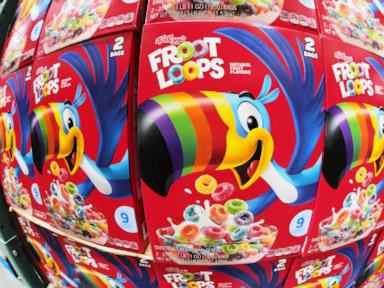
Industrial food manufacturing operates on precise cost-to-margin equations where synthetic additives historically provided unbeatable chemical stability, low unit economics, and vibrant visual consistency. When WK Kellogg Co announced plans to purge synthetic food colorings from its remaining portfolio ahead of its original 2027 legal timeline, the decision was treated in mainstream coverage as a simple nod to consumer preference. That framing misses the operational mechanics at play. The acceleration of this formulation overhaul is driven by convergent pressures from state-level litigation, major retail distribution gatekeepers, and shifting supply chain unit economics that render petroleum-derived dyes an operational liability.
The transition affects roughly 15 percent of the company's cereal portfolio—spanning legacy brands such as Froot Loops and Apple Jacks—where synthetic FD&C colors remained active while international variants and domestic counterparts had already migrated to clean-label standards. Deconstructing this shift requires analyzing the triad of forces compelling food conglomerates to re-engineer their core supply chains: regulatory friction, retail-tier assortment pruning, and functional chemistry constraints.
The Regulatory and Legal Vector
For decades, multinational food processors maintained dual-formulation standards, utilizing natural color alternatives in jurisdictions with strict regulatory prohibitions while retaining petroleum-based synthetics in the United States. This geographical arbitrage strategy collapsed under targeted legal scrutiny. When state attorneys general initiated investigations into synthetic chemical marketing claims, compliance costs shifted from an acceptable legal risk to an existential threat to market access.
The turning point for WK Kellogg materialized through binding legal instruments, specifically an Assurance of Voluntary Compliance signed with state regulators. Unlike voluntary corporate social responsibility pledges that permit shifting timelines, a legally binding agreement transforms ingredient selection into a judicial compliance metric. The financial penalty for non-compliance ceases to be brand erosion and becomes immediate litigation exposure. Consequently, corporate strategy had to compress a multi-year capital expenditure rollout into a hyper-accelerated procurement schedule.
Retail Assortment Gatekeeping
Operational changes in food manufacturing rarely happen without downstream pressure from dominant retail distributors. Supermarket chains control slotting space and margin distribution, and their risk thresholds regarding consumer health litigation have shifted dramatically.
Major retailers implemented strict inventory gating rules, setting hard deadlines to delist cereal SKUs containing synthetic dyes or artificial preservatives like BHT. When a distribution channel accounting for massive volume throughput threatens to purge non-compliant products from shelves, the manufacturer faces an acute revenue contraction risk. The decision by WK Kellogg to pull its timeline forward by twelve months reflects the mathematical reality of retail shelf-space preservation. Losing shelf space to private-label competitors or clean-label startup brands incurs a heavier financial penalty than the capital expenditure required to re-engineer processing lines.
The Chemistry and Capital Expenditure Bottleneck
Replacing synthetic dyes with plant-derived alternatives is not a simple matter of swapping ingredients in an existing mixing vat. Industrial food chemistry faces severe operational hurdles when transitioning from petroleum colorants to fruit and vegetable juice extracts, turmeric, and annatto.
Synthetic dyes offer uniform stability across varying temperature extremes, pH levels, and light exposure during extended distribution cycles. Natural pigments, by contrast, exhibit high sensitivity to heat during extrusion and baking processes. They degrade when exposed to moisture, light, and fluctuating acidity inside packaging liners.
To overcome these physical limitations, WK Kellogg had to allocate significant capital expenditure toward equipment modernization. Processing lines require specialized micro-encapsulation technology to shield natural pigments from thermal degradation during manufacturing. Furthermore, natural extracts lack the blinding vibrancy of artificial counterparts, necessitating complex multi-juice compounding to match consumer expectations for high-saturation products like brightly colored cereal loops.
The Margin Impact and Cost Structure Transformation
The financial profile of cereal production shifts fundamentally when natural colorants replace synthetic additives. Raw material input costs for fruit and vegetable extracts, concentrated juices, and botanical derivatives trade at a significant premium over petroleum-based alternatives.
This creates a margin compression dilemma. Food manufacturers operate within rigid price ceilings dictated by elastic consumer demand in the center-store grocery aisle. Absorbing higher input costs without the ability to proportionally raise retail prices forces operational efficiencies elsewhere in the supply chain.
The long-term economic calculus, however, favors total portfolio harmonization. Maintaining separate supply chains for domestic and international markets incurs continuous logistical friction, redundant inventory management costs, and higher auditing overhead. By unifying global and domestic formulations around a single, clean-label specification, the enterprise eliminates duplicate procurement channels and reduces long-term complexity costs.
Re-engineering legacy product portfolios under duress demands an aggressive reallocation of engineering resources and supply chain capital. The elimination of synthetic additives from mass-market cereals marks the transition of clean-label requirements from a niche marketing differentiator to a baseline requirement for industrial survival.
Procurement strategies must now focus on securing long-term agricultural supply contracts for botanical colorants to hedge against commodity price volatility. Food processors failing to build supply chain resilience into their ingredient sourcing will find themselves structurally uncompetitive as regulatory scrutiny and retail gatekeeping tighten across the broader consumer packaged goods sector.