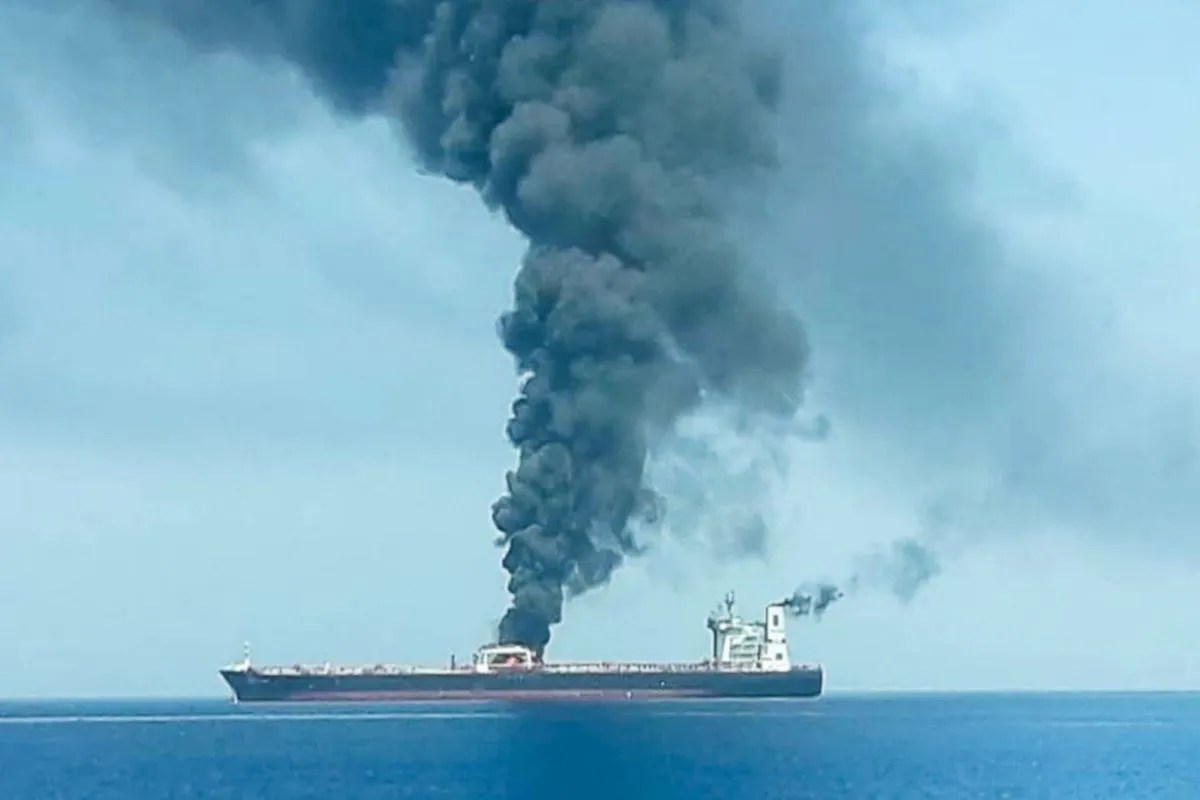
The security architecture of the Strait of Hormuz relies on an unstable equilibrium where minor kinetic disruptions generate disproportionate macroeconomic shocks. When a maritime tanker is targeted in this corridor, the immediate crisis is not merely a localized security breach; it is a calculated stress test of global supply chain tolerance and state-level deterrence models. The recurrent friction between Iranian asymmetric naval strategies and United States power projection highlights a structural vulnerability in international trade. To understand the trajectory of these confrontations, one must analyze the operational mechanics of maritime chokepoints, the financial transmission channels of maritime risk, and the strategic calculus of asymmetric escalation.
The Chokepoint Dilemma and Volumetric Reality
The Strait of Hormuz functions as the primary artery for global energy distribution, handling approximately one-fifth of the world's petroleum consumption. Its geographical constraints—a shipping lane with inbound and outbound channels only two miles wide—create an inherent operational bottleneck. This physical vulnerability means that total closure is unnecessary to disrupt global markets; the mere escalation of risk parameters suffices to alter economic behavior.
The state actors operating within this theater utilize starkly divergent operational models:
- The Conventional Deterrence Framework: Heavily reliant on blue-water naval presence, technological superiority, and the enforcement of freedom of navigation under international law. This model assumes that the threat of overwhelming retaliatory force will deter hostile actions.
- The Asymmetric Friction Framework: Employing low-cost, deniable assets such as fast attack craft, sea mines, uncrewed aerial vehicles (UAVs), and proxy forces. This model seeks to exploit the high risk-aversion of commercial shipping and the political constraints of conventional militaries.
This structural asymmetry invalidates standard deterrence models. A conventional military response to an unmapped mine or a low-cost drone strike is economically and operationally disproportionate, leaving shipping networks exposed to calculated, sub-threshold aggression.
The Cost Function of Maritime Interdiction
The true impact of a tanker attack is measured through the immediate re-pricing of maritime risk. When kinetic incidents occur, the financial transmission mechanisms react across three distinct vectors.
War Risk Insurance Premiums
Underwriters adjust the premium rates for vessels transiting designated high-risk areas. A single kinetic event can cause war risk premiums to spike by hundreds of percent within hours. This cost is calculated as a percentage of the ship's hull value, adding hundreds of thousands of dollars to a single transit. The financial burden falls directly on the charterers, filtering down to end-consumers.
Freight Rates and Demurrage
The scarcity of vessels willing to enter a volatile zone drives up spot charter rates. Shipowners demand a risk premium to operate in contested waters, while delays caused by heightened security inspections or rerouting alter vessel availability globally. The accumulation of demurrage charges during periods of heightened tension introduces significant friction into energy supply chains.
Strategic Rerouting Mechanics
The alternative to transiting the Strait of Hormuz requires bypassing the Persian Gulf entirely. For crude oil exporters, this demands utilization of overland pipelines to alternative terminals on the Red Sea or the Gulf of Oman. However, the aggregate capacity of these pipelines is structurally insufficient to absorb the total volume transiting the strait. The remaining volume must either face the high-risk maritime passage or remain stranded, forcing production shut-ins and triggering global supply deficits.
Escalation Mechanics and Deterrence Deficits
The cycle of escalation between Washington and Tehran operates on a predictable feedback loop driven by asymmetric calculations. A localized attack on a commercial vessel serves as a signal within a broader geopolitical negotiation framework.
The first phase involves a deniable or proxy-led strike on a target of low strategic value but high symbolic visibility. This action tests the operational readiness and political will of the international coalition tasked with securing the waterway.
The second phase unfolds when the international response is limited to diplomatic condemnation or defensive positioning. This creates a window of vulnerability. The attacking entity perceives a lack of escalatory intent from the opposing side, which lowers the perceived cost of subsequent operations. The deterrence gap widens because conventional naval assets are optimized for fleet-on-fleet engagements rather than policing vast expanses against decentralized, low-signature threats.
The third phase introduces the risk of miscalculation. As commercial operators demand state-backed escorts, the density of naval assets in the chokepoint increases. This concentration reduces reaction times for vessel commanders, elevating the probability that a defensive action against an ambiguous contact triggers a direct state-on-state conventional engagement.
Structural Redundancy as a Strategic Imperative
Relying entirely on tactical naval deployments to secure the Strait of Hormuz is a failing long-term strategy. True stability requires building structural resilience that neutralizes the economic utility of asymmetric attacks. This involves the permanent expansion of pipeline networks that terminate outside the chokepoint, thereby decoupling global energy security from the physical security of the strait. Until the volume of diverted crude exceeds the volume reliant on the waterway, the Strait of Hormuz will remain a high-leverage theater for asymmetric actors seeking to extract geopolitical concessions through economic friction.