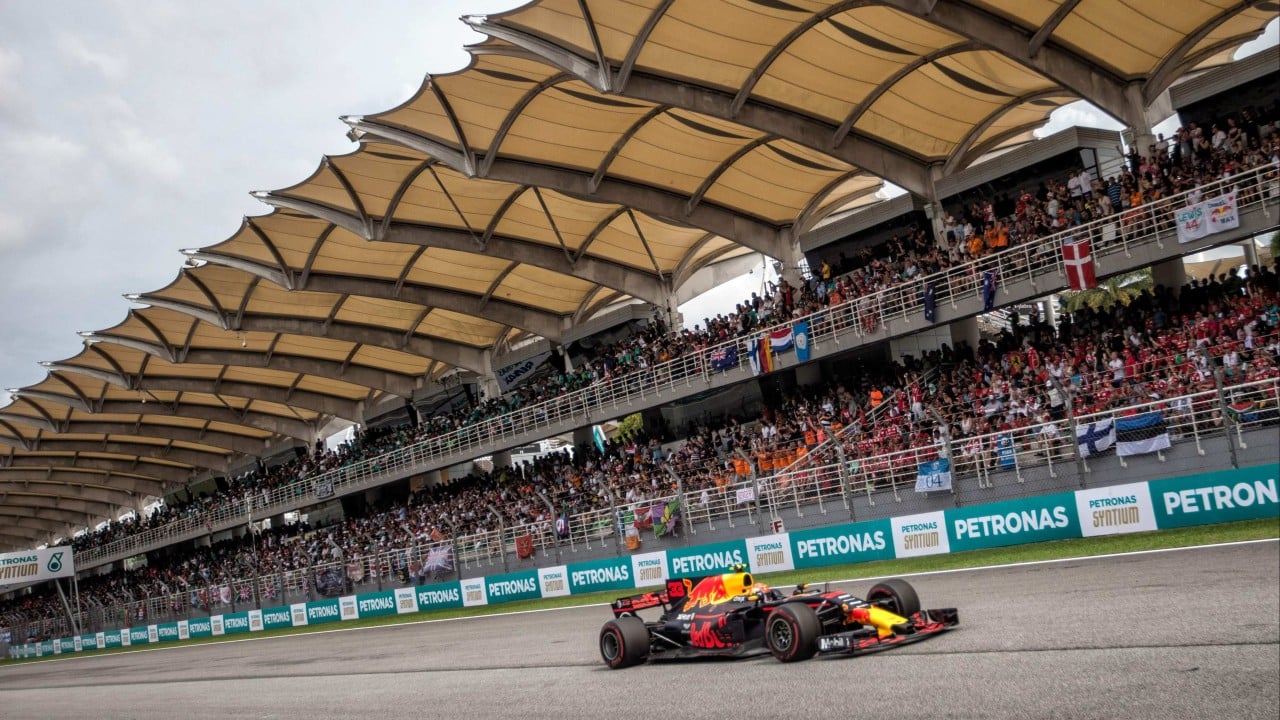
The modern sports economy operates on tight margins, fixed calendar slots, and high-stakes municipal bidding wars. When a premier motorsport championship drops a round or requires a sudden redistribution of its global circuit, host nations face a severe capital allocation problem. Malaysia hosted the Formula One World Championship at the Sepang International Circuit from 1999 through 2017 before escalating hosting fees and diminishing direct return on investment forced the government to abandon the contract. Reintroducing a displaced Grand Prix into this infrastructure requires viewing the event not through the lens of prestige or cultural celebration, but strictly as a short-duration shock to local supply chains, public balance sheets, and foreign exchange reserves.
Evaluating the viability of absorbing a relocated race requires analyzing three distinct operational variables: asset depreciation versus upgrade expenditure at Sepang, the opportunity cost of state capital allocation, and the velocity of tourism expenditure relative to imported event costs. If you liked this piece, you might want to read: this related article.
The Sepang Asset Depreciation and CapEx Function
Sepang International Circuit was engineered by Hermann Tilke and stands as a functional asset, but a dormant or under-utilized FIA Grade 1 facility degrades over time. While the track surface, run-off areas, and paddock buildings retain structural integrity, twenty-first-century motorsport standards demand continuous updates to pit lane technology, garage connectivity, telemetry infrastructure, and paddock hospitality spaces.
When a Grand Prix is cancelled or displaced elsewhere in the calendar, promoters scramble for alternative venues that possess current FIA certification. Sepang retains this certification, which eliminates the primary bottleneck of circuit construction. However, holding an international championship round on short notice triggers an accelerated capital expenditure cycle. The cost function of preparing a dormant track for an influx of Formula One freight, teams, and media involves three cost centers: For another perspective on this development, refer to the latest coverage from Bleacher Report.
- Remedial asphalt resurfacing and safety barrier calibration to meet current sporting regulations.
- Upgrading digital infrastructure, including high-bandwidth fiber optics for live telemetry, broadcast routing, and team data transmission.
- Expanding paddock hospitality structures to meet corporate entertainment demands from international sponsors.
The capital expenditure required to restart a dormant Grand Prix does not scale linearly with the time available. A standard twelve-month preparation window allows for competitive bidding among contractors and optimized procurement of materials. A compressed window of three to six months forces rush orders, premium freight costs for specialized equipment, and overtime labor charges. This shifts the initial financial baseline upward, increasing the hurdle rate for profitability before a single ticket is sold.
The Public Subsidy Model and Opportunity Cost
In emerging market motorsport economics, the hosting fee is typically paid directly to the commercial rights holder by a state-backed entity or sovereign fund. During Sepang’s initial nineteen-year run, the Malaysian federal government absorbed the financial deficit through tourism development funds, viewing the race as a global marketing campaign for the country brand and national petroleum company Petronas.
Reintroducing a displaced race alters the risk profile of this public subsidy. A planned event allows for multi-year ticket sales projections, long-term corporate partnership contracts, and phased tourism campaigns that attract regional travelers from Singapore, Indonesia, Australia, and China. A reactive, displaced race compresses the commercial runway.
The economic trade-off centers on opportunity cost. State capital deployed to subsidize a short-notice motorsport event cannot be allocated toward infrastructure projects with compounding domestic yields, such as public transit, digital education networks, or healthcare modernization. To justify the public subsidy of a displaced race, the direct economic injection must surpass the multiplier effect of alternative state investments.
Formula One events generate revenue through two primary streams: inbound tourist spending and global media exposure. Tourist spending has a high velocity within the hospitality, aviation, and food and beverage sectors in the Klang Valley. However, media exposure value—often cited in millions of dollars of equivalent advertising—rarely converts into sustained foreign direct investment or tourism growth without a coordinated, long-term national marketing strategy. Relying on the race broadcast alone to drive economic returns is an inefficient use of public funds.
Tourism Velocity and Margin Compression
A common analytical error in event economics is treating gross visitor expenditure as net economic gain. When international spectators arrive for a Grand Prix, they consume hotel rooms, dine in restaurants, and utilize local transport. This creates a revenue spike for businesses in Kuala Lumpur and Sepang.
Margin compression occurs because a displaced race attracts a different demographic mix than a long-announced fixture. Advance ticket sales favor international travelers who book flights and accommodation months ahead, securing higher rates and spending across multiple categories. Short-notice calendar shifts favor local or regional attendees who already reside within proximity. While regional attendees support stadium capacity metrics, their ancillary spending profile differs significantly from long-haul international tourists. Local spectators spend less on high-end hospitality, premium lodging, and extended tourism itineraries outside the immediate race window.
Furthermore, the operational costs of hosting a Grand Prix are denominated largely in foreign currencies, specifically Euros and US Dollars, covering freight logistics, officiating personnel, and technical compliance fees. If the local currency experiences depreciation against these benchmarks, the cost of hosting escalates while domestic ticket revenue remains fixed in local currency terms. This currency mismatch introduces financial volatility that can quickly erase projected operating margins.
The Structural Mechanics of Regional Competition
Malaysia does not operate in a vacuum. The Southeast Asian motorsport market features mature competition, most notably the street circuit in Singapore, which secures high-yield corporate tourism through evening scheduling and entertainment integration.
When a displaced race lands in Malaysia, it must capture market share without cannibalizing the existing regional sports tourism ecosystem. If the event date conflicts with or closely shadows established regional fixtures, ticket pricing power diminishes. Promoters are forced into margin-diluting discounting strategies to fill grandstands, reducing the overall economic yield for the host nation.
The logistical choreography required to pull off a successful race on short notice demands absolute institutional competence. Transporting freight fleets comprising dozens of cargo flights and hundreds of containers from a canceled venue across continents to Kuala Lumpur International Airport requires seamless customs clearance, tax exemptions for temporary racing imports, and specialized transport corridors to the circuit. Any friction in customs clearance delays team setup, compromises practice schedules, and damages the operational credibility of the host venue.
Strategic Execution Framework
Re-entering the Formula One ecosystem as a reactive host is only viable if structured around specific financial protections. Municipalities and promoters must avoid open-ended underwriting where the state absorbs all cost overruns.
Sustainable execution requires private-public risk-sharing models where commercial sponsors and ticketing revenue cover baseline operational expenses, while the state limits its involvement to infrastructure upkeep that benefits the country beyond the race weekend. Without these structural safeguards, a displaced Grand Prix ceases to be an economic catalyst and becomes an expensive exercise in short-term brand maintenance.