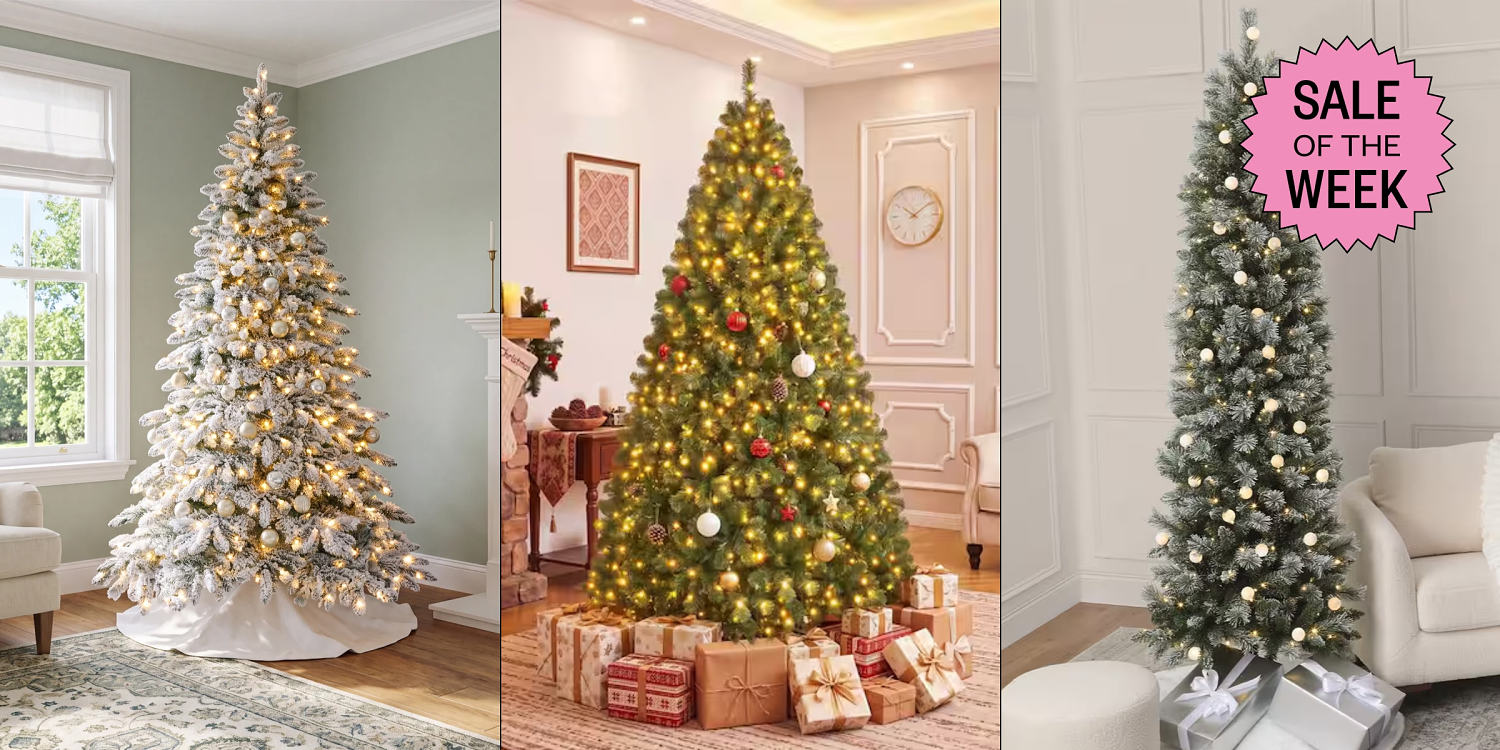
Aggressive mid-season markdowns of up to 50% off on artificial Christmas trees across Michaels, Home Depot, and Birch Lane are not acts of seasonal generosity; they represent synchronized inventory liquidation driven by warehouse carrying costs and compressed holiday selling windows. Consumers who treat these promotions as uniform discounts fall into a classic retail anchoring trap, often overpaying for low-density PVC foliage while missing structural value in commercial-grade polyethylene models. Navigating this promotional cycle requires stripping away percentage-off marketing and evaluating tree acquisitions through unit economics, material composition, and retailer-specific margin structures.
The Mechanics of Pre-Peak Markdown Compression
Retailers operating in the seasonal decor sector face an acute perishable-inventory problem. Unlike evergreen hardware or year-round home furnishings, an artificial Christmas tree loses roughly 70% of its perceived market value on December 26. Storage costs for bulky, cubic-foot-heavy cartons consume warehouse capacity needed for first-quarter patio and spring inventory.
To mitigate the risk of post-holiday dead stock, big-box and direct-to-consumer platforms deploy a front-loaded promotional cadence. By slashing prices up to 50% weeks before the final December rush, retailers accomplish three operational objectives:
- Velocity Acceleration: High headline discounts pull demand forward, capturing consumer wallet share before competitors lock in household budgets.
- Margin Blending: Retailers offset the compressed gross margin on the headline tree SKU by attaching high-margin accessories—such as tree skirts, ornament hooks, and storage bags—at full retail price during the checkout flow.
- Anchoring Distortion: The "up to 50% off" framing relies on an inflated Manufacturer's Suggested Retail Price (MSRP) established specifically to absorb planned promotional markdowns without breaching the retailer's floor margin.
Understanding this mechanism shifts the buyer's focus from the discount percentage to the net landed cost per vertical foot and branch tip.
Structural Segmentation of the Three Retailers
Michaels, Home Depot, and Birch Lane occupy distinct tiers within the home goods ecosystem. Each retailer utilizes a different supply chain architecture, resulting in fundamentally different product specifications even when headline discount percentages appear identical.
Home Depot and the High-Volume Utility Model
Home Depot operates on massive economies of scale, prioritizing structural durability, lighting integration, and rapid fulfillment. Their seasonal assortment—anchored by proprietary lines like Home Accents Holiday—focuses on high-output LED systems and memory-wire branch construction.
When Home Depot discounts trees by up to 50%, the sharpest reductions typically target high-inventory, mid-tier models (7.5-foot to 9-foot unlit or warm-white pre-lit variants). The operational trade-off here involves lighting architecture. Mass-market pre-lit trees rely on series-parallel wiring harnesses. While modern continuous-on technology prevents an entire section from failing when a single bulb burns out, integrated lighting creates a single point of failure that limits the usable lifespan of the tree to roughly five to seven seasons before electrical degradation outpaces foliage wear. Buyers at Home Depot maximize value by targeting high-tip-count unlit models or micro-LED variants where diode longevity exceeds standard incandescent mini-lights.
Michaels and the High-Low Margin Strategy
Michaels runs a classic high-low promotional retail model. Because craft and seasonal decor stores rely heavily on impulse foot traffic and coupon-driven conversion, their baseline MSRP on artificial trees is structurally higher relative to raw material weight than that of a home improvement warehouse.
A 50% markdown at Michaels generally brings the price down to its true market equilibrium rather than representing a deep liquidation discount. Their inventory skews toward specialty aesthetics: flocked finishes, slim pencil profiles, and non-traditional colorways (champagne, pastel, and black). Flocking—the application of cellulose fibers and adhesive to simulate snow—adds visual mass while masking lower underlying branch tip counts. This allows the manufacturer to reduce the volume of plastic needles required per tree, preserving gross margin even during a half-price sale. Buyers evaluating Michaels' inventory must account for the shedding rate of flocked coatings and verify whether the base structure provides sufficient rigidity for heavy glass ornaments.
Birch Lane and the Direct-to-Consumer Aesthetic Arbitrage
Birch Lane, operating under the Wayfair umbrella, functions primarily as an asset-light drop-ship and curated marketplace platform. Unlike Home Depot or Michaels, which manage physical store-level inventory, Birch Lane aggregates third-party wholesale importers under a cohesive traditional-aesthetic brand identity.
Discounts up to 50% on Birch Lane reflect dynamic algorithmic pricing designed to compete with brick-and-mortar doorbusters while accounting for parcel shipping overhead. Because shipping an oversized 60-pound carton via ground freight carries substantial dimensional weight surcharges, the cost of logistics is baked into the base price prior to the markdown. The strategic advantage of Birch Lane lies in access to higher ratios of injection-molded polyethylene (PE) tips, which replicate the three-dimensional structure of real fir and spruce needles. However, because Birch Lane aggregates multiple suppliers, quality control varies sharply across SKUs. A 50% discount on one listing may yield a dense, realistic centerpiece, while an identical discount on an adjacent listing delivers a sparse, flat-cut tree disguised by studio lighting.
Deconstructing Artificial Tree Unit Economics
Evaluating a tree strictly by its height and sale price leads to suboptimal purchasing decisions. A rigorous comparison across these three retailers requires standardizing four physical variables that dictate manufacturing cost and visual realism.
- PE-to-PVC Foliage Ratio: Artificial needles are produced using two distinct plastics. Polyvinyl chloride (PVC) is extruded into thin sheets, sliced into strips, and twisted around wire. It is inexpensive, lightweight, and visually flat—best suited for filling the interior trunk space. Polyethylene (PE) is injection-molded from casts of real evergreen branches, creating realistic, tapered needles. True luxury trees feature 70% or higher PE tip ratios on the exterior branches. Budget trees—often the ones advertised with the deepest percentage discounts—rely almost exclusively on 100% PVC construction.
- Tip Count Density: Branch tips determine the visual opacity of the tree and its capacity to conceal the central metal pole. For a standard 7.5-foot full-profile tree, a tip count below 1,000 indicates a sparse structure that will require heavy ribbon or oversized floral picks to mask gaps. Commercial-grade fullness begins at 1,500 tips and scales upward past 2,500. Slim or pencil profiles require proportionally fewer tips, typically between 600 and 900 for a 7.5-foot frame, due to their narrower base diameter.
- Base Diameter and Footprint: Retailers highlight vertical height while burying the base width in secondary specification tables. A 7.5-foot tree with a 58-inch base diameter occupies nearly 18.4 square feet of floor space, whereas a slim variant of the same height with a 36-inch diameter requires just 7 square feet. Measuring the spatial footprint prevents post-delivery returns, which often incur restocking or return-shipping fees on online marketplaces like Birch Lane.
- Hinge and Center-Pole Gauge: Heavy-gauge steel poles (typically 1.25 inches or wider in diameter) paired with riveted metal hinges prevent branch droop over multi-year storage cycles. Lower-tier promotional SKUs frequently substitute plastic hinge brackets, which become brittle in unconditioned attic or garage storage environments and shear under the weight of dense ornaments.
The Hidden Cost of Integrated Lighting Systems
Pre-lit trees dominate the promotional offerings at Home Depot, Michaels, and Birch Lane, yet integrated lighting introduces the highest probability of premature product failure. When a retailer discounts a pre-lit tree by 50%, the buyer must weigh convenience against long-term serviceability.
Standard pre-lit trees weave wiring harnesses directly into the branch hinges during factory assembly. When a wire frays inside a hinge pinch-point or a transformer fails after three seasons, removing the factory-installed lights requires cutting hundreds of tightly wrapped wires without severing the PVC foliage. Consequently, a lighting failure effectively totals the entire tree.
Furthermore, bulb count per vertical foot dictates nighttime visual impact. A 7.5-foot tree with 300 lights appears under-lit, creating dark voids across the canopy. Optimal illumination requires a minimum of 100 bulbs per vertical foot—750 lights for a 7.5-foot model. If a heavily discounted pre-lit SKU falls below this threshold, the buyer will immediately incur additional capital expenditure purchasing supplemental light strands, eroding the value of the initial 50% markdown.
Operational Limitations of Mid-Season Sale Hunting
Waiting for or chasing mid-season 50% off events carries distinct structural limitations that buyers must factor into their acquisition timeline:
- SKU Stockouts on High-Spec Models: The highest-performing trees—specifically unlit high-PE models and commercial micro-LED variants with memory wire—possess the lowest initial production runs and sell through before maximum markdowns hit. The deepest 50% discounts disproportionately apply to over-ordered, lower-tier PVC SKUs.
- Return Friction and Restocking Fees: Brick-and-mortar purchases at Home Depot or Michaels allow immediate physical inspection and friction-free curbside returns. Online orders through Birch Lane subject the buyer to dimensional-weight return shipping deductions if the physical product fails to match studio photography.
- Post-Season Liquidation Risk: While waiting until December 26 yields discounts of 60% to 75%, inventory selection is reduced to damaged boxes, display models, and undesirable dimensions. Mid-season 50% sales represent the mathematical intersection of intact SKU availability and acceptable margin compression.
Tactical Acquisition Protocol
To extract genuine economic value from the current 50% off markdowns across Home Depot, Michaels, and Birch Lane, execute a strict four-step filtering process before committing capital:
- Audit the Specification Sheet Before the Price Tag: Discard any listing that omits exact branch tip counts and base diameter measurements. Enforce a strict floor of 1,200 tips for a full 7.5-foot tree and verify the presence of molded PE exterior tips in the material breakdown.
- Decouple Lighting from Foliage: Unless the listing specifies commercial-grade, replaceable-transformer LED clusters with at least 100 bulbs per vertical foot, bypass pre-lit models entirely. Purchase an unlit high-PE tree at 40% to 50% off and deploy independent, high-density light strands to eliminate single-point-of-failure obsolescence.
- Match the Retailer to the Structural Requirement: Direct capital to Home Depot for high-durability, standard-profile trees backed by friction-free local returns; utilize Michaels exclusively for niche space-constrained profiles (slim or half-trees) where the 50% discount neutralizes their inflated baseline MSRP; and filter Birch Lane strictly by verified customer photos to confirm PE needle density before accepting online return-shipping risk.
- Calculate Total Cost of Ownership: Factor the immediate purchase of a heavy-duty canvas rolling storage bag into the transaction. Compressing an artificial tree back into its original degraded cardboard carton accelerates hinge damage and needle shedding, turning a discounted mid-tier purchase into a disposable two-season expense.