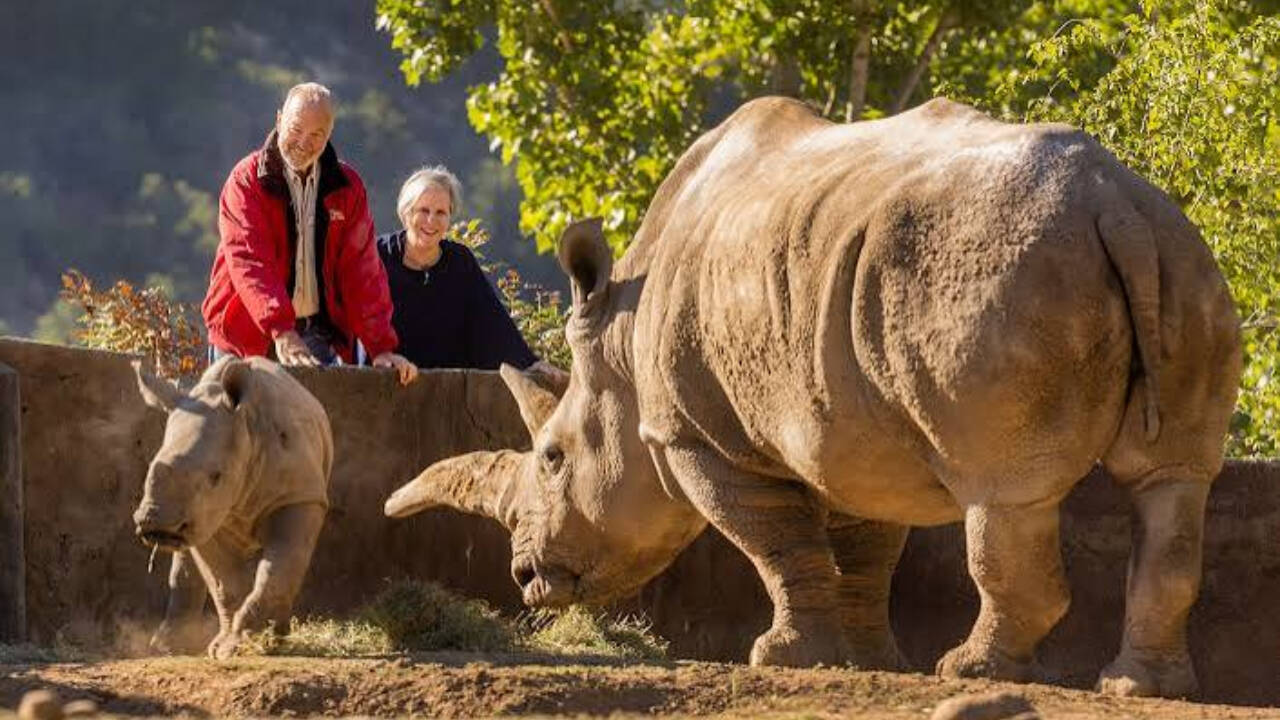
Private wildlife preserves operate inside a structural contradiction: they bear the fixed biological liabilities of an accredited zoological institution while relying on the volatile cash flows of a hospitality enterprise. When Safari West, a 400-acre wildlife preserve in Santa Rosa, California, transitioned from a privately held entity into a 501(c)(3) nonprofit organization, it executed an institutional restructuring designed to resolve this exact mismatch. Understanding this transition requires dissecting the unit economics of ex-situ conservation, the capital constraints of founder-led ecological enterprises, and the tax-exempt mechanisms that allow biological assets to survive generational succession.
The Structural Mismatch of Private Conservation
Operating a 400-acre preserve housing roughly 1,000 animals across 90 species creates an inflexible cost floor. Unlike a standard hospitality business—which can scale down payroll, close wings, or reduce inventory during an economic downturn—a zoological facility faces non-negotiable biological overhead. Every mammal, bird, and reptile requires daily caloric intake, specialized veterinary intervention, climate-controlled enclosures, and regulatory compliance regardless of gate receipts.
In a traditional for-profit structure, this fixed cost base creates three operational vulnerabilities:
- Revenue Cyclicality vs. Biological Continuity: Ecotourism and luxury glamping revenue fluctuate seasonally and react sharply to macroeconomic contractions, wildfire smoke events in Northern California, and public health restrictions. Feed, medical supplies, and specialized animal care labor do not fluctuate.
- Taxation of Retained Earnings: A private LLC or C-Corporation pays corporate income taxes on net operating surpluses before those funds can be reinvested into capital-intensive habitat expansion or endowment reserves. For an organization whose primary output is genetic preservation rather than shareholder dividends, corporate taxation functions as a direct leak in conservation capital.
- The Succession Bottleneck: Founder-led preserves built over decades accumulate massive illiquid equity—both in real estate value and biological collections. Transferring a 400-acre Sonoma County property to heirs or private buyers triggers prohibitive estate taxes or forces a liquidation of land that destroys the ecological mission.
Transitioning to a 501(c)(3) public charity directly neutralizes these three pressures by aligning the legal entity with the actual economic function of the enterprise.
Deconstructing the 501(c)(3) Mechanism in Zoological Operations
Moving from a private commercial enterprise to a tax-exempt nonprofit does not alter the daily husbandry protocols on the ground, nor does it eliminate the need for commercial revenue. Instead, it fundamentally rewires the organization's capital stack.
Under Internal Revenue Code Section 501(c)(3), an organization operating for scientific, educational, or charitable purposes unlocks four distinct financial levers that remain inaccessible to private operators:
- Philanthropic Capital Formation: High-net-worth donors, family offices, and institutional foundations cannot deploy tax-deductible grants into a for-profit corporation. Converting to a nonprofit opens an entirely new tier of capital—specifically, restricted and unrestricted major gifts earmarked for veterinary hospitals, breeding facilities, and land acquisition.
- Property and Income Tax Exemptions: In high-cost jurisdictions like California, commercial property taxes on 400 improved acres represent a substantial annual cash outflow. Qualifying for the California Welfare Exemption eliminates property taxes on land and improvements used exclusively for charitable and educational conservation purposes, immediately lowering the facility's break-even occupancy rate.
- Endowment Construction: Nonprofits can legally accumulate tax-free endowment funds where principal remains invested in perpetuity while investment yields subsidize baseline animal care. This decouples survival from daily ticket sales.
- Program-Related Revenue Retention: Earned income from safari tours, overnight tent cabins, and dining remains permissible inside a 501(c)(3) provided those activities directly advance the exempt educational mission. Net surpluses generated during peak summer months roll into the next fiscal year untaxed, building a cash buffer for winter deficits.
The Earned-Income Hybrid Model
The most resilient zoological institutions operate as social enterprises—entities that pair commercial hospitality engines with philanthropic subsidies. Relying 100% on donations exposes a preserve to donor fatigue and stock market drawdowns. Relying 100% on ticket sales forces management to prioritize crowd-pleasing exhibits over unglamorous, high-cost genetic breeding programs for obscure endangered species.
By retaining its established hospitality infrastructure—safari vehicle tours, tented accommodations, and group educational retreats—while layering a 501(c)(3) governance model over the top, Safari West positions itself to capture both market-rate consumer spending and mission-driven philanthropy. Visitors pay for an immersive wildlife experience; donors fund the underlying genetic rescue infrastructure that makes the experience authentic.
Ex-Situ Conservation and Genetic Assurance
To evaluate why a 400-acre preserve matters beyond local tourism, one must examine the mechanics of ex-situ conservation—the maintenance of species outside their natural habitats.
Habitat fragmentation, poaching, and climate shifts have reduced wild populations of numerous ungulates, avian species, and small mammals below their Minimum Viable Population (MVP) thresholds. When wild populations drop too low, genetic bottlenecks occur, increasing inbreeding depression and susceptibility to stochastic disease outbreaks.
Large-acreage preserves serve a distinct biological function that urban zoos cannot replicate:
- Behavioral Integrity: Urban zoos operate on constrained footprints, often housing animals in small enclosures that limit natural herd dynamics, foraging behaviors, and physical conditioning. A 400-acre terrain allows multi-species grazing herds—such as giraffes, zebras, antelopes, and ostriches—to interact across expansive topography, preserving natural social hierarchies and reproductive behaviors.
- Genetic Reservoirs: Accredited facilities participate in cooperative breeding programs, such as the Association of Zoos and Aquariums (AZA) Species Survival Plans (SSP). Studbook keepers track the pedigree of every individual across North America, prescribing specific breeding pairs to maximize genetic diversity (often targeting the retention of 90% of founder genetic variation over 100 years).
- Reintroduction Staging: Animals bred in large, semi-wild enclosures require far less behavioral rehabilitation before release into protected wild reserves than animals raised in sterile, high-density cages.
Without institutional permanence, decades of selective pedigree management can evaporate overnight if a private owner dies, goes bankrupt, or sells the land to a vineyard developer. The nonprofit transition locks the genetic repository into a perpetual public trust.
Governance Transformation and Operational Trade-Offs
Converting a founder-controlled enterprise into a public charity introduces severe governance friction. No structural shift occurs without trade-offs, and the transition from sole proprietorship to a fiduciary board brings immediate operational constraints.
Loss of Unilateral Control
In a private enterprise, founders make capital allocation decisions unilaterally and instantaneously. Under 501(c)(3) regulations, ownership dissolves. No individual holds equity in a nonprofit; the assets belong to the public trust, governed by an independent Board of Directors bound by strict fiduciary duties of care, loyalty, and obedience.
Founders transitioning into executive roles within the new nonprofit must shift from autonomous decision-making to board-approved strategic planning. Major capital expenditures, executive compensation, and land-use changes require formal governance approval and public disclosure via IRS Form 990.
Regulatory and Compliance Overhead
Tax exemption invites heightened scrutiny from federal and state regulators:
- Private Inurement Prohibitions: The IRS strictly prohibits any net earnings from flowing to private insiders. Any real estate lease, asset transfer, or consulting agreement between the founders and the new nonprofit must undergo rigorous third-party fair-market-value appraisals to avoid intermediate sanctions and tax-exemption revocation.
- Unrelated Business Income Tax (UBIT): While educational tours and conservation-linked lodging qualify as mission-related revenue, ancillary commercial operations—such as non-educational retail merchandise, external catering, or commercial event rentals—may trigger UBIT if they are not substantially related to the exempt purpose. Accounting teams must segregate revenue streams and allocate shared overhead with forensic precision.
- Public Transparency: Form 990 filings expose executive salaries, top vendor contracts, balance sheet reserves, and fundraising ratios to competitors, journalists, and watchdog organizations.
Risk Mitigation in High-Hazard Bioregions
Situated in the Mayacamas Mountains foothills of Sonoma County, Safari West operates in a Tier 3 High Fire-Threat District. In recent years, wildfires—most notably the 2017 Tubbs Fire, where founder Peter Lang famously stayed behind with hoses to protect the animals while his own home burned—have demonstrated that climate volatility represents an existential threat to fixed-acreage preserves.
A private balance sheet struggles to self-insure against catastrophic wildfire risk. Commercial property and casualty insurers have steadily retreated from California wildland-urban interfaces, driving premiums upward while capping coverage limits.
A nonprofit structure improves disaster resilience through three mechanisms:
- Capital Campaigns for Hardened Infrastructure: Donors readily fund tangible, life-saving infrastructure—such as automated perimeter sprinkler systems, subterranean water cisterns, fire-resistant concrete barns, and specialized animal transport trailers—that would crush a private operator's debt-to-equity ratio.
- Emergency Relief Mobilization: During active regional disasters, 501(c)(3) organizations can legally solicit tax-deductible emergency relief donations within hours, mobilizing liquid cash for emergency feed, temporary evacuations, and veterinary triage.
- Public-Private Partnerships: Government agencies, county fire districts, and state wildlife departments coordinate far more seamlessly with tax-exempt educational institutions than with private commercial ventures when allocating disaster mitigation grants.
Strategic Blueprint for Legacy Conservation Enterprises
For private wildlife sanctuaries, botanical gardens, and ecological preserves approaching generational transition, delayed restructuring destroys enterprise value and endangers biological collections. Executing a successful conversion requires a disciplined, multi-year sequence:
- Segregate Real Estate from Operations Early: Establish clear valuation baselines for land, infrastructure, and biological assets at least three to five years prior to conversion. Determine whether the founding family will donate the real estate via a bargain sale, execute a long-term ground lease, or transfer ownership via a phased charitable remainder trust.
- Build the Fiduciary Board Before Filing: Recruit board members with specific functional competencies—specifically nonprofit tax law, institutional endowment management, veterinary science, and major-gift fundraising—rather than populating the board with personal friends of the founders.
- ring-Fence Mission-Critical Hospitality: Audit every commercial revenue stream against IRS UBIT guidelines. Rewrite tour scripts, signage, and guest materials so that every visitor touchpoint explicitly delivers measurable educational value, ensuring hospitality cash flows remain tax-exempt.
- Launch a Founding Endowment Campaign: Do not treat nonprofit status as a passive tax shield. Immediately deploy the new 501(c)(3) status to raise an initial restricted endowment equal to at least 18 months of fixed biological operating expenses (feed, veterinary care, and core keeper payroll).
Organizations that fail to formalize this transition remain trapped in a fragile model where a single generational exit, market recession, or regional disaster can dismantle decades of genetic conservation. Locking ecological assets inside a well-governed, revenue-generating public charity remains the only structural mechanism capable of matching financial longevity with biological time horizons.