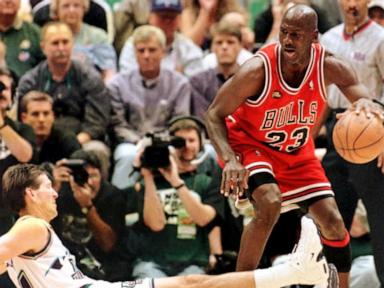
The transaction of Michael Jordan's 1998 NBA Finals Game 1 jersey for 14 million dollars establishes a new pricing ceiling for sports memorabilia. When single-item asset valuation reaches eight figures without underlying cash-flow generation, traditional financial models break down. This price point cannot be explained through standard utility or sentimental pricing. Instead, it reflects a convergence of hyper-liquid wealth concentration, absolute asset uniqueness, and the institutionalization of sports artifacts as alternative asset classes.
Understanding this valuation requires abandoning conventional retail market logic and analyzing the transaction through the lenses of positional goods theory, liquidity premium dynamics, and the psychological mechanics of cultural anchor assets.
The Structural Anatomy of Heritage Asset Valuation
Standard consumer goods derive their price from production cost plus margin, adjusted for utility and demand elasticity. Heritage assets, specifically singular artifacts linked to globally dominant cultural figures, operate under inverse economic rules. Supply is strictly inelastic at zero, meaning an increase in demand yields zero supply response.
The 1998 NBA Finals jersey, worn during the opening game of what media and fans designated "The Last Dance," carries a specific narrative weight that separates it from standard collectibles. It represents the terminal point of the most dominant commercial and athletic dynasty in modern team sports history.
[Asset Singularity] ➔ [Narrative Peak Convergence] ➔ [Institutional Liquidity] ➔ [Record Clearing Price]
To deconstruct the 14 million dollar figure, one must isolate the three distinct value drivers that compose the total price of a heritage sports artifact:
- Provenance Integrity: The degree to which the chain of custody is unbroken and authenticated by high-resolution photographic matching. A jersey worn during an ordinary regular-season game carries a fraction of the historical weight of a Finals opener where the athlete performed at a peak career juncture.
- Cultural Saturation: The global recognition factor of the athlete and the specific season. Michael Jordan functions as a transnational brand entity whose peak influence predates the fragmentation of modern media, concentrating attention in a way that contemporary athletes cannot replicate due to audience bifurcation.
- Capital Concentration: The presence of ultra-high-net-worth individuals seeking non-correlated, tangible alternative stores of value. As traditional equity and debt markets face volatility or inflationary pressures, concentrated wealth rotates into scarcity-driven physical assets.
Liquidity Dynamics and the Winner-Take-All Collector Market
The auction market for elite memorabilia functions as a winner-take-all tournament. Unlike art markets where thousands of works by various masters trade across a continuous price spectrum, sports memorabilia concentrates institutional attention on a very small set of apex items.
When an asset achieves this status, it ceases to be a recreational collectible and begins to behave like fine art or rare real estate in a prime location. The buyer pool shrinks to a handful of global billionaires, sovereign wealth funds, or institutional sports entities. At this tier, price discovery is driven not by market averages, but by the maximum marginal willingness to pay of the single wealthiest participant in the auction room.
This dynamic creates a steep price cliff. While standard game-worn jerseys from star players might trade in the tens or hundreds of thousands of dollars, apex items associated with historical inflection points bypass linear progression entirely. The leap from previous multi-million dollar records to 14 million dollars demonstrates that buyers at this level are pricing in future liquidity scarcity. They are betting that twenty years from now, the number of authenticated, high-significance items from Jordan's peak era will remain static while global wealth expands.
The Cost Function of Authenticity and Risk Mitigation
In any alternative asset class, the primary friction limiting capital inflow is asymmetric information and the risk of counterfeit insertion. The high valuation of the 1998 jersey is intrinsically tied to the minimization of this friction.
Authentication agencies utilize photomatching—comparing high-definition archival broadcast stills grain-by-grain against the fabric weave, loose threads, and patch alignments of the physical garment. When an item achieves a 100 percent verifiable match to a defining broadcast moment, the risk premium associated with authenticity drops to near zero.
Authentication Confidence ➔ Risk Reduction ➔ Institutional Capital Influx ➔ Valuation Expansion
This structural shift transforms a subjective collector's item into a verifiable financial instrument. Without this rigorous verification infrastructure, institutional capital would refuse to clear transactions at this scale. The 14 million dollar price tag is therefore partially a tax on uncertainty; buyers pay a premium for absolute institutional certainty that the asset is genuine.
Strategic Outlook on Heritage Asset Pricing
The establishment of an eight-figure benchmark for athletic apparel alters the incentive structures for athletes, teams, and equipment managers. Historically, game-worn gear was treated as consumable inventory, frequently gifted to opponents, trainers, or fans with little regard for future provenance.
Modern organizations now treat locker rooms as primary minting floors for high-value physical assets. Serialized tracking, chain-of-custody logging, and corporate partnerships with auction houses are integrated directly into franchise operations.
The trajectory of this market indicates further bifurcation. Mass-market collectibles will continue to face commoditization and software-driven valuation cycles, while apex heritage assets tied to generational cultural monopolies will decouple entirely from macroeconomic baselines. The 1998 jersey transaction is not an anomaly; it is the calibration point for a mature asset class where history, scarcity, and concentrated capital intersect.