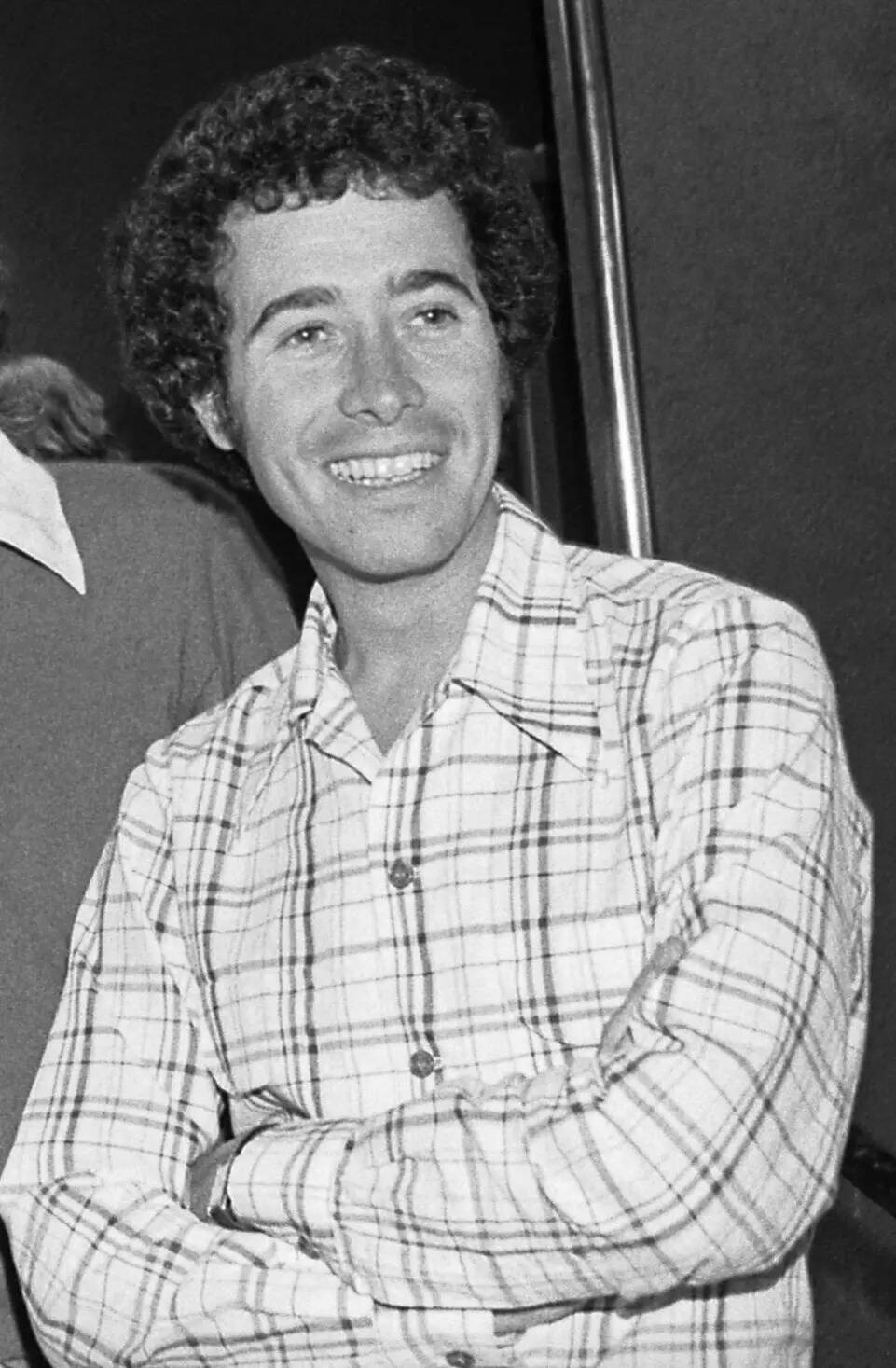
The capitalization of elite educational institutions via mega-philanthropy fundamentally alters the labor supply curves of highly specialized industries. When David Geffen’s $150 million endowment completely eliminated tuition for all Master of Fine Arts students at the Yale School of Drama, the immediate public consensus focused on altruism and individual financial relief. A structural analysis, however, reveals this transition is a calculated repositioning of an institutional balance sheet to solve a critical labor market bottleneck.
Elite arts training institutions operate under a broken economic model: they charge premium private-university tuition for degrees that yield highly volatile, low-median-income career paths. By replacing variable tuition revenue with a permanent capital endowment, an institution shifts from a tuition-dependent operational model to an asset-backed talent incubator. This restructuring alters student risk profiles, institutional recruitment capacity, and the broader commercial entertainment ecosystem.
The Capital Architecture of a $150 Million Endowment
To understand how tuition elimination functions, one must first deconstruct the cash flow mechanics of the endowment. A university does not spend a $150 million principal gift directly. Instead, the capital is integrated into the central endowment pool and invested across diversified asset classes to generate a predictable yield.
                  [ $150M Principal Gift ]
                             │
                             ▼
               [ Integrated Endowment Pool ]
                             │
                 (4.5% - 5.0% Spending Rate)
                             │
                             ▼
         [ $6.75M - $7.5M Annual Operating Cash ]
                             │
         ┌───────────────────┴───────────────────┐
         ▼                                       ▼
[ Offset Lost Tuition ]               [ Subsistence Stipends ]
Most elite university endowments operate under a disciplined spending rule, typically distributing between 4.5% and 5.0% of a moving average of the portfolio's market value annually. Applying this standard institutional payout rate to a $150 million principal yields an annual operational cash flow of $6.75 million to $7.5 million.
This annual yield serves two distinct fiscal functions on the school's balance sheet:
- Tuition Replacement: It directly offsets the gross tuition revenue previously collected from the student body. For a specialized graduate program with tight enrollment caps (typically under 200 total students across all cohorts), an annual inflow of $7 million comfortably matches or exceeds the aggregate tuition revenue.
- Operational Insulation: It detaches the school’s annual operating budget from enrollment volatility. The institution no longer needs to optimize cohort sizes or lower admissions standards during economic downturns to hit revenue targets.
The risk in this capital structure lies in inflation and market contraction. If asset returns trail the rate of hyper-inflation specific to higher education costs, the real purchasing power of the annual payout degrades. The institutional safety net is therefore dependent on the central university's capacity to achieve net positive real returns above the spending rate over a multi-decade horizon.
Deconstructing the Student Cost Function
The true cost of a graduate degree extends far beyond the nominal tuition sticker price. For an MFA candidate, the total economic burden is expressed through a multi-variable cost function:
$$C_{total} = T + L + O_{opportunity} - S$$
Where:
- $T$ is nominal tuition.
- $L$ is the localized cost of living (housing, food, healthcare).
- $O_{opportunity}$ is the foregone salary the individual would have earned by working in the market instead of enrolling in a full-time program.
- $S$ is institutional financial aid or stipends.
Eliminating tuition reduces $T$ to zero, but it does not clear the remaining variables. Graduate students in high-cost regions still face significant debt accumulation via living expenses unless the endowment yield also finances comprehensive subsistence stipends.
The primary structural flaw in the pre-endowment model was the asymmetric relationship between debt accumulation and expected lifetime earnings. A typical three-year MFA program could easily generate over $100,000 in student loan debt. When this liability is mapped against the median wages of theatrical actors, designers, and playwrights, the debt-to-income ratio becomes entirely unsustainable.
By driving $T$ to zero, the institution shifts the graduate's post-degree financial baseline. The student's reservation wage—the minimum compensation required to accept a job offer rather than remain unemployed or seek alternative work—drops precipitously. Free from the monthly cash drain of federal or private student loan repayments, graduates can rationally accept lower-paying, highly prestigious artistic roles that accelerate their career velocity early on.
Labor Market Distortions and Talent Monopolization
When an elite program eliminates tuition while its peers maintain a standard revenue model, it introduces a severe competitive imbalance into the market for top-tier talent. This dynamic can be modeled through three distinct structural phases.
[ Phase 1: Asymmetric Recruitment ]
Yale offers $0 tuition vs. peer institutions charging $50k+/year.
Selectivity index spikes; yield rate approaches 100%.

               │
               ▼

[ Phase 2: Socioeconomic Diversification ]
Risk-averse, high-talent, low-wealth applicants enter the pool.
The student body shifts from capital-endowed to talent-endowed.

               │
               ▼

[ Phase 3: Market Monopolization ]
Graduates enter commercial entertainment with zero debt leverage.
They underbid peer-school graduates by accepting low-initial-yield contracts.
1. Asymmetric Recruitment Advantage
The school immediately captures the global supply of elite applicants. If an applicant is cross-admitted to an institution charging $60,000 annually and a program offering a zero-tuition structure, the financial rationalization dictates choosing the latter in almost every scenario. The institutional yield rate (the percentage of admitted students who enroll) moves toward 100%, allowing the school to cherry-pick candidates based purely on talent metrics rather than financial capacity.
2. Socioeconomic Diversification of the Talent Pipeline
Under a traditional tuition model, a hidden selection bias exists: applicants from wealthy backgrounds are disproportionately capable of absorbing the financial risk of a low-yield arts degree. Eliminating tuition alters the applicant pool profile. High-talent, risk-averse individuals from lower socioeconomic strata who previously opted out of the application process entirely now enter the pipeline. The student body transitions from capital-endowed to talent-endowed.
3. Downstream Labor Compression
Graduates entering the commercial entertainment ecosystem (Broadway, streaming networks, regional theater) with zero debt leverage create a structural bottleneck for graduates of other institutions. Because Yale alumni do not require high initial salaries to service debt, they can monopolize entry-level fellowships, assistantships, and low-paying repertory contracts. This creates an environment where graduates from tuition-charging peer institutions are systemically priced out of the market, accelerating the concentration of institutional alumni in key industry positions.
Institutional Incentives and the Prestige Economy
Higher education institutions operate within a prestige economy where reputation dictates capital attraction, faculty recruitment, and elite placement. Converting a school to a zero-tuition model is a highly effective mechanism for maximizing institutional prestige.
| Structural Variable | Pre-Endowment Model | Post-Endowment Model |
|---|---|---|
| Primary Revenue Source | Tuition fees and university subsidies | Dedicated endowment yields |
| Admission Focus | Balance talent with ability to pay | Uncompromised talent selection |
| Graduate Debt Load | High ($50,000 - $150,000+) | Zero to minimal |
| Career Risk Tolerance | Low (forced into commercial/corporate work) | High (experimental, long-term development) |
| Market Competitive Position | Vulnerable to macroeconomic shifts | Highly insulated market leader |
This structural shift alters the internal incentives of the administration. When tuition revenue is removed from the operational equation, the school's primary KPI changes from maximizing enrollment volume to maximizing the long-term cultural and economic impact of its alumni. The institution can curricularly innovate without the fear of alienating a consumer-student base; they are no longer selling a credential to a customer, but rather investing capital into an asset.
Furthermore, this model creates a self-reinforcing philanthropic loop. As graduates achieve high-profile commercial success early in their careers due to their financial flexibility, the institution's cultural capital rises. This elevated status attracts subsequent tiers of ultra-high-net-worth philanthropists seeking to attach their names to highly visible, successful social experiments, ensuring the long-term capital health of the broader university ecosystem.
Structural Limitations of the Capitalized Philanthropy Model
While highly effective for a single elite institution, scaling this zero-tuition framework across the entire arts education landscape presents significant systemic challenges. The model contains inherent structural limitations that prevent it from serving as a universal blueprint for higher education reform.
The primary constraint is the extreme concentration of philanthropic capital. Mega-gifts of $150 million are overwhelmingly directed toward institutions that already possess massive brand equity and multibillion-dollar central endowments. A secondary or tertiary regional arts program cannot easily replicate this model because it lacks the donor network and institutional prestige required to secure a principal gift of this magnitude. Consequently, the zero-tuition trend exacerbates the wealth gap between a tiny cartel of elite institutions and the rest of the higher education ecosystem.
A second limitation involves the systemic risk of market saturation. If a dozen elite drama and film programs simultaneously eliminated tuition through similar endowments, the aggregate supply of debt-free, highly trained graduates entering the entertainment industry would spike. Because the total number of professional acting contracts, writing rooms, and design positions is relatively inelastic, this influx would not necessarily expand the job market. Instead, it would merely raise the baseline credential requirements for employment, shifting the industry bottleneck from "who can afford the training" to "who can secure one of the hyper-competitive, endowment-backed slots."
Finally, the model remains tethered to global financial market volatility. An institution reliant on an endowment yield for 100% of its operational costs is exposed to prolonged market downturns. If a macroeconomic crisis forces a contraction in the endowment's total valuation, the institution must either reduce its operating budget, alter its student support services, or draw from central university reserves to maintain the zero-tuition guarantee.
The Strategic Blueprint for Industry Competitors
For peer institutions operating without a $150 million endowment cushion, competing directly on pricing is a losing proposition. To survive this shift in the talent acquisition market, competing programs must execute a fundamental pivot in their value proposition and operational structure.
The optimal defensive strategy requires a shift toward accelerated, low-residency, or highly specialized micro-credentials. If a competing institution cannot lower its annual tuition to zero, it must compress the time-to-market for its students. By replacing a traditional three-year residential MFA with an intensive, hyper-focused 15-month program, the competitor cuts the student’s total opportunity cost and living expenses in half.
Concurrently, these programs must embed direct commercial monetization mechanics into their curricula. This involves establishing formal equity-sharing partnerships with commercial production companies, streaming platforms, and theatrical studios. By transforming the graduate school into a direct corporate labor pipeline where students are paid market rates for project-based work during their enrollment, competing institutions can offset tuition costs through commercial enterprise rather than relying strictly on philanthropy. The institutions that fail to adapt their revenue models to this new capitalized reality will see their talent pipelines dry up, permanently cementing their status in the secondary tier of the cultural economy.