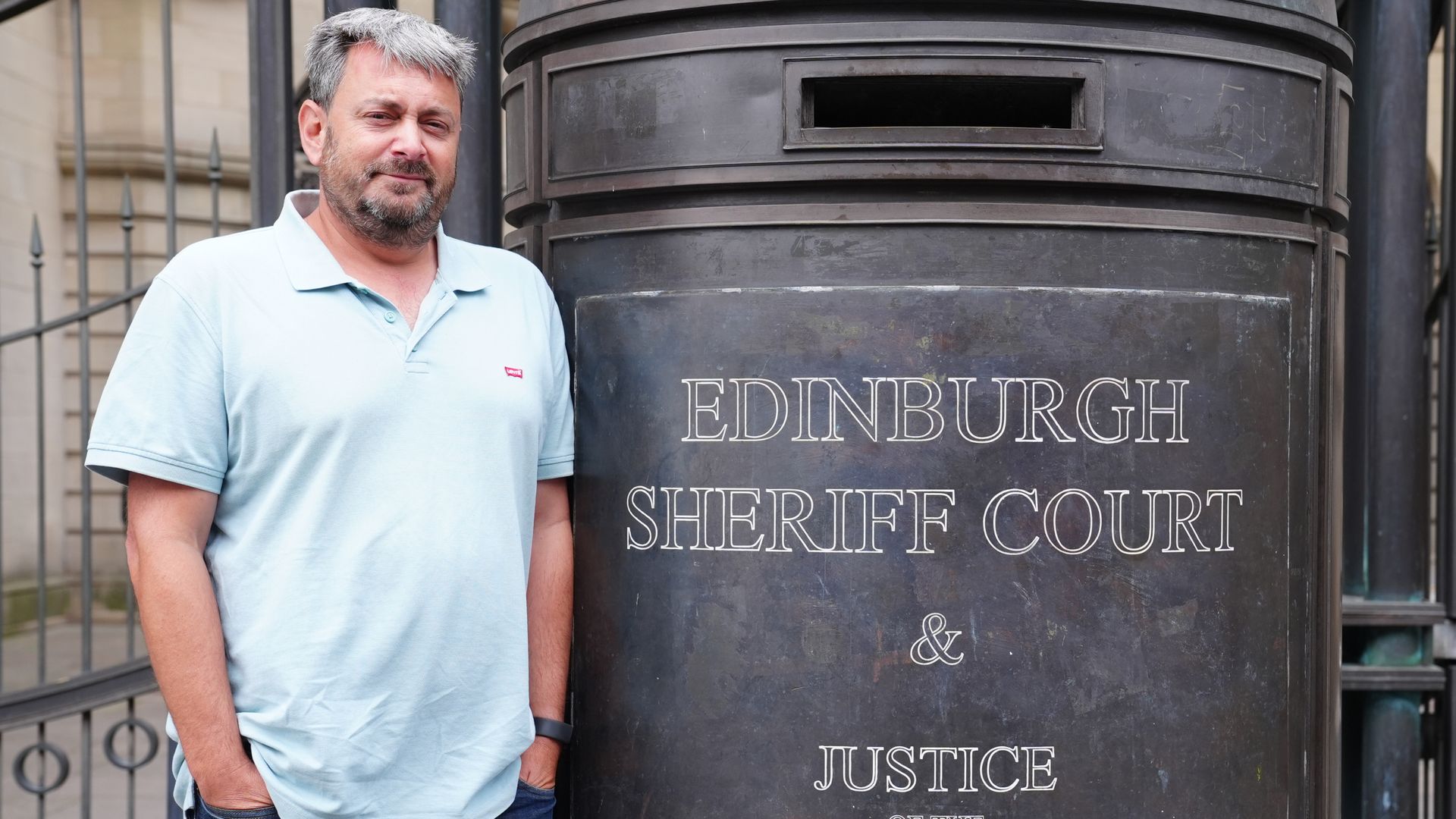
The recent admission by The Banshee Labyrinth in Edinburgh that it unlawfully discriminated against Jewish comedian Philip Simon marks a shift in how the arts industry must handle ideological disputes. After months of litigation and a refusal to settle out of court, the venue conceded in the Edinburgh Sheriff Court that its decision to pull Simon’s 2025 Fringe show, Shall I Compere Thee in a Funny Way, violated the Equalities Act. This case is not merely about a singular booking gone wrong; it exposes the fragility of free expression in spaces that conflate political dissent with identity-based exclusion.
For over a year, the venue maintained that the cancellation stemmed from the comedian’s social media posts, which they claimed aligned with the rhetoric of groups linked to humanitarian violations. The performer, conversely, maintained that the venue had effectively enforced a purity test, targeting him for his Jewish identity under the guise of political disagreement. By waiting until the eleventh hour to admit liability, the venue forced a protracted legal battle that incurred significant, avoidable costs for the complainant. Sheriff Roderick Flinn did not mince words, labeling the venue’s delay as unreasonable.
This behavior highlights a trend where cultural institutions prioritize brand signaling over basic legal obligations. When venues act as ideological gatekeepers, they often bypass the nuance of individual expression in favor of broad, often ill-defined, community standards. In this instance, the result was a direct violation of the law. The court’s determination that this was "unlawful belief-based discrimination" serves as a warning to theater owners and festival organizers across the United Kingdom.
The economics of the Fringe—and the live performance circuit at large—rely on the rapid turnover of acts. When a venue unilaterally decides that a performer’s personal beliefs are incompatible with their house stance, they are exercising a form of soft power that has tangible, professional consequences for the artist. In this case, the venue’s ownership, Morrison Bros, spent months mounting a defense they eventually conceded was untenable. This points to a deeper issue: the normalization of administrative censorship.
If a venue expects a performer to adhere to a specific political litmus test, they are no longer operating as a platform for art; they are operating as an extension of a political caucus. The legal ramifications are now clear. Under the Equalities Act 2010, protected characteristics—including religious and belief-based identities—cannot be used as a proxy for political disagreement to justify the cancellation of a contract.
Consider the hypothetical scenario where a venue cancels a musician because of their vocal support for a specific labor movement, or a poet for their stance on environmental policy. If the rejection is rooted in the individual's protected identity or the manifestation of their belief system, the path to legal recourse is no longer ambiguous. The Banshee Labyrinth case establishes that "staff safety" or "community alignment" are not blank checks for discriminatory behavior.
The incident also draws attention to the role of larger festival bodies. While venues often operate as independent entities, they exist within the ecosystem of the Fringe, a massive, globally recognized platform. When individual venues under that umbrella engage in behavior that warrants a court’s rebuke for discrimination, the credibility of the entire circuit suffers. The refusal to accept early settlement offers that included apologies and antisemitism training suggests that the venue’s priority was not conflict resolution but a stubborn adherence to an untenable position.
Performers are now operating in an environment where their professional survival is tied to the whims of venue management teams. This reality necessitates a shift in how contracts are drafted and how disputes are mediated. Legal battles are expensive and emotionally draining; Philip Simon’s ordeal proves that the burden of this cost falls disproportionately on the individual. The court’s decision to award expenses at a higher solicitor-client rate is a nod toward the severity of the venue’s conduct, yet it does little to recoup the lost time and professional momentum of the performer.
The industry must now grapple with the fact that ideological gatekeeping is not a shield against legal liability. There is a distinct difference between hosting a show that features content one finds objectionable and actively discriminating against an individual because of their identity or the beliefs they hold. When the line between these two things is erased, the result is the kind of institutional failure witnessed in Edinburgh.
Moving forward, the expectation for venues must be a commitment to the principles of open discourse, regardless of the political climate. The legal precedent set in the Edinburgh Sheriff Court signals that the courts are watching, and that the "cancellation" of artists based on identity-associated beliefs will be met with firm, costly consequences. The era of unchecked, arbitrary exclusion in the performance space is hitting a wall of reality. Those who choose to ignore this will inevitably find themselves on the wrong side of the law, and the wrong side of public record.
Accountability is not merely an institutional goal; it is a legal requirement. When a venue chooses to engage in discriminatory practice, they are not just damaging the career of an individual; they are dismantling the very environment of creative freedom they claim to sustain. The fallout from this case will likely ripple through the industry, forcing a re-evaluation of booking policies and the legal standard of conduct for those who hold the keys to the stage.