Energy crises frequently trigger reactive political interventions that prioritize short-term price suppression over long-term system stability. While the immediate objective is to shield consumers from price volatility, poorly structured subsidies create a decoupling of price signals from resource scarcity, ultimately prolonging the crisis they intend to solve. A rigorous analysis of energy policy reveals that "bad" subsidies are characterized not just by their fiscal cost, but by their failure to address the underlying supply-demand imbalance.
The Trilemma of Energy Policy Intervention
To evaluate any subsidy, it must be measured against three conflicting objectives: affordability, security of supply, and decarbonization. Most emergency interventions fail because they treat these as independent variables rather than a zero-sum equation.
The Price Signal Erosion
When a government caps the retail price of electricity or gas without a corresponding reduction in wholesale costs, the price signal—the primary mechanism for demand destruction—is neutralized. In a high-price environment, rational actors reduce consumption, which naturally lowers the equilibrium price. Subsidies that flatten the price curve remove the incentive for efficiency, forcing the state to fund the gap between the artificial price and the market reality. This creates a fiscal feedback loop where the cost of the subsidy grows as long as the market remains tight.
Structural Failures in Current Subsidy Models
Analytical scrutiny identifies three specific architectures of failure in modern energy policy:
1. The Perverse Incentive of Price Caps
General price caps are regressive. Because energy consumption typically scales with income and property size, the wealthiest deciles of a population capture the largest share of the subsidy in absolute terms. This lack of targeting ensures that public funds support discretionary energy use rather than essential heating or industrial production.
2. Market Liquidity and Utility Insolvency
Subsidies often place the financial burden on energy retailers or producers through "windfall taxes" or price freezes. If the gap between procurement costs and allowed retail prices is not bridged by immediate state liquidity, the utility sector faces a systemic insolvency risk. This results in nationalization or massive bailouts, shifting the cost from the ratepayer to the taxpayer, often with a significant premium for administrative overhead.
3. Disincentivizing Alternative Infrastructure
Capital expenditure on renewables, heat pumps, or insulation relies on a "payback period" calculated against market energy prices. By artificially lowering the cost of fossil fuels through subsidies, the government inadvertently lengthens this payback period, making the transition to more efficient systems less attractive for private capital.
The Cost Function of Energy Intervention
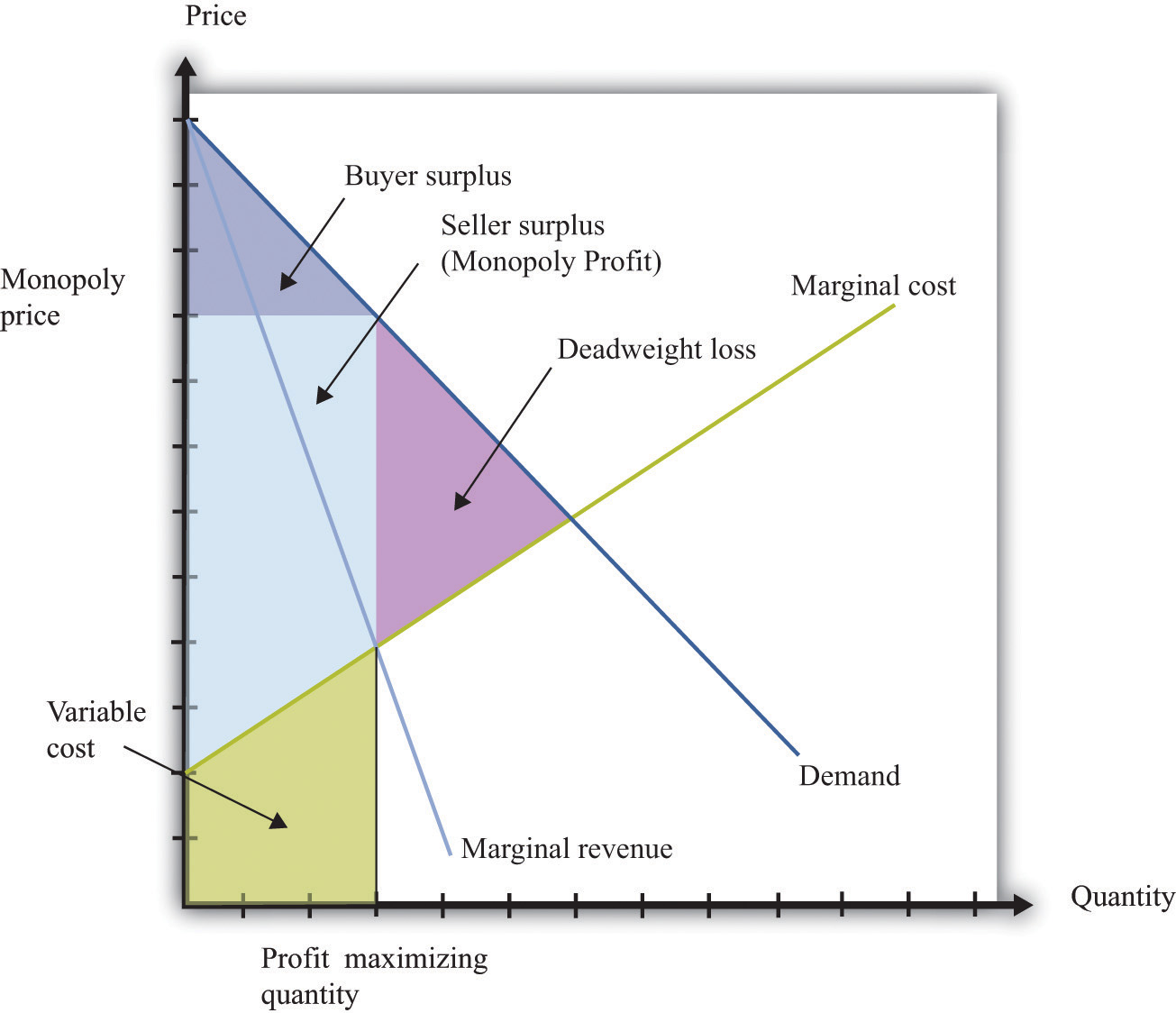
The true cost of a subsidy ($C_{total}$) is not merely the cash outlay. It is a function of the direct fiscal cost, the deadweight loss of market distortion, and the opportunity cost of deferred infrastructure.
$$C_{total} = C_{direct} + DWL + O_{infrastructure}$$
Where:
- $C_{direct}$ is the total budgetary expenditure.
- $DWL$ represents the economic efficiency lost when consumers use more energy than is socially optimal at market prices.
- $O_{infrastructure}$ represents the delayed carbon reduction and efficiency gains due to skewed ROI calculations.
Precise Definitions of Merit-Based Support
A "good" subsidy must be defined by its ability to preserve the marginal price signal while protecting the most vulnerable actors. Two frameworks offer a more logical alternative to broad price suppression:
Targeted Income Transfers
Instead of lowering the price of the commodity, governments provide direct cash transfers to low-income households. This keeps the price of gas or electricity high at the meter, encouraging everyone—including the transfer recipients—to conserve. Because the transfer is decoupled from the volume of energy used, it does not distort the market clearing price.
Block-Rate Pricing (The Tiered Model)
This framework provides a subsidized "baseline" of energy at a low cost, covering essential needs like lighting and refrigeration. Any consumption above this threshold is charged at the full market rate.
The benefits of this model include:
- Guaranteed protection for basic human needs.
- Preservation of the marginal incentive to save.
- A built-in progressive structure where high-volume users pay the true cost of their consumption.
The Bottleneck of Administrative Capacity
A primary reason governments default to "bad" subsidies is a lack of data granularity. Implementing a targeted transfer or block-rate system requires a sophisticated intersection of tax data, utility meter data, and social security records. Many states lack the digital infrastructure to execute this in real-time during a crisis. The result is a fallback to "blunt force" instruments like VAT cuts or universal price caps, which are easier to implement but economically destructive.
Strategic Shift from Consumption to Capacity
To exit the cycle of emergency subsidies, the capital must pivot from subsidizing the burning of molecules to subsidizing the reduction of demand. This requires a shift in the subsidy cost-benefit analysis:
- Efficiency Retrofitting as a Hedge: Funding for insulation acts as a permanent reduction in the state's future liability for energy subsidies. Every kilowatt-hour saved is a kilowatt-hour that never needs to be subsidized in the next crisis.
- Grid Resilience over Price Suppression: Redirecting windfall tax revenue into grid stabilization and storage technology addresses the volatility at its source.
- Correcting the Carbon Price Delta: Subsidies that lower the price of carbon-intensive fuels must be balanced with a rising carbon tax. Failure to do so sends a signal that the state will underwrite fossil fuel costs indefinitely, chilling investment in the green transition.
Logical Constraints and Limitations
It is essential to recognize that even "perfect" subsidies cannot create supply where none exists. If a physical shortage occurs—such as a pipeline cutoff—price is merely the rationing mechanism. If the price is capped and the supply is finite, the result is not affordability; it is physical curtailment (blackouts). No subsidy can override the physical reality of a resource deficit.
The strategic priority for any state facing a long-term energy shift is to move from a "reactive price protection" stance to a "proactive efficiency mandate." This involves the cessation of universal price caps in favor of high-granularity, means-tested support, and the aggressive redirection of fiscal resources toward demand-side technology. The objective is to ensure the market price is felt by the majority of actors, as this is the only force capable of driving the structural behavioral change required to end a supply-side crisis. Governments must accept the political friction of higher prices in the short term to avoid the permanent fiscal erosion of an unconstrained subsidy regime.