There are eighty million Egyptians.
That was the mathematical anchor of the family grievance. The number sat in the air, heavy with expectations, ancestral geography, and the quiet assumption that love would naturally follow the path of least administrative resistance. When Abdul El-Sayed told an elder uncle that his life partner came from a coastal town in Karnataka rather than the banks of the Nile, the reaction was not malicious. It was simply baffled. Eighty million options, and the compass needle swung all the way to South India.
The viral artifact resurfacing across digital feeds captures a specific brand of immigrant family comedy. Two cultures that pride themselves on feeding guests until they burst, placing an ungodly amount of pressure on professional degrees, and holding sacred opinions on spice levels suddenly found themselves negotiating a joint custody arrangement of a young man from Michigan.
Intermarriage is rarely just about two people. It is a collision of living rooms.
Consider what happens when an Egyptian household meets a South Indian family dynamic spanning generations from Bhatkal to Bengaluru. You get a hybrid architecture of identity. On one side, the dramatic cadence of North African warmth; on the other, the steady, rhythmic pulse of South Indian tradition. Over two decades of marriage to Dr. Sarah Jukaku, a practicing psychiatrist whose roots trace back through generations of public service and medicine, the math shifted. El-Sayed would later joke that the sheer duration of his immersion left him more Desi than Arab.
Humor is how we survive the friction of belonging to multiple worlds at once.
When public figures step into history—such as becoming the first Muslim elected to the United States Senate—the spotlight usually flattens them into stiff monuments of achievement. They become press releases. They become talking points on evening broadcasts. But the internet loves a good human glitch, and nothing grounds a political milestone quite like an incredulous uncle questioning life choices over family tea.
The viral clip works because it strips away the podium. It reminds viewers that behind every historic campaign stop and policy platform lies a kitchen table argument about demographics. An Egyptian uncle looking at a map and wondering how a romance crossed continents is a universally recognizable archetype. It is the sound of an older generation realizing the world has quietly outgrown the boundaries they drew on it.
Culture is not preserved in museums. It is negotiated in shared kitchens, through compromised recipes, and in the quiet understanding that patience is required when you blend two massive diasporas under one roof.
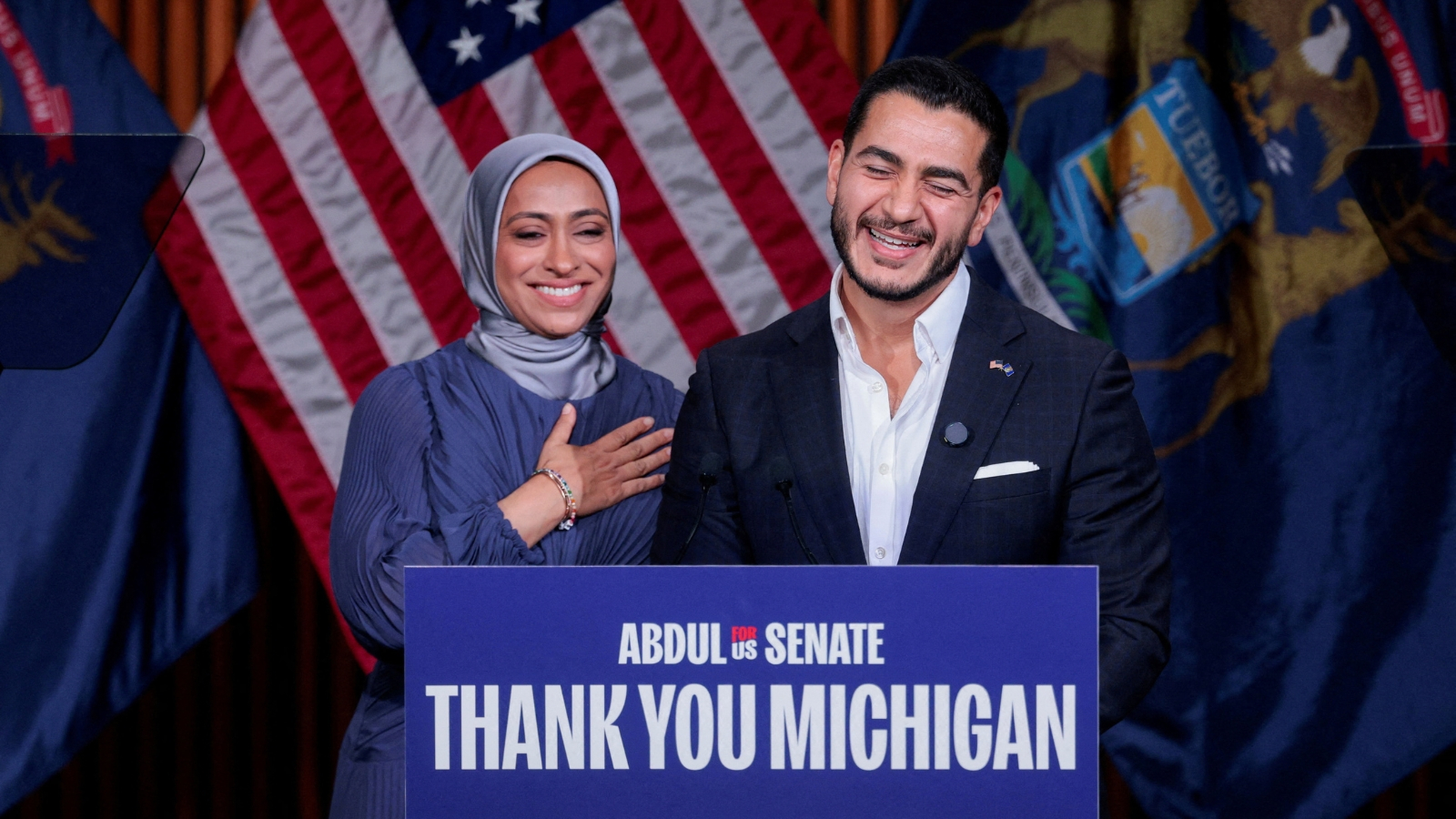
When El-Sayed stood before supporters, his wife by his side, the narrative was bigger than a single election night. It was about the accidental poetry of modern migration. Millions of families leave home, cross oceans, and plant seeds in strange soil, never quite anticipating that their grandchildren or children will wind up rewriting the geography of love entirely.
Eighty million Egyptians is a lot of people. But love cares very little for population statistics. It finds its way across the globe, landing quietly in a university lecture hall in Michigan, leaving bewildered uncles with nothing to do but laugh, shake their heads, and watch the world turn.
Abdul El-Sayed's Indian-Origin Wife And His Karnataka Connection
This video explores the background and viral moments surrounding Abdul El-Sayed's marriage to Dr. Sarah Jukaku and her family roots in Karnataka.