The river should have been enough.
When Shanichara Bote packed what little his family owned into burlap sacks, he was not just moving. He was fleeing a ghost. He crossed the Reu River first, leaving behind the blood-soaked soil of Dropatinagar where, on a cold December afternoon in 2012, a wild bull elephant had crushed his mother and father into the earth. Shanichara then pushed past the dense, official boundaries of Chitwan National Park. Finally, he crossed the wide, rushing waters of the Rapti River, settling in the village of Jagatpur.
Two major rivers. Miles of dense jungle. A decade and a half of silence. He believed the geography of survival would protect his remaining family. He was wrong.
Animals do not operate on human schedules, but they possess maps written in their bones. On a pitch-black midnight this week, the ghost crossed the water.
The Sound in the Mud
A mud-brick home provides shelter from the monsoon rain, but it offers zero protection against three tons of focused muscle.
Shanichara woke to a sound that was less an audible noise and more a vibration in his teeth. A heavy, rhythmic thudding against the rear wall of his small, zinc-roofed house. In the rural fringes of Nepal, you learn to identify threats by how the ground shakes.
Panic took over. He yelled, a raw scream that tore through the sleep of the nine family members packed into the cramped dwelling. There was an instant stampede in the dark.
Shanichara's wife, Mangali, grabbed a handful of dry thatch from the porch, striking a match to create a makeshift torch. It was a desperate gambit. The flame caught quickly, leaping to the dry wood of the shed, casting a violent, flickering amber glow over the courtyard.
In that sudden, terrifying light, the nightmare materialized.
Dhurbe.
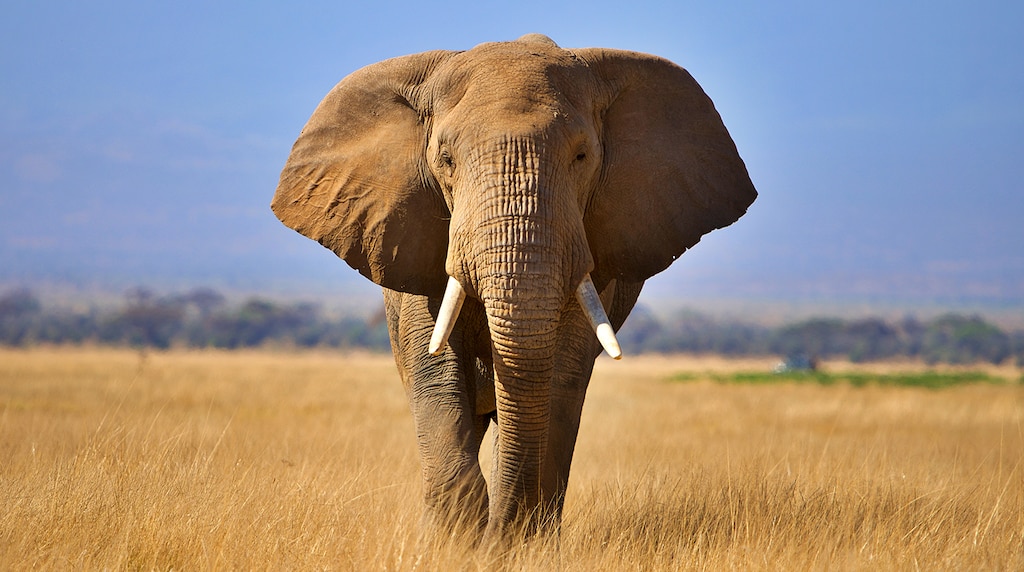
He is not just any wild Asian elephant. He is a living legend of the Terai lowlands, a massive, ancient bull whose name is whispered with a mixture of reverence and absolute terror. His tusks have been cut by rangers in past years, his neck wrapped in heavy satellite collars that frequently fail, his body carrying the hidden, scarred lead of military bullets he survived over a decade ago.
He was standing in the ruins of the back wall.
The mud structure had given way like wet cardboard under his weight. Through the dust, Shanichara’s twenty-five-year-old daughter-in-law, Ashika, emerged into the open air, her arms wrapped tightly around her four-year-old son, Bharat. She was running for her life.
She never made it to the safety of the fire. Dhurbe intercepted them in the dark.
The attack was over in seconds. By the time Mangali’s roaring thatch fire finally deterred the giant, forcing him to turn and melt back into the shadows of the nearby Sukhibhar forest, the damage was absolute. The house was burning down, but the fire didn't matter. On the ground lay the quiet, broken forms of the mother and her little boy.
The Fourteen-Year Circle
The next afternoon, Shanichara sat on a plastic chair inside the District Police Office in Chitwan. His clothes smelled of smoke. His eyes were wide, vacant, staring at the concrete floor while officers filled out the bureaucratic paperwork required to release the bodies from the hospital morgue.
"We believed moving across the major rivers would keep us safe," he muttered, his voice barely a rasp. "But after all these years, the exact same elephant found us again. There is nowhere left for us to run."
The tragedy feels like an impossibility, a statistical anomaly so cruel it borders on the mythic. How does a single animal find the exact same family fourteen years later, miles away from the original crime scene?
To understand, you have to look past the sensationalized headlines of a "stalking" beast and look at the collapsing geometry of the modern world.
Dhurbe is linked to at least twenty-five human deaths since 2010. He is an apex force navigating a landscape that is shrinking by the hour. Decades ago, the grasslands of Chitwan covered a fifth of the park, offering a bounty of food for migrating herds. Today, that habitat has been cut in half. Encroachment, roads, and agricultural fields have carved the ancient elephant migration routes into a chaotic jigsaw puzzle of human settlements.
When an elephant like Dhurbe moves through his territory, he isn't reading a map of political borders or village names. He is following the ancient, cyclical paths of his ancestors, arriving like clockwork during the autumn and winter harvest seasons to raid crops. The Bote family had moved to escape the elephant, but they had inadvertently built their new home directly along another edge of his shrinking world.
Consider what happens next when a creature that requires hundreds of pounds of forage a day finds a wall where a forest used to be. The result is a quiet, ongoing war.
The Failure of the Wire
Following the midnight attack, enraged local residents did what people do when the system fails them: they marched to the Rapti bridge, blocking traffic, their voices echoing across the water. They blamed the park. They blamed the high-tech satellite collars that were supposed to transmit data to central computers to warn villages of an approaching tusker. They blamed the electric fences that sat dead and useless in the brush.
The authorities are caught in a legal and ethical gridlock. In 2012, after Dhurbe killed Shanichara’s parents, the government deployed ninety-three soldiers and park rangers with orders to shoot to kill. They fired on him, wounding him severely, but the bull escaped into the deep brush, vanished for five years, and returned wiser, more volatile, and entirely distrustful of human contact.
Now, conservation laws and international treaties protect the endangered Asian elephant, forbidding easy culling. Rangers try mitigation instead. They dart him with tranquilizers, fit new tracking collars, and administer musth-suppressing drugs to lower his testosterone.
But technology cannot fix a lack of space.
A satellite collar can tell a technician where an elephant is, but it cannot stop a three-ton animal from pushing over a house when he is hungry or agitated. The electric fences are easily bypassed by intelligent bulls who learn to drop logs over the wires to short out the current.
By Sunday evening, the smoke had finally stopped rising from the blackened remains of Shanichara's homestead in Jagatpur. The family’s few belongings were ashes. The neighbors had cleared the road, the protests dissolving into the heavy, humid air of the Terai.
Dhurbe was already gone, deep within the Sukhibhar forest, tracking the scent of the trees, entirely unaware of the names of the people he left behind, yet bound to them forever by a circle of earth that is simply getting too small for both of them.