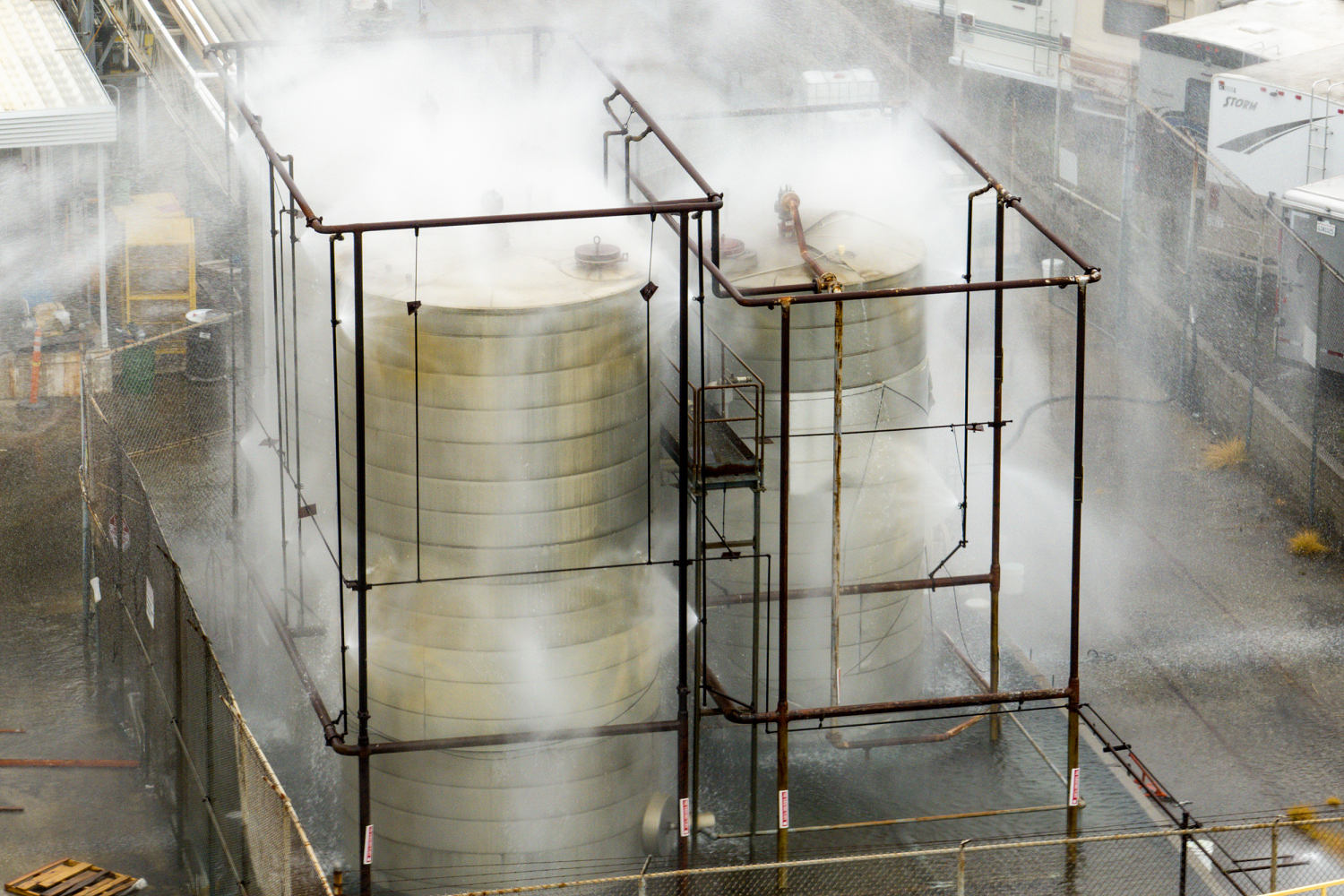
A massive chemical tank is bulging. It is overheating. A catastrophic explosion threatens a whole community. This was the nightmare facing emergency crews in Perris, California, when a commercial tank car holding 138,000 pounds of styrene gas began to fail.
Evacuation orders went up fast. Roads closed, including a major interstate. Everyone braced for a blast. Then, something unexpected happened. A crack appeared on the tank.
In most hazmat scenarios, a structural breach means disaster. Here, it might just be the thing that saves the town.
When you look at how industrial chemical accidents happen, the enemy is almost always pressure. Let's break down what is actually happening inside that California chemical tank, why emergency workers are breathing a very cautious sigh of relief, and what this means for industrial safety protocols moving forward.
The Chemistry of a Runaway Reaction
To understand why a crack is good news, you have to understand styrene. It is a sweet-smelling, oily liquid used to make plastics, rubber, and fiberglass. It does not just sit there. It requires constant temperature control.
If styrene gets too hot, it starts to polymerize. That is a fancy way of saying the molecules start linking up into chains. This process generates its own heat.
That heat speeds up the reaction, which generates even more heat. Experts call this a runaway thermal reaction.
The temperature inside the Perris tank skyrocketed to over 300 degrees Fahrenheit. Normal is around 60 degrees. When a liquid boils and expands inside a sealed steel container, it turns into a bomb.
The steel shell expands. It bulges. Eventually, the metal reaches its limit and rips apart violently. That is a Boiling Liquid Expanding Vapor Explosion, or BLEVE. It flattens buildings.
Why a Crack Changes the Equation
Firefighters and hazmat experts can't just walk up to a 300-degree tank of volatile chemicals and patch it. They can't easily vent it either if the valves are compromised or dangerous to reach. They had to use drones with thermal imaging to watch the tank from a safe distance.
Then the drones spotted the crack.
Instead of a catastrophic failure, the tank developed a localized breach. Think of it like a pressure cooker. If you plug the safety valve on a pressure cooker, the whole pot eventually explodes and destroys your kitchen. But if the seal fails slightly and lets a little steam hiss out, the pressure stops building.
That crack acts as an impromptu safety valve.
By letting gases escape, the internal pressure drops. The risk of a massive, shards-of-metal-flying-everywhere explosion goes down significantly. It buys the ground crews something they desperately need. Time.
The Messy Reality of Hazmat Mitigation
Don't mistake a drop in pressure for a total resolution. The danger just shifted shapes. Now, crews aren't just fighting a potential explosion; they're managing a toxic plume.
Escaping styrene gas is bad news for human lungs. Long-term exposure wrecks the nervous system. Short-term exposure causes headaches, nausea, and respiratory irritation.
This is why officials keep evacuation zones in place even after the immediate blast threat decreases. They have to wait for the chemical to cool down and the reaction to burn itself out. You can't just pour water on a styrene fire or dump cooling agents inside a compromised hull without risking another volatile reaction.
The strategy here relies on steady monitoring. Teams use water canyons from a distance to cool the outer shell of the tank. They watch the thermal cameras. They wait for the temperature curve to flatten and head downward.
What Industrial Facilities Get Wrong About Storage
This incident highlights a major vulnerability in chemical logistics. Storage tanks and railcars are built to tough standards, but they rely heavily on passive safety systems and strict human oversight.
When a stabilizing agent fails or a cooling system goes offline, the clock starts ticking. The biggest mistake companies make is assuming they have days to fix a temperature spike. In a runaway polymerization reaction, you have hours, sometimes minutes, before the curve becomes exponential.
If you manage any facility handling volatile monomers, you need redundant, automated cooling systems that don't rely on main grid power. You need real-time, remote telemetry on every single tank, not just manual checks during a shift walk-through.
Once the temperature crosses the critical threshold, your options disappear. You are left hoping for a lucky structural crack instead of a devastating blast.
Steps for Community and Facility Safety
If you live near an industrial corridor or manage a site with similar chemical profiles, waiting for emergency alerts isn't a plan. Take these concrete steps immediately.
First, map your local risks. Every facility storing hazardous materials above certain quantities must file a Risk Management Plan (RMP) with the EPA. These documents are public. Find out what is sitting in the industrial park two miles away. Know the specific evacuation routes for your zone.
Second, establish automated perimeter monitoring. For facility managers, relying on internal tank sensors isn't enough. Air monitoring arrays should sit at your property line to catch leaks before the community smells them.
Third, run joint drills with local fire departments. Standard municipal firefighters aren't equipped for complex chemical runaway reactions. They need your facility data, your blueprints, and your technical expertise long before the sirens start wailing.
The situation in California shows that luck plays too big a role in hazmat response. A failing tank shouldn't rely on a well-placed crack to avoid a disaster. Better engineering, faster cooling interventions, and absolute transparency about chemical stability are the only ways to keep these tanks from turning into community threats.