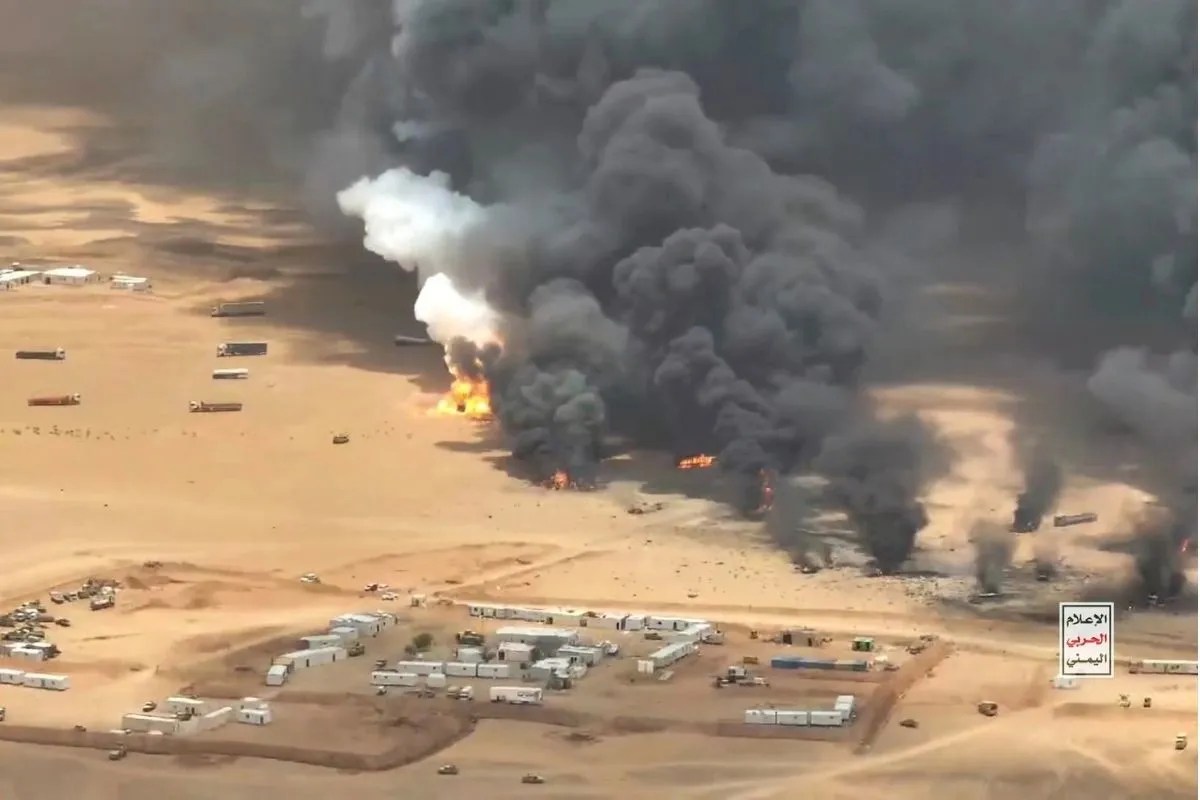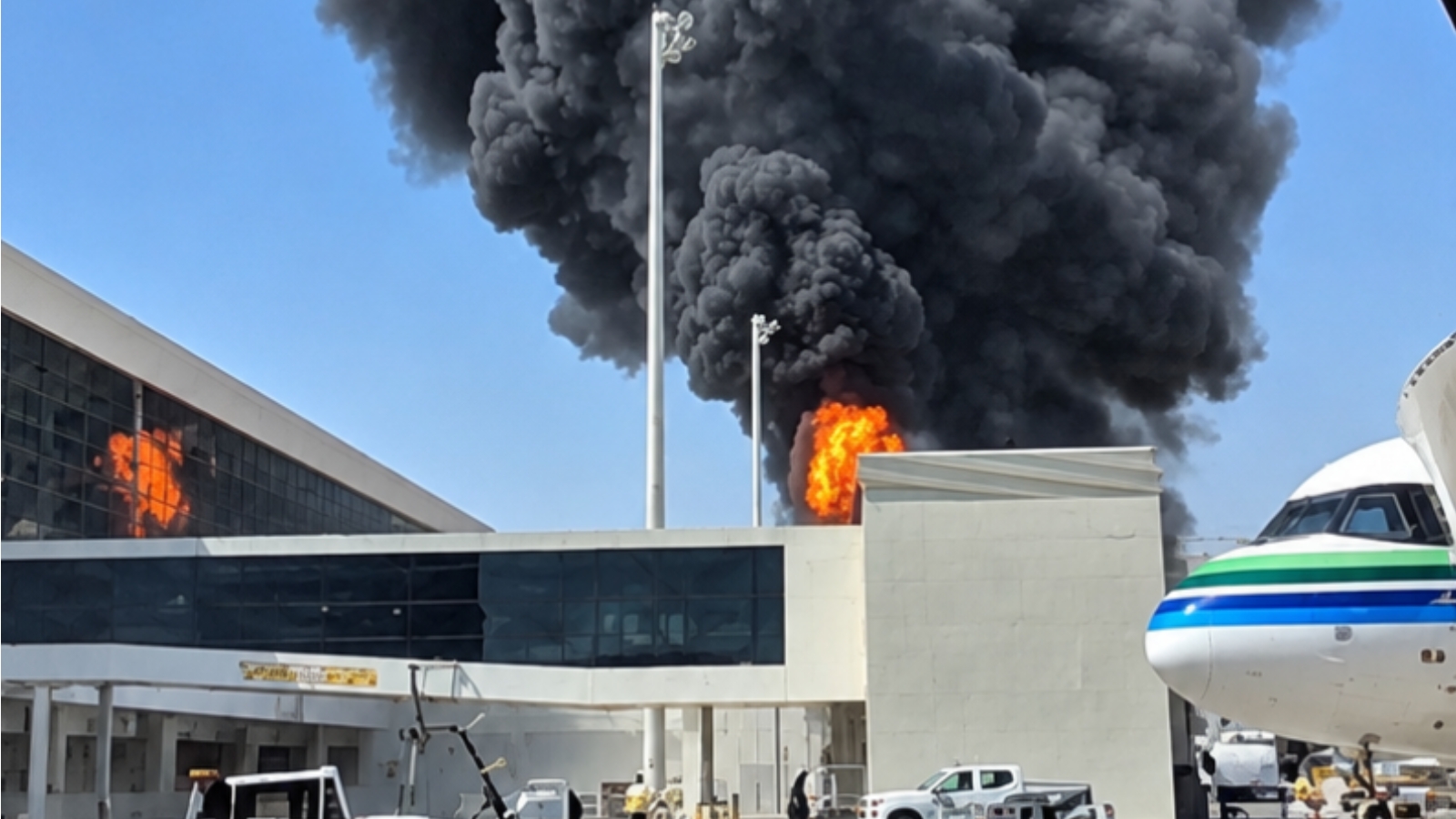
The headlines rolled in with uniform panic. A blast shakes King Khalid International Airport in Riyadh, smoke billows across the tarmac, evacuations trigger instant gridlock, and western embassies drop immediate travel warnings. The standard media narrative treats this as another predictable chapter in regional security theater, advising everyone to shelter in place, cancel itineraries, and wait for the all-clear from risk-averse bureaucrats thousands of miles away.
That advice is garbage.
If you treat a modern geopolitical kinetic event through the lens of a standard panic cycle, you are surrendering your operational agency to people whose only professional incentive is liability avoidance, not objective reality. I have watched corporations burn millions of dollars on knee-jerk evacuations and asset freezes based on automated embassy advisories that conflate localized friction with systemic structural collapse.
It is time to strip away the lazy consensus of modern risk management and look at why standard travel warnings are mathematically and strategically flawed.
The Flawed Physics of Modern Threat Inflation
Let us define terms clearly. When an advisory warns of a shutdown, corporate mobility managers instantly lock down regional staff, cancel conferences, and reroute operations through inferior hubs. They assume a binary state: an airport is either a safe paradise or a smoking crater.
This is a childish framework.
Airports like Riyadh are hyper-resilient critical nodes. They are engineered with massive redundancy, segmented logistics corridors, and localized containment capabilities. A localized projectile intercept or tarmac incident does not vaporize the entire aviation infrastructure of the Arabian Peninsula, yet automated western alerts trigger a cascade of institutional cowardice.
Imagine a scenario where a corporate logistics director looks past the flashing red banner on cable news and analyzes actual flight tracking metrics. They would see that while primary passenger terminals experience temporary holding patterns or diversion protocols, cargo arteries, secondary regional strips like Prince Naif bin Abdulaziz International Airport, and overland transit routes remain fully functional.
The mainstream narrative relies on emotional availability heuristics. Because an explosion sounds terrifying, planners panic. They confuse noise with total systemic failure.
The Cost of Over-Compliance
Knee-jerk travel warnings create an invisible tax on operational competence. When an organization pulls its people out of Riyadh every time a Houthi missile gets swatted down by air defense batteries, three things happen instantly:
- Institutional knowledge on the ground evaporates.
- Local partnerships built over years of high-value dealmaking atrophy.
- Competitors who understand actual variance management sweep in to take the meetings you abandoned.
Risk management has mutated into a compliance shield. Embassy desk officers issue blanket warnings to protect their own careers. If they tell you to stay and something happens, they are fired. If they tell you to flee and nothing happens, nobody cares. You pay the financial and operational penalty for their asymmetry of incentives.
This is why top-tier operators ignore broad-brush directives. They run proprietary risk matrices based on proximity gradients, intelligence feeds from private security contractors who actually have boots on the tarmac, and direct telemetry from port authorities.
Rebuilding the Operational Playbook
Stop asking whether a city is safe. That question is useless. Instead, ask three precise operational questions:
- What is the exact spatial radius of the disruption relative to critical transport vectors?
- What are the active land-bridge and secondary air alternatives that bypass primary bottlenecks?
- What is the duration of the institutional panic versus the physical repair window?
During recent disruptions at King Khalid International, the physical cleanup and air traffic realignment happened in a fraction of the time it took foreign ministries to draft their boilerplate caution notices. While executives were clearing their calendars for a week, local supply chains adapted within hours.
The contrarian truth is that modern security alerts are lagging indicators designed for tourists, not strategic business operators. If you run your enterprise by reacting to public state department advisories, you are always fighting the last battle while your competitors master the current one.
Next time the sky lights up and the panic industry starts screaming, do not pack your bags. Open your logistics map, verify the telemetry, and keep moving.