The air inside a United Nations climate summit always smells faintly of recycled coffee, wet wool, and jet lag. You stand in the corridors, watching thousands of diplomats, engineers, and activists rush past with lanyards slapping against their chests, and you start to feel the quiet hum of a machine that is simultaneously massive and fragile. Every November, the world gathers to negotiate the terms of its own survival. And every November, the real story is not what happens at the podiums, but what happens in the spaces left behind.
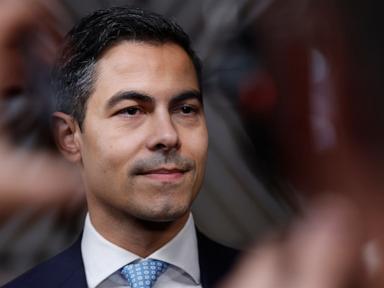
At COP31 in November 2026, that space had a name. Former U.S. Special Presidential Envoy for Climate John Kerry stood before reporters and delivered a blunt assessment of the second Trump administration's decision to dismantle federal climate initiatives and withdraw once again from international climate commitments. According to Kerry, Donald Trump was making himself the "biggest loser" by scrapping American climate action.
That phrase—biggest loser—echoed through the press rooms and across news feeds within minutes. On the surface, it sounds like standard political sparring, the kind of sharp soundbite designed for evening broadcasts and social media algorithms. Yet beneath the rhetoric lies a far more complicated, deeply human question about power, economics, and who actually pays the price when a superpower walks away from the table.
To understand what Kerry was pointing toward, and why defenders of the administration's energy policy see the exact opposite outcome, you have to step outside the conference halls. You have to look at the people standing on the fault lines of the global energy transition.
The Factory Floor and the Shifting Current
Consider a hypothetical scenario that plays out every week across the industrial Midwest. Picture a forty-two-year-old tool-and-die maker named Marcus in Ohio. For twenty years, Marcus machined parts for internal combustion engines—pistons, camshafts, components forged in heat and oil. Three years ago, his plant began retooling for electric vehicle battery housings, backed by federal tax credits from the 2022 Inflation Reduction Act. He learned new tolerances. He watched younger apprentices arrive on the floor, excited about building something that felt tied to the future rather than the past.
Then the policy winds shifted. Following the 2024 election and the return of Donald Trump to the White House in January 2025, the administration moved swiftly to freeze green energy subsidies, roll back tailpipe emissions standards, and prioritize domestic oil and gas extraction under the banner of "energy dominance." For Marcus, the politics of Washington are not abstract debates over parts per million of atmospheric carbon dioxide. They are the sudden pause on a new assembly line. They are the quiet conversations in the breakroom about whether the factory's next big contract is going to a competitor in South Korea or Germany instead.
This is the core of John Kerry's argument at COP31. When Kerry called Trump the "biggest loser," he was not merely making a moral plea about melting ice caps or rising seas. He was making a cold, hard economic calculation. In Kerry's view, the global transition to clean energy is no longer a theoretical policy goal; it is an unstoppable market wave driven by physics, falling renewable costs, and the industrial strategies of Europe and Asia. By pulling the United States out of the Paris Agreement for a second time and gutting domestic clean-tech incentives, Kerry argued, Washington is not stopping the energy transition. It is simply forfeiting the race.
Think of the global energy market like a massive river changing its course after a heavy storm. You can build a dam out of executive orders and deregulation to keep the water flowing down the old channel, and for a while, the old mills will keep turning. Meanwhile, the rest of the world is already digging the new riverbed, laying down ports, factories, and trade routes along the path where the water is naturally headed. When the temporary dam eventually gives way to market forces, the nation that refused to adapt finds itself stranded on dry land while others control the current.
Two Competing Visions of Prosperity
Yet if you stop the story there, you miss why millions of voters and a powerful coalition of policymakers cheered the administration's pivot. Fairness requires stepping into the other room—the one where energy executives, rural lawmakers, and working families view the climate agenda not as a lifeboat, but as an anchor.
Supporters of President Trump's energy strategy argue that rapid, government-mandated decarbonization imposes immediate, punishing costs on the American economy while rival nations continue to burn coal at record levels. From their perspective, subsidizing electric vehicles and wind farms distorts free markets, strains the electrical grid, and drives up costs for manufacturers and consumers alike. Why, they ask, should American families pay higher utility bills or accept restrictions on gas-powered cars when China remains the world's largest emitter of greenhouse gases, building dozens of new coal-fired power plants even as it dominates solar panel manufacturing?
Administration officials have consistently framed their withdrawal from international climate pacts as a defense of national sovereignty and economic common sense. By unleashing domestic oil, natural gas, and nuclear production, they contend, the United States lowers energy prices at home, strengthens national security, and insulates American workers from global treaties that place heavier burdens on Western economies than on developing giants. In their telling, the real "losers" are nations that hobble their own reliable energy grids in pursuit of ideological targets.
I have spent years reporting on energy and environmental policy, sitting in cramped town halls from the Gulf Coast of Louisiana to the wind-swept plains of West Texas, and I will admit something that partisans on both sides rarely confess: both arguments carry a kernel of unsettling truth. The transition away from fossil fuels is messy, expensive, and disruptive in the short term. Grids do struggle when intermittent power sources scale faster than transmission lines. At the same time, pretending that fossil fuels can remain the unchallenged foundation of global commerce in the mid-twenty-first century ignores the massive capital flows already reshaping every major economy on Earth.
The Invisible Stakes in the Corridor
What happens, though, when the United States steps back from global climate diplomacy? At COP31, the absence of a high-level federal push from Washington altered the gravity of the entire conference.
Diplomacy relies on leverage and trust. For decades, international climate negotiations have functioned on a delicate bargain: wealthy nations that grew rich burning fossil fuels agreed to cut their emissions rapidly and provide financial support to poorer nations, which in turn agreed to bypass dirty development pathways and build clean grids from the start. That bargain has always been frayed, frequently delayed, and chronically underfunded.
When the world's largest historical emitter and largest economy announces it is no longer participating in that bargain, the psychological impact ripples outward instantly. Negotiators from small island states, sub-Saharan Africa, and South Asia—places where extreme heat and coastal flooding are already erasing decades of economic progress—suddenly find themselves asking why they should make painful concessions if Washington refuses to show up.
Consider a second hypothetical character to see how this diplomatic vacuum translates into lived reality. Imagine Priya, a municipal water engineer in a coastal city in India. Her city is expanding by hundreds of thousands of people every year, and every summer the monsoon arrives either too late or with violent, infrastructure-destroying intensity. Priya needs billions of dollars in blended international finance—money backed by institutions like the World Bank, where American influence is decisive—to build resilient stormwater systems and transition her city's bus fleet to electric power.
When the United States retreats from climate finance pledges, the capital pool shrinks. Borrowing costs rise for cities like Priya's. Projects stall. And when clean infrastructure becomes too expensive to finance, developing nations fall back on what is cheap, proven, and immediately available: coal and diesel.
This is the paradox at the heart of Kerry's warning. Scrapping climate action does not isolate a country from the consequences of a warming planet, nor does it preserve the status quo. Instead, it slows down global cooperation at the exact moment when speed matters most, while ceding the lucrative supply chains of the clean economy to competitors who are happy to fill the void.
Who Claims the Future
While diplomats debated at COP31, business leaders were quietly making their own decisions—and those decisions reveal just how complicated the picture has become.
In the years following the passage of the 2022 climate law, private companies announced hundreds of billions of dollars in manufacturing investments across the United States, disproportionately in Republican-led states. Battery plants in Georgia, solar factories in Ohio, clean hydrogen hubs along the Gulf Coast—these projects created tangible jobs and local tax revenue. Many corporate executives did not invest because of speeches at UN summits; they invested because the math worked, and because global customers—from European automakers to tech giants building power-hungry AI data centers—demanded low-carbon supply chains.
Now, those executives find themselves navigating a fractured landscape. Federal support has retreated, creating uncertainty for early-stage technologies like green hydrogen and offshore wind. Yet state-level policies in places like California and New York, combined with strict carbon border tariffs in the European Union, mean that any American company hoping to sell products globally still has to play by decarbonization rules.
Meanwhile, China has wasted no time pressing its advantage. By late 2026, Chinese manufacturers controlled the overwhelming majority of global supply chains for solar wafers, lithium-ion batteries, and critical mineral processing. When Kerry told reporters that Trump was making himself the "biggest loser," he was pointing directly at Beijing. Every cancelled American research grant, every stalled grid upgrade, and every abandoned diplomatic partnership hands China a cleaner path to dominate the defining industries of the coming decades—much as American oil and automotive companies dominated the twentieth century.
The Weight of a Long Horizon
It is easy to feel cynical watching politicians trade insults across oceans while atmospheric carbon levels continue to climb. The numbers themselves can feel numbing: gigatons of emissions, trillions of dollars in projected damages, fractions of a degree that separate manageable adaptation from systemic disruption. When problems grow that large, human beings instinctively look away, retreating into tribal loyalties or short-term comfort.
Yet history rarely judges nations by the slogans that won a single election cycle. It judges them by whether they recognized structural shifts while they still had the time and capital to shape them.
In 1900, a traveler walking down Fifth Avenue in New York City would have seen thousands of horse-drawn carriages and a single, noisy automobile. Within thirteen years, the carriages were virtually gone, replaced by an industrial revolution that reshaped cities, geopolitics, and daily life. Those who bet on horses were not foolish; they were betting on everything they knew, everything that felt reliable and familiar. They simply misread the direction of the current.
At COP31, the delegates eventually packed their briefcases, boarded their flights, and returned to capitals grappling with inflation, security crises, and political division. Back in Ohio, Marcus still clocks in at six in the morning, waiting to see which blueprints land on his workbench next quarter. Across the ocean in India, Priya still checks the rainfall gauges before dawn, calculating how much water her city's aging pipes can hold before they break.
The podiums are empty now, the soundbites fading into the archive of another year's news cycle, leaving only the quiet, relentless arithmetic of physics and markets to decide who actually won.