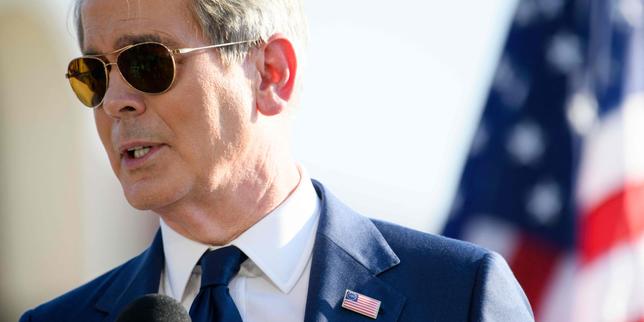
The coffee in the porcelain cup had gone cold hours ago, forming a thin, oily skin across the surface that reflected the harsh, recessed lighting of the conference center. Around the mahogany expanse, representatives of the world’s wealthiest democracies shifted in their ergonomic chairs, checking their watches with a studied casualness that fooled no one. They were the architects of the global financial order, gathered to mend a fractured international economy, yet their collective gaze kept drifting toward a single, occupied seat.
Anton Silouanov was there.
He did not belong. At least, not according to the moral geometry that had governed Western foreign policy since the tanks rolled across the border toward Kyiv. And yet, there the Russian finance minister sat, his expression entirely neutral, a physical manifestation of a stubborn geopolitical reality. The United States had made its choice. Washington had decided that breaking the room was worse than sharing it.
To understand the profound awkwardness vibrating through that high-level summit, you have to look past the official communiqués and the dry press briefings. You have to imagine what it feels like to sit across from a man whose government is actively dismantling the architecture of European security, while your own finance ministers are forced to negotiate the baseline survival of global supply chains. It is the diplomatic equivalent of sharing a lifeboat with an arsonist who is still holding the matches.
The Western allies squirmed. Some murmured about a boycott. Others suggested walking out en masse the moment Moscow took the microphone. But Washington held the line, arguing behind closed doors that abandoning the room entirely would only cede the floor to others, to the neutral observers in the Global South who watch these Western rituals with a mixture of skepticism and fatigue.
Let us be clear about what was happening in that room. This was not a failure of nerve. It was a cold, unsentimental calculation born of institutional muscle memory. The global financial system is an ancient, creaking vessel held together by rusted bolts and international treaties that presume a baseline of shared rules. Pull out a primary pillar—even a rogue one—and the whole deck risks sliding into the dark.
I remember standing outside a similar summit years ago, watching the motorcades slice through heavy rain, and realizing how fragile these global summits actually are. They look monolithic on television, temples of absolute power draped in flags and security cordons. Up close, they are fragile ecosystems of ego, fear, and mutual dependency. The ministers inside are terrified of two things happening simultaneously: looking weak in front of their domestic electorates, and causing a financial panic that could erase trillions of dollars of wealth before the evening news cycle ends.
So, the United States swallowed its pride. It assumed the awkward burden of its own superpower status, weathering the quiet fury of its European partners who felt profoundly betrayed by the compromise.
Consider the mechanics of global governance. It operates much like an old apartment building where all the tenants despise one another, yet they share a single, fragile plumbing system. You can scream at your neighbor in the hallway, you can refuse to look them in the eye by the mailboxes, but if you shut off their water entirely, your own pipes will eventually burst from the pressure.
Silouanov’s presence at the G20 table was that shared pipe. The Russian economy, despite crushing sanctions and financial isolation, remains too interconnected with the foundational commodities of the planet—wheat, oil, fertilizer—to simply be wished away into the ether. When Washington insisted on his inclusion, it was an acknowledgment of a bitter truth. Diplomacy is rarely about sitting down with people you love. It is about the agonizing necessity of negotiating with people you despise, simply because the alternative is burning the house down around your own ears.
The discomfort in the room was palpable. When the Russian delegate spoke, notes were shuffled with sudden, intense concentration. Coffee cups were lifted with exaggerated care. Eyes were fixed on legal pads. It was a masterclass in performative detachment, a room full of powerful people pretending that the elephant in the corner was merely a coat rack.
Yet, beneath the diplomatic theater lay a deeper, more unsettling question. If the institutions built to police international norms are forced to sit at the same table with those who shatter them, what are those institutions actually worth? Are they pillars of justice, or are they merely expensive waiting rooms for the next crisis?
The meeting eventually adjourned. The press statements were issued, polished to a dull, bloodless sheen that masked the friction beneath. The motorcades rolled out into the night, cutting through the damp air toward private jets and waiting security details.
The room emptied. The cold coffee was cleared away by attendants in quiet uniforms. But the stain remained, etched into the grain of the wood, a silent reminder that the world is no longer neatly divided between friends and enemies. It is a messy, tangled web where the greatest powers on earth are forced to shake hands with the ghosts they are trying to starve out, enduring the chill of a shared room because the storm outside is far too dangerous to face alone.

:max_bytes(150000):strip_icc()/line-app-logo-ccdacd0f7c344b3d9d4847edcb90733d.jpg)
