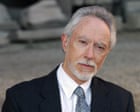
The invitation arrived as they always do: gold-embossed, heavy with the weight of cultural prestige, promising a week of intellectual sparring and fine wine in the City of Gold. For any other writer, the Jerusalem International Writers’ Festival is a crowning moment. It is a place where the air is thick with history and the limestone glows pink at sunset. But when the letter reached J.M. Coetzee, the Nobel laureate didn’t see a podium. He saw a boundary line.
Coetzee is a man who knows the architecture of silence. He grew up in the shadow of South African apartheid, a system designed to make some people invisible and others invincible. He has spent a lifetime writing about the friction between the state and the soul. When he looked at the itinerary for the festival, he didn’t see a celebration of literature. He saw a screen being pulled over a catastrophe.
The Weight of a Name
A signature is a small thing. A few loops of ink. But for a writer of Coetzee’s stature, that signature is a moral currency. By refusing to attend, he wasn't just skipping a flight; he was devaluing the political capital of the event itself.
He didn't mince words. He spoke of a "genocidal campaign" in Gaza. He spoke of the erasure of a people. For a man famous for his clinical, almost surgical precision with language, these words were chosen not for shock value, but for their literal accuracy in his eyes.
Imagine a young writer in Gaza today. Let’s call him Rami. Rami doesn't have a gold-embossed invitation. He has a notebook with singed edges and a pen that is running dry. He is writing in a tent or the ruins of a kitchen. To Rami, a grand international festival held just miles away—while the sky above him rains fire—isn't a bridge to culture. It’s a wall. When Coetzee stays home, he is effectively telling Rami: I see you.
The Myth of the Neutral Stage
There is a common argument that art should transcend politics. Critics say that boycotts stifle dialogue, that the festival is a place for "peaceful exchange."
It sounds noble. It feels sophisticated.
But dialogue requires a level playing ground, and the ground in Jerusalem is tilted. When a state uses a cultural festival to project an image of normalcy while simultaneously conducting a military campaign that has drawn the scrutiny of the International Court of Justice, the festival stops being a neutral stage. It becomes a prop.
Coetzee understands the mechanics of "soft power." He knows that a photograph of a Nobel Prize winner smiling in a Jerusalem courtyard does more for a government's PR than a thousand press releases. By removing himself from the frame, he breaks the illusion. He forces the viewer to look at the empty space where he should have been standing.
Why the Silence Screams
The statistics are numbing. Tens of thousands dead. Millions displaced. Universities in Gaza reduced to rubble. Libraries burned. When the physical infrastructure of culture is systematically dismantled, the "writers' festival" becomes a bitter irony.
Think about the "scholasticide"—the destruction of the very institutions that produce writers, thinkers, and poets. If the teachers are gone and the schools are dust, who is left to write the next chapter?
Coetzee’s refusal is a recognition of this asymmetry. He isn't just protesting a war; he is protesting the idea that we can talk about "the beauty of prose" while the people who would read it are being buried. He is an old man now, living in Australia, far from the heat of the Middle East. He could have taken the easy path. He could have gone, given a cryptic speech about "humanity," and flown home with his reputation intact.
He chose the harder path: the path of the ghost.
The Ghost at the Feast
The festival will go on. There will be other writers. There will be applause. But Coetzee’s absence will be the most talked-about "appearance" of the week.
This is the power of the boycott. It doesn't need to stop the music to be effective; it just needs to change the key. Every attendee, every journalist, and every spectator will have to ask themselves why the seat is empty. They will have to reckon with the word "genocide"—a word that carries the heaviest possible weight in the Hebrew language and Jewish history—now being used by a man who witnessed the birth and death of apartheid.
The invisible stakes are not about a single festival. They are about the role of the intellectual in a time of atrocity. Do you lend your luster to the status quo? Or do you use your platform to point toward the dark?
Coetzee has spent his career writing about "the barbarian." In his most famous novel, the barbarians never actually arrive; they are a phantom used by the state to justify its own cruelty. In the real world, the roles have shifted. The man once invited as the guest of honor has decided that, in this specific story, he would rather be the outsider.
The limestone in Jerusalem will still glow pink at sunset. The wine will still be poured. But for those with ears to hear, the loudest sound in the city will be the silence of a man who refused to look away.