Walk down Cambie Street on a Tuesday morning in late autumn, when the rain turns the asphalt into a dark mirror and the mist hangs low enough to snag on the tops of the cedar trees. Look past the coffee shops and the bus shelters. You will see them.
Fenced-off squares of mud. Weeds pushing through cracked concrete where a dry cleaner or a corner grocery used to stand. Metal signs, sun-bleached and zip-tied to chain-link fences, promising luxury condominiums that were supposed to break ground two years ago.
Silence.
For a city obsessed with the noise of real estate, the quiet at these construction sites is deafening.
If you live in British Columbia, you know the villain of our housing story by heart. We have spent the better part of a decade pointing our collective finger across the Pacific. We blamed the offshore millionaire parking cash in a Point Grey mansion. We blamed the numbered companies, the shadowy capital, the foreign buyer who drove up prices while nurses, teachers, and baristas were pushed out toward Chilliwack or out of the province entirely.
So, in January 2023, Ottawa gave us what we demanded. They slammed the door shut. The Prohibition on the Purchase of Residential Property by Non-Canadians Act—the foreign buyer ban—went into effect, later extended through 2027. Combined with British Columbia’s own 20 percent foreign buyer tax and speculation levies, the message to the outside world was unmistakable. Keep your money. We will fix this ourselves.
We waited for the crash. We waited for the two-bedroom condos in Burnaby to suddenly become affordable on a single income.
Instead, we got the mud lots on Cambie Street.
The Ghost in the Blueprint
To understand why locking the front door accidentally trapped us inside a burning house, we have to look past the political slogans and examine how a building actually gets built.
Consider a hypothetical developer—let’s call him Marcus. Marcus isn't a villain twirling a mustache in a glass tower; he is a mid-sized builder in Metro Vancouver trying to put up a 120-unit mid-rise near a SkyTrain station.
In theory, everyone wants Marcus to succeed. The city needs the 120 homes. Construction workers need the paychecks. Renters need the supply.
To get a shovel in the ground, Marcus does not simply reach into his own pocket. Real estate development runs on bank financing, and Canadian banks are notoriously conservative. Before a major lender will release a single dollar of construction financing to pour concrete, they demand proof that the project won't fail. They require pre-sales. Usually, a developer must sell 60 to 70 percent of the units on paper—off a floor plan in a temporary presentation center—before the bank will fund the actual construction.
This is where the math breaks down.
In 2026, building anything in British Columbia is brutally expensive. Municipal development cost charges have skyrocketed. Materials cost more. Labor is scarce and pricey. Interest rates, even as they ease off their peaks, have permanently altered the cost of borrowing. By the time Marcus pays for the land, the permits, the concrete, and the electricians, he cannot sell those 120 units for $500,000 apiece without going bankrupt. The floor price just to break even might sit closer to $850,000 or $1 million.
Now look at who is walking through the door of Marcus’s presentation center.
Local first-time buyers—the young couple renting a basement suite in East Vancouver—cannot qualify for an $850,000 mortgage, nor do they have $170,000 sitting in a checking account to tie up as a deposit for three years while they wait for the building to finish. Local investors, battered by high borrowing costs, strict short-term rental bans, and provincial taxes, have largely retreated to the sidelines.
So the presentation center sits empty. Pre-sales stall at 25 percent. The bank refuses to release the construction loan. Marcus cancels the project, lays off the architects, and leaves the chain-link fence up around the mud lot.
No pre-sales. No loan. No building.
What the Experts Actually See
This is the exact mechanism that housing economists, urban planners, and industry analysts across British Columbia have been sounding the alarm over. When real estate experts argue that relaxing the foreign buyer ban would benefit the B.C. housing market, they are not campaigning for mansions to be sold to overseas oligarchs. They are talking about rescue capital for stalled housing supply.
Let’s look at the numbers without the political theater.
Even before the federal ban took effect, foreign buyers accounted for a remarkably small slice of the British Columbia market—hovering around 1 to 2 percent of total residential transactions in the years immediately following the introduction of B.C.’s provincial foreign buyer tax. They were never the sole engine driving a multi-trillion-dollar housing market.
Yet that small percentage played a disproportionate role in one very specific segment: pre-construction condominiums.
Think of pre-sale buyers as the venture capitalists of urban housing. When an international buyer—perhaps a parent buying a unit for a child attending UBC, a tech worker planning a future relocation, or a global investor looking for stability—puts down a 20 percent deposit on an unbuilt condo, they are absorbing the early-stage risk. They are providing the exact upfront equity that satisfies the Canadian bank, unlocks the construction loan, and pays for the crane to go up.
Once that tower is built, those units exist in the physical world. Under B.C.’s strict Vacancy Tax and Speculation Tax regimes—which remain fully intact regardless of the federal ban—an overseas owner cannot simply leave that condo dark and empty without paying punitive annual taxes. To avoid losing tens of thousands of dollars every year, they have to rent it out.
Suddenly, a condo funded by foreign capital becomes a home for a local nurse, a barista, or a young family.
By banning non-Canadians from buying pre-construction units, we didn't save those condos for local buyers. We ensured those condos were never built at all.
The Illusion of the Simple Fix
I remember sitting at a kitchen table in New Westminster back in 2022, listening to friends debate the looming ban. The anger in the room was palpable, and honestly, it was justified. When you are spending 55 percent of your take-home pay on a one-bedroom apartment with mold in the bathroom window, and you watch a house down the street flip for twice its value in three years, you want someone to pay. You want a villain you can name.
Politicians love an easy villain because complex structural problems make terrible campaign slogans.
It is exhausting to explain zoning bylaws, municipal permitting delays, development levies, and construction financing ratios to a voter who is being evicted. It is effortless to point at a map of the world and say, They did this to you.
I used to believe it too. For years, it felt intuitive that fewer buyers meant lower prices. Supply and demand, right? Cut the demand, and prices must fall.
That logic holds true when you are buying apples at a farmers' market. If ten people show up for five apples, the price goes up. Tell five people to stay home, and the apples get cheaper.
Housing is not an apple. Apples grow on trees regardless of who shows up at the market. Apartment buildings do not grow out of the ground. They are manufactured only when enough buyers show up beforehand to pay for the seeds, the water, and the orchard. When you ban half the buyers from the pre-sale market, the farmer doesn't lower the price of the apples; the farmer stops planting trees.
The Unintended Casualties
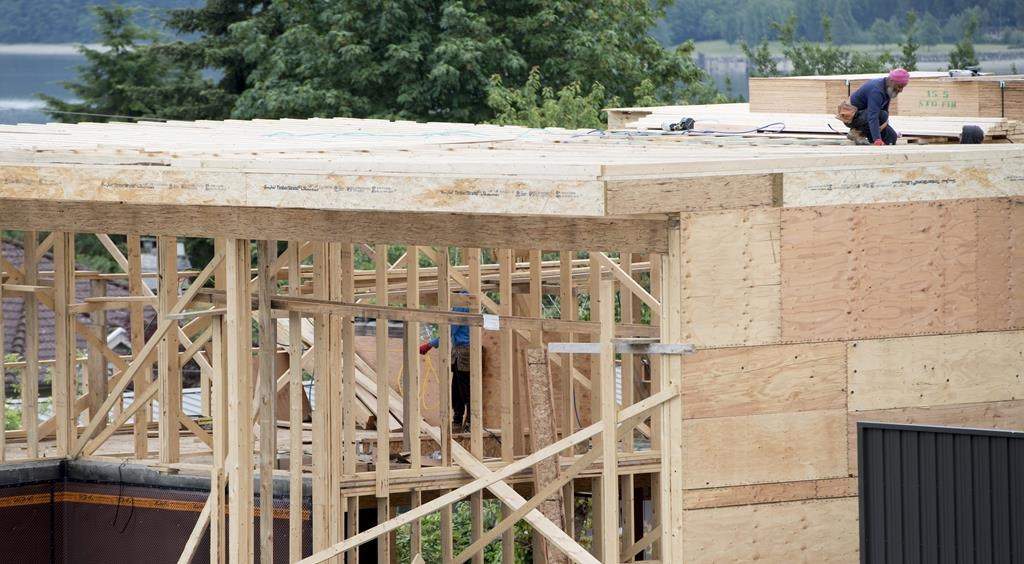
Look at what has happened to housing starts across Metro Vancouver and Victoria as projects have been shelved, delayed, or quietly converted from ownership condos into scaled-back phases.
According to data from the Canada Mortgage and Housing Corporation (CMHC) and regional development associations, the gap between the homes British Columbia needs to build to restore affordability and the homes actually breaking ground has widened into a chasm. In 2025 and 2026, pre-sale absorption rates across major B.C. transit corridors plunged to multi-decade lows. Developers who once sold out a 300-unit tower in a weekend now struggle to move a dozen units a month.
When construction slows down, the damage ripples outward in ways most people never connect to housing policy.
First, rents go up. When fewer condos are built, the people who would have bought them remain in the rental pool, competing with lower-income tenants for an aging supply of apartments. Even when purpose-built rental towers are proposed, they face the exact same brutal math of high land costs and municipal fees, meaning many of them are stalling out right alongside the condo projects.
Second, the construction workforce fractures. Framing crews, electricians, plumbers, and concrete finishers do not sit around waiting two years for interest rates or federal policies to change. They move to Alberta, or Texas, or leave the trades entirely. Once that skilled labor evaporates, ramping back up takes years, driving labor costs even higher when the market finally turns.
Third, the tax base shrinks. Every stalled tower represents tens of millions of dollars in foregone municipal development charges—the very money cities use to pay for new parks, water mains, community centers, and affordable housing grants.
We built a wall to keep foreign money out, and ended up starving our own cities of the capital needed to grow.
A Surgical Alternative to a Blunt Instrument
Nobody—least of all the economists advocating for change—is suggesting that British Columbia return to the Wild West days of 2015, when suitcases of cash bought up single-family neighborhoods and left entire blocks dark at night.
The choice is not between a total ban and total surrender. We already possess the sharpest policy tools in North America to regulate how housing is used once it is built.
Consider what would happen if Ottawa and Victoria moved from a blunt prohibition to a surgical, supply-driven exemption.
Imagine a policy that keeps the ban firmly in place for existing resale homes—protecting single-family houses and established townhomes from outside speculation—while allowing non-Canadians to purchase newly constructed, pre-sale multi-family units.
Think through the chain reaction of that single adjustment.
First, international capital flows back into pre-construction projects, providing the upfront deposits required to trigger bank financing. Cranes go back up over the mud lots on Cambie Street, in Surrey City Centre, in Langford, and in Kelowna.
Second, because those buyers are purchasing brand-new, high-density units rather than bidding against a local family for a three-bedroom house in Coquitlam, they are actively expanding the housing stock rather than cannibalizing it.
Third, provincial taxes remain firmly in place as a revenue engine. If a non-Canadian buyer pays B.C.’s 20 percent foreign buyer tax on a $900,000 pre-sale condo, that generates $180,000 in immediate tax revenue for the provincial treasury—money that can be directly earmarked to build non-market, subsidized housing for low-income families. And if that buyer fails to rent the unit out to a local resident, the Speculation and Vacancy Tax penalizes them every single year.
In that scenario, outside capital does three things simultaneously: it funds the construction of new housing, it increases the local rental supply, and it directly subsidizes affordable housing through tax revenue.
Right now, under the blanket ban, that capital generates zero homes, zero rentals, and zero tax dollars. It simply goes to Seattle, Sydney, or London instead.
The Pride That Costs Us Shelter
Why haven't we made this adjustment already?
Because admitting a popular policy backfired requires political courage, and political courage is the rarest commodity in any housing crisis.
If a federal minister or a provincial premier stands at a podium tomorrow and announces they are relaxing the foreign buyer ban, the headlines will write themselves. Critics will accuse them of selling out Canadians. Social media will erupt with outrage before anyone reads past the first paragraph. It is far safer, politically, to leave the ban in place, hold press conferences about long-term housing targets, and pretend the stalled construction sites will magically fund themselves.
Meanwhile, the clock keeps ticking for the people actually living through the shortage.
It ticks for the young couple in Kitsilano pushing off having a second child because a three-bedroom apartment doesn't exist in their budget. It ticks for the small business owner in Victoria who cannot hire kitchen staff because nobody working for $22 an hour can find a room within an hour's bus ride of downtown. It ticks for the newly minted structural engineer graduating from UBC who packs her bags for Calgary because she wants a life where owning a home doesn't require an inheritance.
Housing policy should never be an exercise in moral theater. It is supposed to be engineering. You look at the inputs, you measure the outputs, and when a mechanism jams the machine, you fix it.
Go back to that corner on Cambie Street when the rain stops and the streetlights flicker on at dusk. Look through the gaps in the chain-link fence at the weeds growing out of the mud, and then look up at the empty space above them—twenty stories of thin air where homes were supposed to be.
We kept the outsiders out. Now we are standing in the rain, wondering why nobody is building the roof.