The floor of a defense manufacturing plant does not smell like politics. It smells like cutting fluid, ozone, and the sharp, metallic tang of pressurized hydraulic fluid. It is loud. The rhythm of automated CNC machines cutting through titanium blocks is relentless, a steady, deafening thrum that vibrates right through the soles of your work boots.
For decades, this was the invisible heartbeat of American deterrence. You built the parts, you shipped the parts, and the missiles sat in climate-controlled silos or the bellies of naval destroyers, waiting for a day everyone hoped would never come.
But things changed. The machinery is still humming, but the math has broken down.
A few weeks ago, an executive at a major defense prime—let’s call him Jim, a man who has spent thirty years tracking supply chains from titanium sponge imports to solid-rocket motor casings—looked at a spreadsheet and felt a cold drop of sweat trace its way down his spine. The numbers didn't add up. Demand from global conflicts was skyrocketing. Orders were piling up. Yet, the raw materials to build the solid-rocket motors that push a missile into the sky were tied up in bureaucratic knots, sluggish shipping lanes, and a severely depleted domestic manufacturing base.
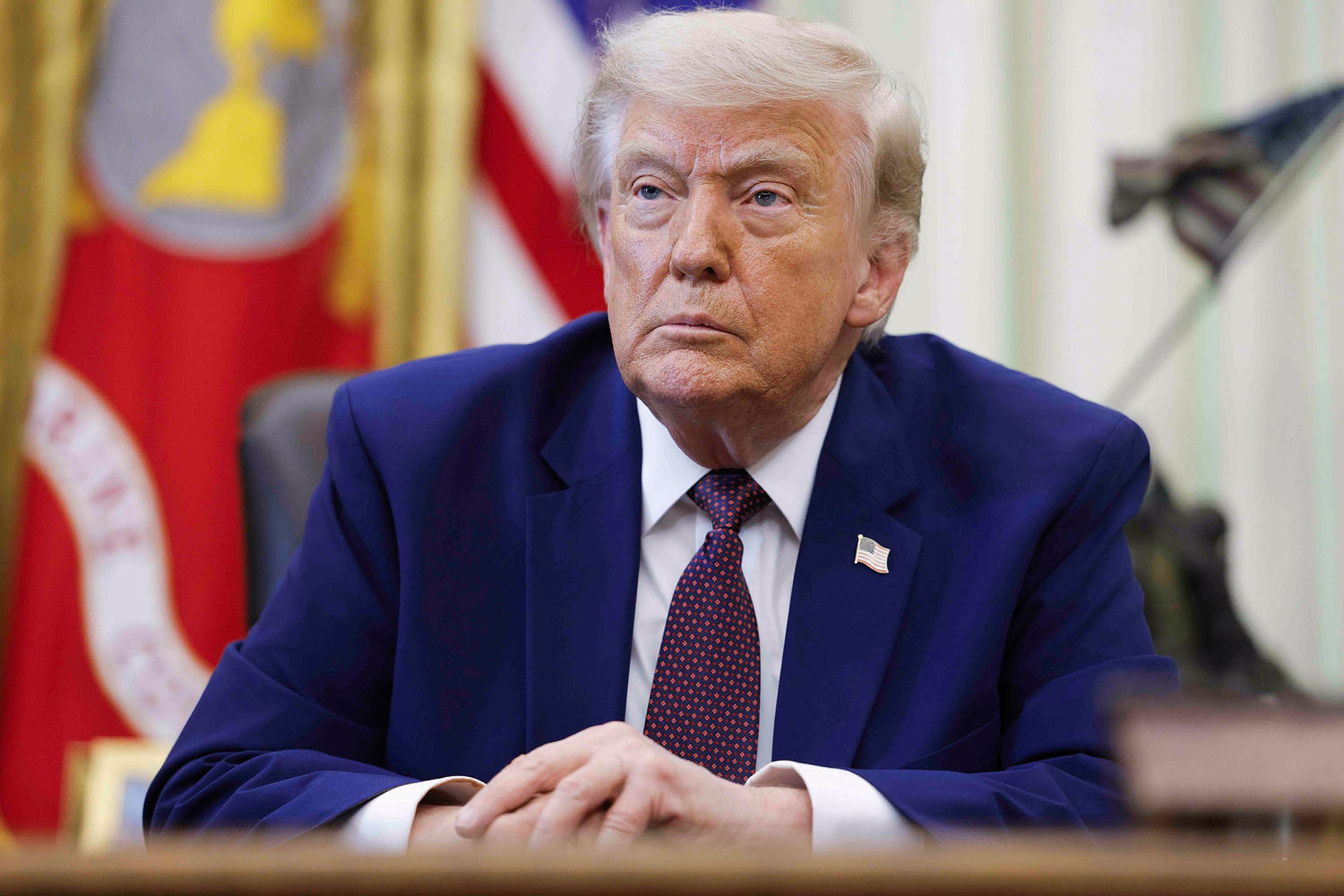
Jim represents a quiet panic currently rippling through the highest echelons of the American defense industrial base. It is a panic that has forced the hand of the suit-and-tie crowd. CEOs who usually communicate via encrypted emails and quarterly earnings calls are suddenly packing their briefcases for an urgent, high-stakes rendezvous with Donald Trump.
They are not heading to Washington to talk about taxes or deregulation. They are going because the nation is running dangerously low on the very things that keep the peace through fear.
The Calculus of Deterrence
To understand why the defense industry is sweating, you have to understand how a missile is born.
We tend to think of modern weaponry as software-driven magic—stealth coatings, advanced radar, and AI-guided targeting systems. But at its core, a missile is a pipe stuffed with highly volatile explosives that needs to survive extreme forces. If you do not have the chemical propellants, the specialized ball bearings, or the microchips that can withstand high-g maneuvers, you do not have a weapon. You have an incredibly expensive lawn ornament.
Consider the Patriot missile system. It is currently the thin line between life and death for cities under bombardment halfway across the world. A single Patriot battery can fire interceptors that cost upwards of $4 million each. In a heavy engagement, a battery can burn through its entire ready-to-fire complement in a matter of minutes.
Replacing them takes years.
This is the friction point. The Pentagon operates on a peacetime procurement model. It buys weapons the way a conservative consumer buys a car—haggling over prices, stretching out contracts over a decade, ensuring everything is meticulously audited. But the world is no longer at peace. We are watching a terrifyingly rapid depletion of stockpiles.
The defense CEOs are trapped in the middle. If they invest billions of their own capital to build new factories, hire specialized technicians, and ramp up production, they run a massive risk. What happens if a peace treaty is signed next year? The demand evaporates. The Pentagon cancels the contracts. The shareholders revolt. The factories sit empty, monuments to financial ruin.
So, they wait for a guarantee. They wait for a signal that the government will backstop their risk.
The Mar-a-Lago Calculation
Enter the incoming commander-in-chief. Donald Trump’s relationship with the defense establishment has always been complicated, viewed through the lens of transactional realism. He looks at defense spending not just as a matter of geopolitical strategy, but as a business negotiation. He wants the best price. He wants American jobs. He wants visual results.
The leaders of Lockheed Martin, RTX, Boeing, and General Dynamics know this. They are not approaching this meeting with standard policy white papers filled with acronyms like "NDAA" or "PPBE." They are framing the crisis in terms the former president respects: industrial capacity, domestic manufacturing strength, and winning.
The pitch is simple but fraught. The defense industry is ready to build, but they need the administration to unleash long-term, multi-year procurement contracts. They need Trump to use the Defense Production Act not as an emergency band-aid, but as an economic engine to rebuild American foundries.
But there is a catch. Trump has historically been skeptical of foreign military aid, often questioning why the United States is foot the bill for global security. The executives must convince him that fixing the missile shortage isn't about funding foreign wars; it is about ensuring that if an American admiral ever has to give the order to fire, the tubes aren't empty.
The stakes are entirely invisible to the average citizen buying groceries or pumping gas. We assume the shield is always there. We assume that because we spend nearly a trillion dollars a year on defense, the supply is infinite. It isn't.
The Ghost in the Supply Chain
Let’s step away from the boardroom and look at a single, tiny component: the solid-rocket motor.
For a long time, only a couple of companies in the United States built these motors. It is dangerous, precise work. Mixing the chemical propellant is akin to baking a cake where a single degree of temperature variance or a microscopic air bubble means the entire batch explodes, destroying the facility. Because the work is so hazardous and the regulations so stifling, fewer companies wanted to do it. The supply chain bottlenecked.
Imagine a highway with six lanes that suddenly merges into a single, unpaved dirt road. That is the American missile program right now.
When the CEOs sit down with Trump, this is the reality they have to demystify. They have to explain that you cannot simply press a button and get more Tomahawk cruise missiles. You have to train a generation of specialized chemical mixers. You have to source rare earth elements that are, ironically, often controlled by geopolitical rivals. You have to build precision tooling machines that take twelve months just to manufacture.
It is a terrifying realization for anyone who studies behavioral patterns in international relations. Deterrence only works if your opponent believes you can sustain a fight. If an adversary looks at the American industrial base and realizes we can only fight at full capacity for three weeks before running out of precision munitions, the calculus changes entirely. The world becomes a vastly more dangerous place.
The Human Cost of Precision
Behind every line item in a defense budget is a human being. There is the engineer working late under fluorescent lights, trying to figure out why a guidance system failed its environmental testing. There is the factory worker in Arkansas or Arizona assembling wiring harnesses, knowing the quality of their solder joint might dictate whether a soldier comes home.
And there is the soldier, sailor, or marine, standing watch on a ship in the South China Sea or a dusty outpost in the Middle East, trusting that the machinery bolted to the deck will actually work if the radar screen suddenly lights up with hostile tracks.
That trust is fraying at the edges. Not because the technology is bad, but because the scale is missing.
The upcoming meeting with Trump is a collision of two worlds. On one side is the corporate defense establishment, risk-averse, highly bureaucratic, and deeply aware of its own structural vulnerabilities. On the other side is an administration that prides itself on disruption, fast deals, and a skepticism of institutional warnings.
The industry leaders are hoping to find a common language. They want to frame the missile crisis as an opportunity to revive American manufacturing towns, to create high-paying blue-collar jobs, and to project absolute power abroad without firing a shot. They want to show that a strong defense industrial base is the ultimate realization of an America First policy.
But the clock is ticking. Every day a factory operates at old capacities is a day the gap grows wider.
Jim, our hypothetical supply chain executive, knows this better than anyone. He doesn’t care about the political theater, the tweets, or the cable news commentary. He cares about the ledger. He cares about the fact that it takes 24 months to get a specific type of forging, and the order backlog is currently 36 months long.
He sits at his desk, turns off his computer, and rubs his eyes. The factory floor below him keeps humming, cutting through metal, making a noise that sounds like security but feels increasingly like a countdown. The suits are flying to Florida to cut a deal, because they know that in the theater of global power, the only thing worse than losing a war is realizing you ran out of the ability to fight it before it even started.