The Friction of the Old World
Budi stands at a cluttered stall in Jakarta, the heat of the afternoon pressing against his neck. He is trying to buy a bowl of soto betawi. The steam from the broth smells of galangal and lime, but Budi is distracted. Behind him, a line of office workers grows restless. He fumbles with a wallet thick with physical bills, some crumpled, some crisp, trying to calculate the mental gymnastics of a currency that adds three zeros to every transaction.
Across the sea, in a bustling market in Guangzhou, a traveler named Chen faces the same invisible wall. He wants a silk scarf for his mother. He has a smartphone loaded with digital wealth, yet he is tethered to the physical world by the need for a plastic card or a predatory exchange rate at a kiosk that smells of stale coffee and desperation.
For decades, the simple act of buying a meal or a trinket across a border was an exercise in friction. We accepted the "tourist tax"—that hidden slice of our hard-earned money that vanished into the pockets of middlemen, bank fees, and the volatile swings of the U.S. dollar. We moved our bodies across the globe at 500 miles per hour, but our money moved like molasses, trapped in a 20th-century plumbing system that demanded every cent be routed through a clearing house half a world away.
That world is dying.
The Digital Handshake
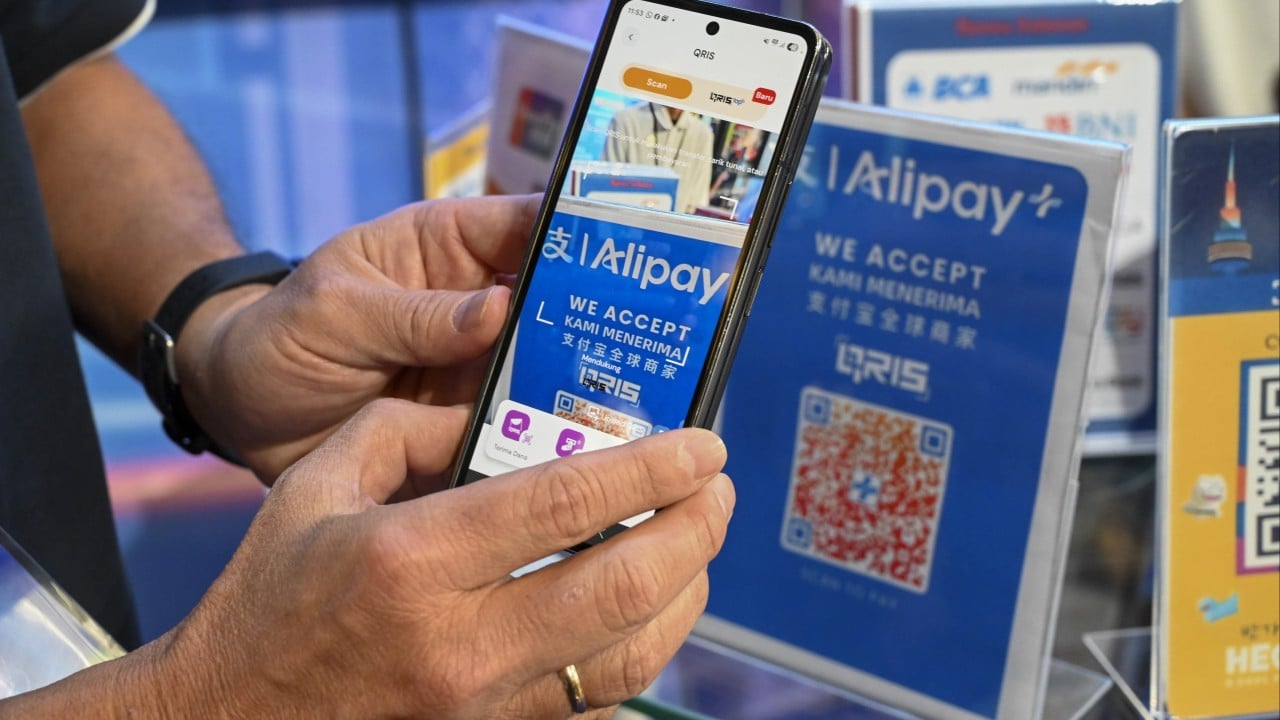
In a move that sounds like a dry policy update but feels like a liberation, China and Indonesia have officially linked their national QR payment systems. This isn’t just about convenience. It is a fundamental shift in how power is distributed in the global economy.
When Budi goes to Beijing now, he doesn't need to find a bank. He doesn't need to pray his credit card isn't blocked by an overzealous fraud algorithm. He simply opens his Indonesian banking app—the same one he uses to pay his electricity bill at home—and scans a code. The transaction happens in seconds. The currency doesn't take a detour through New York or London. The Indonesian Rupiah shakes hands directly with the Chinese Yuan.
This is the "Local Currency Settlement" framework in action. It is a direct bridge built over a shark-infested moat of fees. By bypassing the dollar as an intermediary, both nations are insulating themselves from the whims of Western interest rates and the geopolitical tethers that come with the greenback.
The Math of the Micro-Transaction
Consider the scale. Indonesia is Southeast Asia’s largest economy. China is the world’s manufacturing heart. Between them flow billions of dollars in trade, but the real magic happens at the micro-level.
When a million Budis and a million Chens can spend their local currency as easily as they breathe, the economic velocity changes. It is no longer about the "Global Yuan" as a theoretical concept discussed by ivory-tower economists. It is about the Yuan as a tool for a small business owner in Bali selling wood carvings to a tourist from Shenzhen.
Small.
Fast.
Direct.
Each scan of a QR code is a tiny vote against the old hegemony. It is a preference for a multipolar world where the neighborhood matters more than the empire.
The Invisible Stakes
Why does this feel different than just using a credit card? Because a credit card is a promise of future debt, managed by a third party that takes a 3% cut from the merchant. In the QR revolution, the payment is a push, not a pull. It is instantaneous settlement.
For the merchant, this is the difference between waiting three days for funds to clear and seeing the balance update before the customer has even tucked their phone back into their pocket. In the high-inflation environments that have historically plagued emerging markets, speed isn't a luxury. Speed is survival.
But there is a deeper, more shadow-filled reality here. This integration is a brick in the wall of a new financial fortress. China has been methodically building the Cross-Border Interbank Payment System (CIPS). It is a lifeboat. If the traditional global financial system—the one anchored by SWIFT—ever decides to pull the plug on a nation, these QR links ensure that the lights stay on. Trade continues. The soto betawi still gets sold.
The Human Cost of Efficiency
We often talk about "innovation" as if it is a purely positive force. But as we erase the friction, we also erase the landmarks. There was a certain ritual to the money changer. The smell of the paper, the tactile reality of the exchange, the forced interaction with a local who might tell you where to find the best coffee.
Now, we are becoming ghosts in the machine. We glide through foreign cities, our digital wallets whispering to local servers, leaving no physical trace of our passing. The efficiency is breathtaking, but the anonymity is chilling.
I remember traveling through Jakarta ten years ago. I spent two hours trying to find an ATM that would accept my foreign chip. I met a man named Agus who walked me three blocks to a bank that worked. We talked about his kids and the rising price of rice. Today, I wouldn’t need Agus. I would have my QR code. I would have the soto, but I would lose the conversation.
We are trading human friction for digital flow.
A New Gravity
The gravity of the global economy is shifting East. This isn't a prediction; it is a current event. By linking with Indonesia, China isn't just "boosting" the Yuan; they are creating a regional ecosystem where the Yuan is the default setting.
Thailand, Singapore, and Malaysia are already in the fold. When you look at the map, you see a web of digital ley lines being drawn. These lines ignore the traditional borders of the 1945 world order. They follow the path of least resistance. They follow the smartphone.
If you are a business owner in Jakarta, why would you want to deal with the volatility of the dollar-to-rupiah exchange when you can price your goods in a currency that stays stable relative to your biggest trading partner? It is a gravity well. Once you are in it, escaping back to the old system feels like choosing to walk when you could fly.
The Quiet Revolution
There will be no grand ceremony to mark the end of the dollar’s reign in the South Pacific. There won't be a "mission accomplished" banner. The revolution is happening in the silence of a million daily transactions. It is the sound of a "ping" on a smartphone. It is the sight of a street food vendor printing out a new QR code and taping it to a wooden pole.
Budi finishes his soup. He doesn't think about geopolitics. He doesn't think about the "Local Currency Settlement" or the strategic maneuvers of the People's Bank of China. He just knows that for the first time in his life, his money feels like it belongs to him, not to a bank in a country he has never visited.
He scans. He pays. He walks away into the humid Jakarta evening, his wallet light, his stomach full, and his life unburdened by the ghosts of a financial system that no longer knows how to keep up with him.
The exchange counter is closed. The lights are out. The world has moved on.