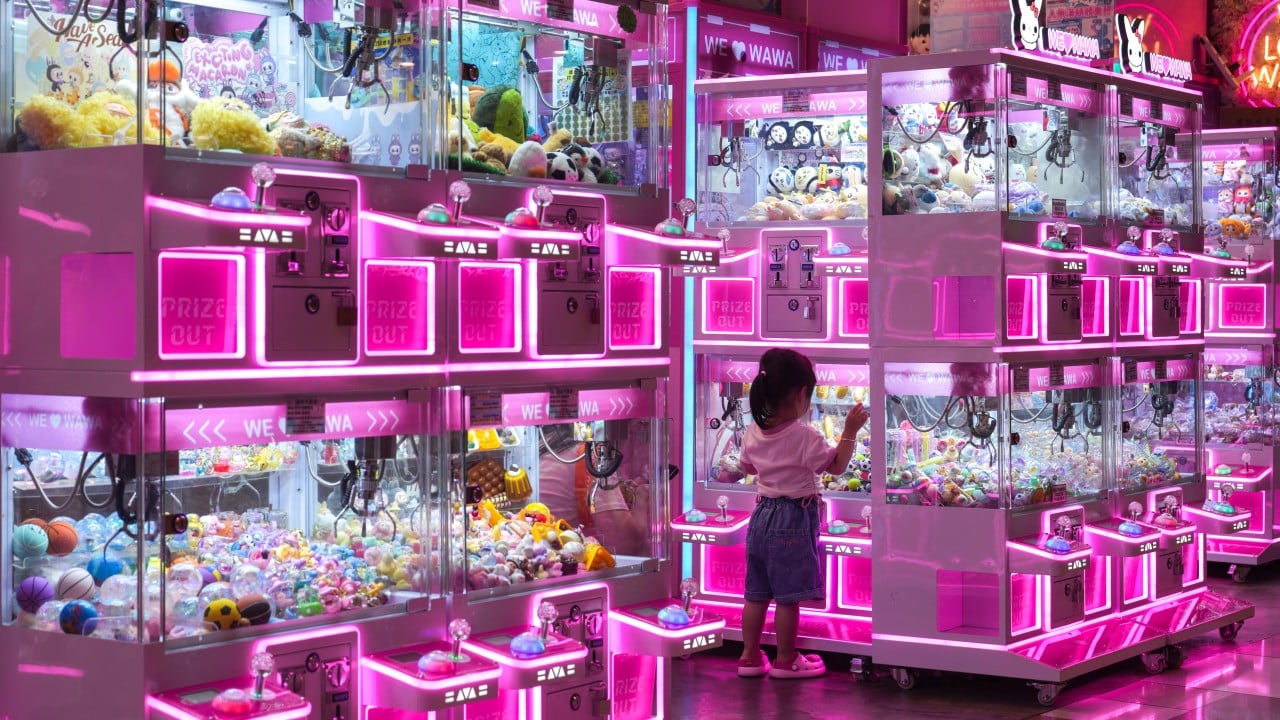
Hong Kong is moving to dismantle the legal gray area that allowed claw machine arcades to colonize the city’s vacant retail spaces. For years, these neon-lit shops operated under a loose interpretation of existing entertainment laws, but a new licensing proposal aims to classify them strictly as gambling-adjacent or regulated amusements. This shift will force operators to secure a Public Entertainment Precinct License, a move that effectively ends the low-overhead gold rush that transformed high-street neighborhoods during the post-pandemic recovery.
The crackdown isn't just about safety. It is about control. By imposing rigid licensing requirements, the government is intentionally raising the barrier to entry, ensuring that only well-capitalized corporations can survive. Small-time entrepreneurs who used these machines to pay the rent on tiny storefronts now face an impossible choice: pay for expensive upgrades or shut down.
The Loophole That Built an Empire
To understand the current tension, you have to look at how these businesses appeared in the first place. When the retail sector slumped, landlords were desperate. They needed tenants who didn't require expensive kitchen fit-outs or massive staff rosters. The claw machine was the perfect solution.
Operating under a Places of Public Entertainment Ordinance (PPEO) exemption was the standard move. For a long time, the authorities turned a blind eye. If a machine gave out a prize every time, it wasn't considered gambling. If the skill involved was deemed sufficient, it bypassed the most grueling oversight. This created a Wild West of plastic toys and flashing lights.
But the sheer density of these shops became their undoing. In districts like Mong Kok and Causeway Bay, the saturation reached a breaking point. What started as a quirky retail trend turned into a perceived public nuisance. Complaints about noise, late-night crowds, and the "gambling-like" nature of high-end machines—where players chase expensive electronics or limited-edition collectibles—forced the Home Affairs Department to take a harder stance.
Money Laundering and the Grey Market
The investigative reality is darker than a few kids losing pocket change. Law enforcement and industry insiders have long whispered about the role these unmanned shops play in the shadow economy. Because many of these machines are cash-intensive and often unmonitored, they provide a convenient front for moving money.
The new proposal introduces a mandatory record-keeping element. Operators will likely have to prove the source of their prizes and the exact payout ratios of their machines. This isn't just bureaucratic red tape; it is a financial audit disguised as consumer protection. Forcing operators into a formal licensing regime makes every coin inserted into a machine part of a traceable paper trail.
The Death of the Side Hustle
The most significant victim of this policy shift is the "sub-operator" model. In this ecosystem, a master tenant rents a large space and sub-leases individual machines to different people. A regular office worker could "own" three machines in a mall, restocking them on weekends for a bit of passive income.
Under the new rules, this fragmented ownership becomes a legal nightmare. The government wants a single point of accountability. If a machine is found to be rigged or if a shop is overcrowded, they want one license holder to fine or prosecute. This consolidation will wipe out the middle-class side hustle, handing the keys back to the big arcade chains that already have legal departments to handle the paperwork.
Comparing the New Standards to Regional Rivals
Hong Kong isn't acting in a vacuum. They are looking at Japan and Taiwan, where claw machines—or "UFO catchers"—are a massive, regulated industry. However, those regions have a long-standing culture of self-regulation through industry associations. Hong Kong is skipping the "self-regulation" phase and going straight to the "police and permit" phase.
| Feature | Current Status | Proposed Change | Impact |
|---|---|---|---|
| Licensing Fee | Minimal / Exempt | Significant Annual Cost | Forces out low-margin shops |
| Payout Regulation | Self-monitored | Mandatory hardware audits | Ends "rigged" high-value machines |
| Age Limits | Generally unrestricted | Potential evening curfews | Reduces late-night foot traffic |
| Staffing | Often unmanned | Mandatory on-site supervision | Increases operational costs by 40% |
The table above illustrates a grim reality for the industry. The move to mandatory on-site supervision is the real killer. The entire business model of the claw machine boom relied on the fact that you didn't need to pay a human to stand there. If you add a salary to the monthly balance sheet, most of these shops stop being profitable overnight.
Safety as a Pretext for Gentrification
The government’s primary public-facing argument centers on fire safety and building codes. It’s a classic move. By citing "public safety," the administration avoids the messy debate over whether they are infringing on a popular pastime. They point to blocked exits and faulty wiring in subdivided shops as the reason for the iron fist.
While these risks are real, the timing is curious. The push for regulation coincides with a broader effort to "beautify" Hong Kong’s shopping districts and move away from the "cheap" image of unmanned retail. There is a clear desire to replace rows of claw machines with high-concept cafes or international brands that contribute more to the city’s tax base and "world-class" reputation.
The Technical Trap
The licensing will also likely target the internal software of the machines. Modern claw machines are not simple mechanical devices; they are computers. They can be programmed to only give the claw full strength once every 50 or 100 tries.
If the government mandates randomized strength or a minimum "win" percentage, the house edge evaporates. The business of claw machines is built on the illusion of skill. Once you regulate that illusion into a transparent mathematical certainty, the "game" loses its luster for the players and its profitability for the owners.
The Economic Aftershock
What happens when 30% of these shops close in a six-month window? We will see a return to the "ghost mall" phenomenon in secondary shopping centers. These machines were the band-aid on a hemorrhaging retail sector. By ripping the band-aid off, the government is betting that "better" tenants will fill the void. That is a dangerous gamble in an economy that is still finding its footing.
Real estate agents are already reporting a cooling of interest in "open-plan" retail spaces that were once prime targets for arcade operators. The smart money is already exiting the space, selling off machines to unsuspecting buyers in secondary markets before the laws are fully ratified.
The era of the "easy" arcade win is over. The machines are being unplugged, not by the players, but by a bureaucracy that has finally decided the party has gone on long enough. Operators are no longer fighting the claw; they are fighting the clock.
Owners must now prepare for a transition into a fully professionalized entertainment sector. This means investing in certified hardware, hiring staff, and maintaining rigorous financial logs. The days of set-and-forget retail are gone.
If you aren't ready to run a high-compliance hospitality business, you aren't in the arcade business anymore. You are just holding onto a box of expensive scrap metal.