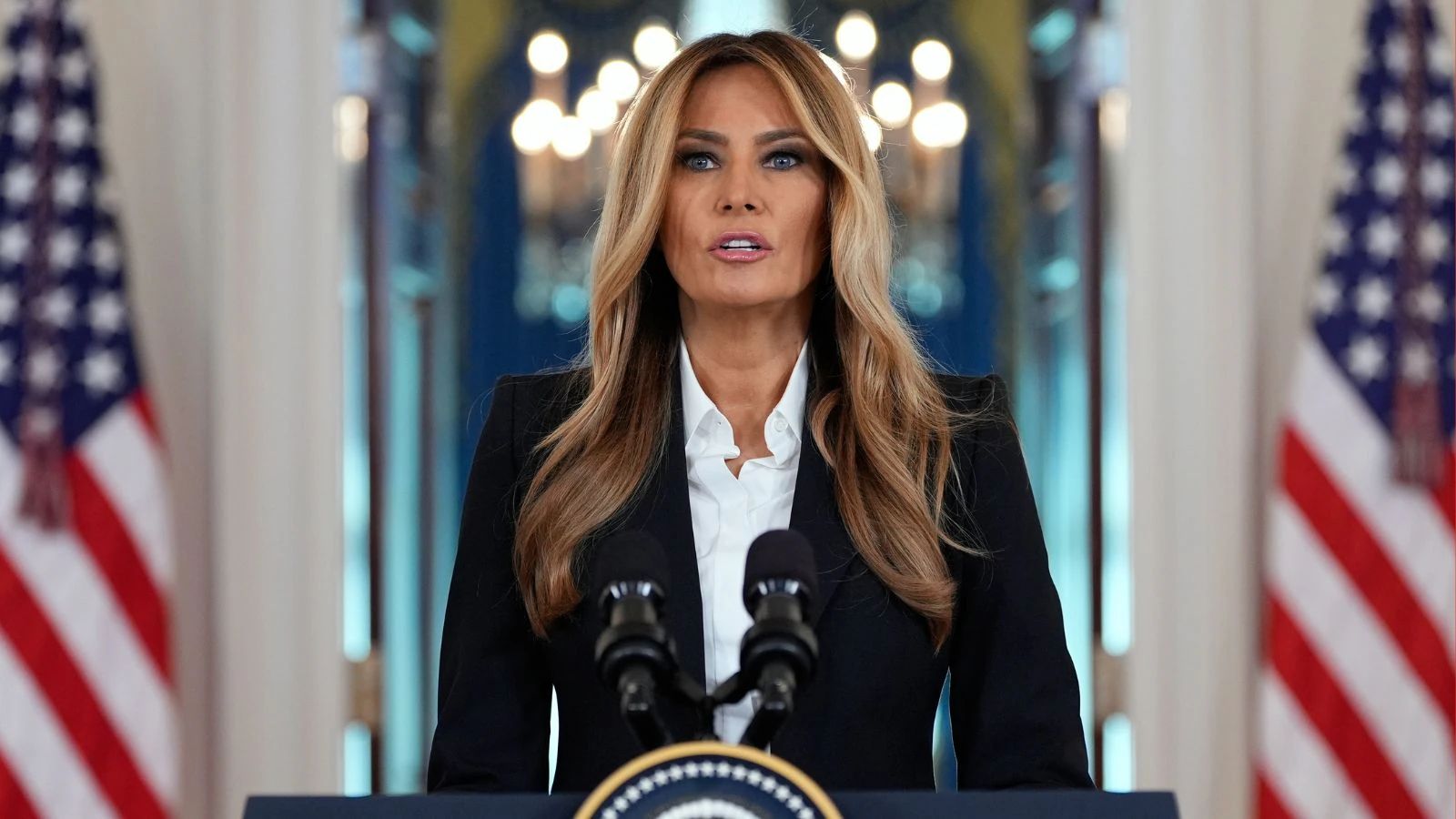
Melania Trump has broken her silence to address one of the most persistent and toxic rumors of the past decade, explicitly stating she never had a relationship with Jeffrey Epstein. In her memoir and subsequent media appearances, the former First Lady describes the late sex offender as a mere acquaintance of her husband, Donald Trump, rather than a personal contact. This denial serves as more than just a personal correction. It is a strategic attempt to scrub the Trump family legacy of any proximity to the most notorious criminal network in modern American history.
The proximity of high society to criminal enterprise is rarely about shared guilt. It is about shared space. For years, the public has parsed flight logs and grainy photographs to find a "smoking gun" that links the Trump inner circle to the horrors of Little St. James. By coming out now with a firm, documented rejection of these ties, Melania Trump is attempting to close a door that has remained ajar since Epstein's first arrest in 2006.
The Social Calculus of Mar a Lago
In the 1990s and early 2000s, the Palm Beach social circuit was a small, incestuous pond. You could not throw a stone in a high-end ballroom without hitting a billionaire, a socialite, or a predator hiding behind a checkbook. Donald Trump and Jeffrey Epstein were both fixtures of this world. They frequented the same clubs and shared the same zip codes.
To understand why these rumors persist, we have to look at the social architecture of the era. Wealthy men of that period often used each other as props to signal status. If you were seen at a party with the most talked-about financier in Manhattan, your stock went up. Trump famously told New York Magazine in 2002 that he had known Epstein for fifteen years and found him to be a "terrific guy."
Melania Trump’s defense hinges on the timeline of her own entry into this world. She met Donald Trump in 1998. By her account, her exposure to Epstein was minimal, consisting of brief, unremarkable social encounters where she was merely the spouse of a business mogul. She paints a picture of a woman who was present but not involved, a frequent reality for those in the orbit of powerful men whose "friends" were often just business assets.
The Problem With Proximity
Guilt by association is a powerful force in the court of public opinion. It does not require a legal conviction to ruin a reputation. For a First Lady, even the hint of a connection to a sex trafficking ring is radioactive. The internet has spent years obsessing over "The Photo"—a 2000 shot showing Donald and Melania Trump with Jeffrey Epstein and Ghislaine Maxwell at Mar-a-Lago.
The Anatomy of a Social Photograph
A photograph is a frozen second that lacks the context of the hours preceding or following it. In the world of high-stakes PR, a single image can outweigh a thousand denials. Melania Trump’s counter-argument is that being photographed in a room with someone does not constitute a "relationship."
In the context of the Palm Beach social scene, a photograph at a club is often as meaningful as a photo with a stranger at a subway station. However, because Epstein’s crimes were so heinous, the standard of proof for the public has shifted. They no longer want evidence of a crime; they want evidence of a total lack of contact. That is an impossible standard to meet when you live in a mansion that hosts hundreds of guests a week.
Breaking the Silence as a Political Shield
The timing of this denial is not accidental. As the Trump family navigates multiple legal challenges and political campaigns, cleaning up "legacy" scandals is a priority. Melania’s decision to address Epstein directly in her book suggests that internal polling or communications teams identified this as a persistent "soft spot" in her public image.
She is not just defending her character. She is protecting the brand. The Trump brand is built on strength and exclusivity, qualities that are diminished if the brand is seen as being manipulated or tainted by a figure like Epstein. By characterizing Epstein as a person she "did not know well" and never socialized with privately, she creates a buffer. She moves from a potential witness in the public's mind to an outsider who was just as disgusted by the revelations as everyone else.
Why This Defense Works for the Base
For the Trump faithful, this denial is a validation of their belief that the media has unfairly targeted the family. They see the Epstein connection as a "deep state" narrative designed to distract from other political scandals. When Melania speaks out, she provides her supporters with the rhetorical ammunition they need to defend her.
- Directness: She does not use "legalese" or vague "I don't recall" statements.
- Documentation: She utilizes her memoir to set a permanent, printed record.
- Consistency: She aligns her story with Donald Trump’s later claims that he "had a falling out" with Epstein years before the crimes became public knowledge.
The Unanswered Questions of the 90s
While Melania’s denial addresses her personal conduct, it does not fully erase the questions regarding the wider social network she inhabited. The 1990s were a period of extreme decadence and low accountability for the ultra-wealthy. We know that Epstein used his connections to Victoria’s Secret and various modeling agencies to find victims. As a former model, Melania Trump was in the very industry Epstein targeted.
Her memoir avoids going into the dark underbelly of the 90s modeling world. Instead, it focuses on her individual journey. This is a classic investigative hurdle: the difference between what a person did and what a person saw. Even if we accept that she had no "relationship" with Epstein, the question of what she observed in those high-society circles remains a point of intense public interest.
Reclaiming the Narrative Through Silence
For years, Melania Trump’s primary weapon was silence. She was the "enigma" of the White House. This worked until the Epstein story reached a fever pitch following his death in 2019. Silence, which once signaled mystery, began to look like evasion.
The transition from silence to vocal denial marks a new phase in her public life. She is no longer just the wife of a candidate; she is an active participant in the reconstruction of her own history. By calling out the Epstein rumors as "baseless," she is betting that the public's short memory and the lack of hard evidence will eventually lead to the story’s expiration.
The Mechanical Reality of Socialite Life
To those outside the 1%, the idea of "knowing" someone is intimate. You share meals, you talk on the phone, you know their secrets. To the 1%, "knowing" someone often means you recognize them across a room at a charity gala.
Melania Trump is banking on the public understanding this distinction. She is arguing that her "knowing" Epstein was a mechanical necessity of her husband’s business and social obligations, not a personal choice. It is a distinction that relies on a specific understanding of high-society logistics—one where you can be in a room with a monster and only see a man in a blazer.
The tragedy of the Epstein era is that so many people used this "acquaintance" defense to shield themselves from the fallout of his actions. Whether it is a member of the British Royal Family or a Manhattan real estate mogul, the script is the same: I was there, but I wasn't involved. ## The Durability of the Ghost
Even with a firm denial, the ghost of Jeffrey Epstein will likely haunt the Trump legacy as long as there are unanswered questions about his source of wealth and his true connections to the global elite. Melania Trump has fired a significant shot in this PR war, but in the age of digital archives, a single denial is rarely enough to kill a ghost.
The strategy now is to move forward with a "clean" record, regardless of how many people believe the ink is still wet. The truth in these circles is often less about what happened and more about what can be proven. Without a witness or a document to contradict her, Melania Trump’s version of the story becomes the official record.
History is written by the survivors. In the wreckage of the Epstein saga, Melania Trump is positioning herself as one of the few who walked through the fire without the smell of smoke on her clothes. Whether that holds up under the scrutiny of future investigations depends on secrets that may still be buried in the vaults of Palm Beach and New York. For now, the line has been drawn in the sand.
The focus shifts now to the court of public opinion, where the verdict is rarely final. Melania Trump has offered her testimony. The world is left to decide if it is a courageous stand for the truth or a carefully constructed wall designed to keep the past at bay.
The narrative of the Trump years is constantly being edited. This latest chapter is an attempt to ensure that when the history books are finished, the name Epstein appears only in the footnotes, far removed from the biography of the First Lady. In the world of power politics, perception is the only reality that matters. Stop looking for the truth in the photos and start looking at the intent behind the denial.


