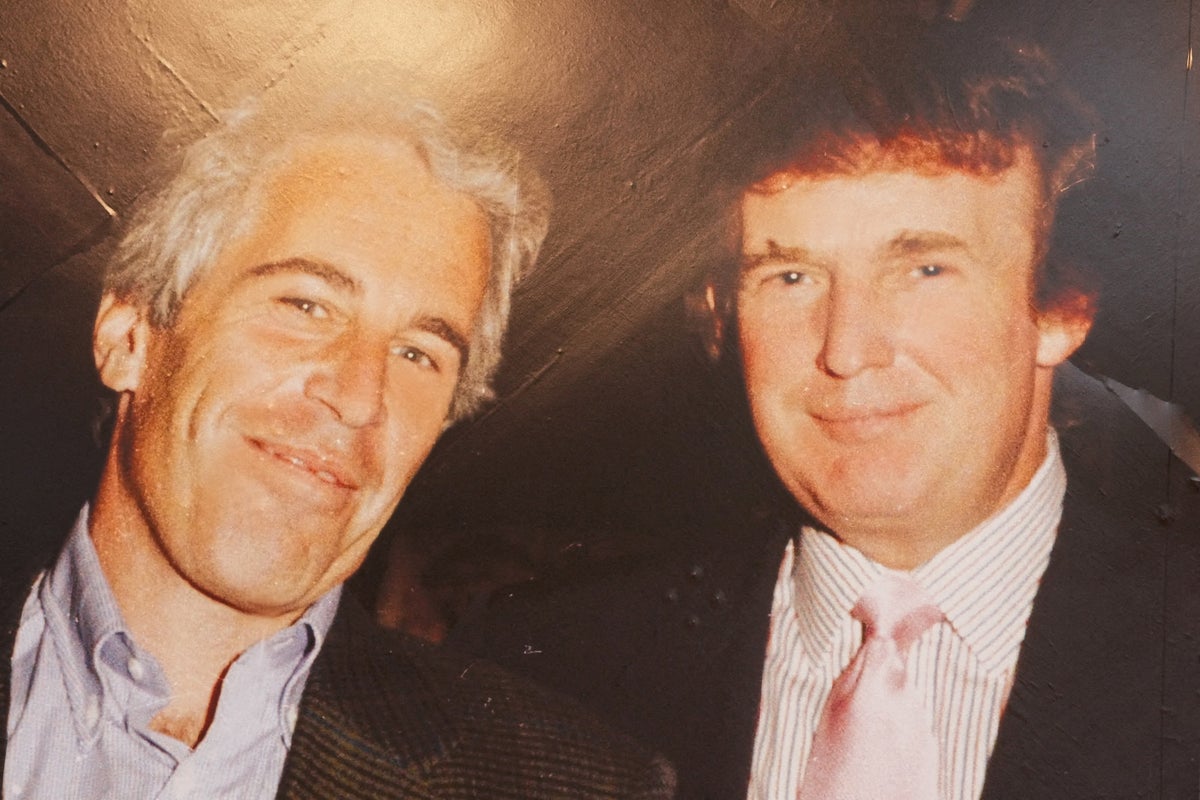
The mainstream media is hyperventilating over a set of newly released jailhouse notes. The headlines scream about a predictable bombshell: Jeffrey Epstein, sitting in a Manhattan cell after his 2019 arrest, tried to trade dirt on Donald Trump, labeling the future president a con artist.
The lazy consensus across newsrooms is that this is a classic political thriller moment—the exposed villain attempting to wield a final, devastating weapon against a global power player.
It is a comforting narrative for pundits. It is also entirely wrong.
Anyone who has spent a career analyzing high-level corporate espionage, federal prosecutions, or the dark economy of institutional leverage knows exactly what those notes actually represent. They do not expose a hidden stash of political dynamite. They expose the desperate, final bluffs of a bankrupt information broker who realized too late that his currency was worthless.
The media wants you to ask: What did Epstein have on Trump?
The real question is: Why did a man who spent decades collecting compromising material on the global elite have absolutely nothing left to sell when his life depended on it?
The Mechanics of Information Asymmetry
In the world of intelligence and high-stakes litigation, information operates on a strict supply-and-demand curve. The value of "dirt" drops to zero the exact moment the public expects you to have it.
When Epstein was arrested by federal authorities in July 2019, the entire world knew his operational blueprint. For decades, his power derived from a carefully managed illusion of total leverage. He was the classic asymmetric actor: a man with no real institutional backing who managed to infiltrate elite circles by convincing everyone that he held the keys to everyone else’s closets.
But look at the timeline. According to the internal documents and handwritten notes from his attorneys and prison staff, Epstein’s sudden eagerness to discuss Trump’s business dealings and personal associations came after the traditional avenues of negotiation had completely collapsed.
This is not how a master manipulator plays a winning hand. This is how an amateur tries to buy his way out of a burning building with counterfeit cash.
The Anatomy of a Failed Proffer
When a high-profile defendant wants to cut a deal with the Department of Justice, they undergo what is known as a proffer session. In these meetings, the defense drops specific, verifiable hints of what they can deliver.
The rules of a successful proffer are absolute:
- The information must be unique to the defendant.
- It must be actionable.
- It must target a larger fish than the one currently in the net.
Epstein’s offers failed on all three counts. Offering to paint Trump as a "con artist" or promising vague revelations about his inner circle in 2019 was not a revelation. By that point, Trump’s finances, personal life, and corporate history had been the most heavily scrutinized topics on Earth for four consecutive years. New York prosecutors, congressional committees, and investigative journalists had already turned over every stone.
Epstein wasn’t offering an insider trading roadmap or a secret ledger. He was reading the newspapers from his cell and trying to repackage public gossip as proprietary intelligence. Southern District of New York prosecutors saw through it immediately. They didn't reject the offer because of a political conspiracy; they rejected it because the product was stale.
Dismantling the Premier Misconceptions
Let us look honestly at the questions that dominate the public conversation around these notes, because the standard answers are steeped in pure fantasy.
Did Epstein hold the ultimate trump card?
No. The ultimate leverage is only useful if it remains a secret. The moment Epstein was put in handcuffs, his ability to threaten individuals into protecting him vanished. In a standard corporate extortion scheme, the target pays to keep the information quiet. In a federal criminal prosecution, the government does not care about protecting reputations; they care about convictions. Epstein’s supposed dirt was useless because he could no longer guarantee the one thing his targets would pay for: silence.
Why did he target Trump specifically in the notes?
Because Trump was the sitting President of the United States. If you are facing a mandatory minimum sentence that guarantees you will die in a maximum-security prison, you do not offer to flip on a minor billionaire or a retired politician. You go for the biggest target available to generate maximum bureaucratic panic. Epstein knew that throwing Trump's name into the mix would force his lawyers to convey the message to Washington. It was a Hail Mary pass meant to trigger an intervention from the executive branch. It failed because the administration knew that touching Epstein with a ten-foot pole was political suicide.
The Harsh Truth of the Kompromat Myth
The public has a deeply cinematic view of blackmail. People assume that figures like Epstein possess a single, catastrophic film reel or a physical drive that can topple governments. Having managed crisis communication and risk assessment for institutional clients who faced genuine extortion threats, I can tell you that the reality is far more mundane—and far more depressing.
Blackmail is rarely about a single explosive secret. It is about a slow, creeping network of mutual complicity. It works because everyone in the room has agreed to look the other way, creating a collective vulnerability.
The fatal flaw of this system is that it requires institutional stability to function. The moment the state steps in and arrests the linchpin, the network doesn't move to protect the broker—it moves to insulate itself from him.
Consider the reality of Epstein’s network. His associates were not loyal soldiers; they were transactional opportunists. When the federal government moved in, those associates did not coordinate a defense. They hired elite white-collar defense attorneys, scrubbed their flight logs, and went completely dark. Epstein found himself in a position that every arrogant middleman eventually faces: he realized he was entirely expendable.
The Downside of the Total Leverage Strategy
To be fair, the strategy of hoarding reputational liabilities can work for a time. It worked for Epstein in 2008 during his initial non-prosecution agreement in Florida. That is the downside of my argument that critics will point out: they will say, "Look at his first deal, the system protected him then."
But that critique misses the fundamental shift in the landscape. In 2008, Epstein was a local scandal handled by a compliant state-level apparatus. In 2019, he was a global flashpoint under the microscope of federal prosecutors who were smarting from a decade of public outrage.
You cannot use 2008 tactics in a 2019 environment. The institutional appetite for backroom deals involving sexual predators had dropped to absolute zero. Epstein’s failure to read that shift is the definitive proof that he was not the criminal mastermind the media portrays him to be. He was a relic of an older, quieter era of elite corruption who got caught in the gears of modern, hyper-visible accountability.
Stop Reading the Notes Like a Diary
The handwritten notes detailing his frantic offers are not a historical record of hidden truths. They are a psychological profile of a collapsing ego.
For decades, Epstein’s entire identity was built on the premise that he was smarter, better connected, and more dangerous than the people around him. Sitting in a cell under suicide watch, stripped of his wealth, his private jet, and his sycophants, those notes were his way of trying to maintain his status. Writing down names like "Trump" was an act of validation. It was a pathetic attempt to remind himself—and the guards watching him—that he still mattered.
The media’s insistence on treating these notes as a significant political revelation is a profound distraction. It keeps us trapped in a cycle of partisan finger-pointing while ignoring the structural failures that allowed his operation to exist in the first place.
We do not need to know what imaginary dirt Epstein was trying to sell from his cell. We need to understand that the market for that dirt only exists when we allow wealth and proximity to power to buy systemic immunity.
The notes do not reveal a conspiracy. They reveal a bankrupt broker holding an empty bag, shouting names into the void, hoping someone would still be afraid of him. Nobody was listening.