When a marksman’s bullet meets its target at supersonic speeds, the result is more than just the cessation of life. It is the destruction of evidence. In a recent standoff that ended with a suspect reduced to what first responders call "biological matter," the local police achieved a tactical victory while suffering a total investigative defeat. The suspect is dead. The threat is gone. But because of the specific caliber and placement of the shot, the man’s identity has been effectively wiped from the physical world.
This isn’t a mystery about a clever criminal. It is a story about the unintended consequences of modern ballistics and the shifting priorities of urban law enforcement. When tactical teams prioritize the immediate neutralization of a threat above all else, they occasionally destroy the very keys needed to unlock the history of the crime. We are entering an era where the "how" of a crime is solved in seconds, but the "who" remains a permanent vacuum.
The Physics of Forensic Disintegration
To understand why a single shot can render a human being unidentifiable, one must look at the mechanics of hydrostatic shock. Standard police sidearms use hollow-point rounds designed to expand and stay within the body. In contrast, tactical units often employ high-velocity rifles chambered in rounds that carry immense kinetic energy. When these projectiles strike a liquid-dense environment like the human cranium, the energy transfer is so violent that it creates a temporary cavity far larger than the bullet itself.
In this specific case, the shooter used a round designed for "barrier blindness"—the ability to pass through glass or light cover without deviating. When that round hit the suspect, the pressure wave didn't just stop the heart. It shattered the jaw, pulverized the dental structures, and shredded the soft tissue required for facial reconstruction.
Fingerprints are useless if the hands are caught in the blast radius of a secondary explosive or simply mangled during the struggle. DNA remains an option, but DNA requires a comparison sample. If the suspect isn't in a federal database, and their physical features are gone, the trail turns cold before the brass hits the pavement.
The Failure of the Digital Dragnet
We are told we live in a world of total surveillance. High-definition cameras, gait analysis, and facial recognition software are supposed to make anonymity impossible. Yet, this incident exposes the massive gaps in that digital net.
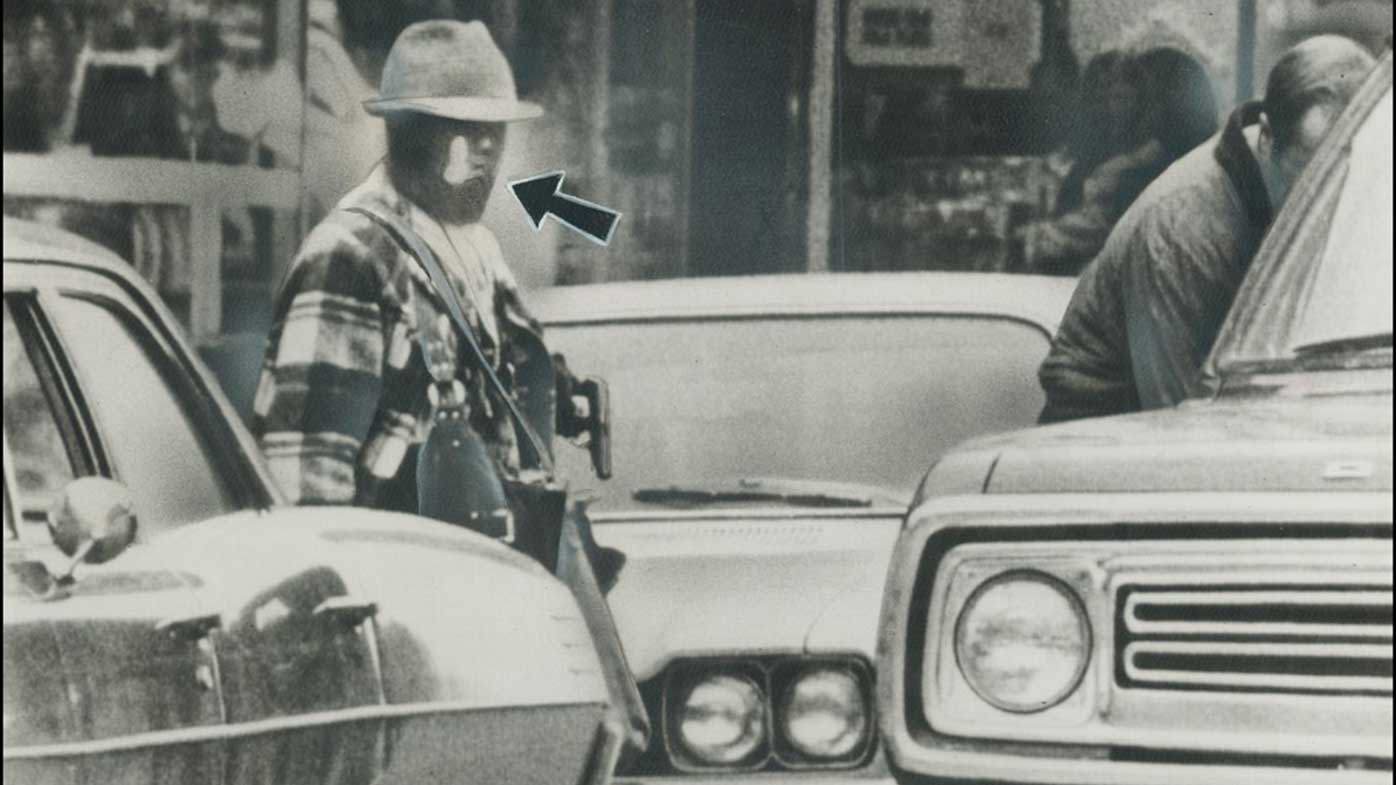
The suspect wore a low-profile mask, likely infused with infrared-reflecting material that turns a face into a white blur on most security feeds. By the time the tactical team arrived, the only "data" available was the physical body. Once that body was structurally compromised by high-precision fire, the high-tech tools of the modern precinct became paperweights.
Investigative journalism often focuses on the "Big Brother" aspect of police tech. We worry about being tracked. But there is a counter-narrative rarely discussed: the ease with which a motivated actor can still vanish. If you don't have a social media presence, if you use cash, and if you die in a way that prevents a post-mortem photograph, you effectively never existed.
Why Identity Matters Post-Mortem
Some argue that the identity of a dead bank robber is irrelevant. The money was recovered; the public is safe. That view is shortsighted and dangerous.
An unidentified suspect is a missing link in a larger chain of custody. Who provided the weapon? Where did they learn the tactical maneuvers seen on the lobby’s CCTV? If we cannot name the man, we cannot map his associations. We can't see if he was part of a larger cell, a desperate veteran, or a foreign national testing local response times. By "blowing him to smithereens," as the tabloid headlines so crudely put it, the state has performed a lobotomy on its own investigation.
The Problem of Tactical Tunnel Vision
Modern SWAT training emphasizes the "OODA loop"—Observe, Orient, Decide, Act. It is a cycle built for speed. In a high-pressure hostage or robbery situation, the "Decide" phase is narrowed down to a binary: shoot or don't shoot. There is no box in the OODA loop for "preserve the suspect's face for the coroner."
This creates a conflict of interest between the tactical officer and the detective. The officer wants the threat neutralized with 100% certainty. The detective wants a lead. When those two goals collide, the heavy caliber usually wins.
The Myth of the Lone Wolf
Every time an unidentified perpetrator is killed, the "lone wolf" narrative is pushed to the forefront. It’s a convenient way to close a file. If there is no name, there is no history. If there is no history, there is no motive to dissect or systemic failure to address.
In reality, most professional-grade robberies involve a support network. Someone provided the floor plans. Someone modified the scanner-jamming equipment found in the suspect's bag. By failing to identify the primary actor, law enforcement allows that support network to remain in the shadows, ready to recruit a replacement.
The Limits of Forensic Reconstruction
Forensic artists are miracle workers, but they need a foundation. They need the depth markers of the cheekbones and the alignment of the orbital sockets. When high-velocity trauma removes those landmarks, the resulting "approximation" is often so generic that it generates thousands of false leads, clogging the system and wasting man-hours.
We are seeing a decline in the effectiveness of traditional forensics in the face of increasingly violent tactical resolutions. The tools we use to stop crime are becoming so effective they are inadvertently sabotaging the tools we use to understand crime.
The Policy of Erasure
There is a grim irony in our current situation. We have more information on the average citizen than at any point in human history, yet we are seeing a rise in "John Doe" cases resulting from police interventions.
This isn't just about one bank robbery. It’s about a shift in the philosophy of force. If the mandate is to end a situation "by any means necessary," we must accept that one of those "means" is the permanent loss of truth. The mystery of the dead robber isn't a failure of the police to do their jobs; it is the natural result of them doing their jobs with terrifying, mechanical efficiency.
The blood on the sidewalk is easy to wash away. The questions left behind are much more permanent. Every time a high-precision round solves a short-term crisis at the cost of a long-term investigation, the public loses a piece of the puzzle. We are trading the "who" for the "now," and eventually, we will find ourselves in a world where the only thing we know about our enemies is the caliber of the bullet it took to stop them.
Stop looking for the man in the headlines. He doesn't exist anymore, and because of the way he died, he likely never will.