The ink on a thirty-year-old contract does not make a sound when it evaporates.
If you walk through the ancient, stone-paved corridors of Hebron’s Old City, the changes do not arrive with the sudden blast of a cruise missile or the visible rumble of a collapsing building. Instead, the shift is atmospheric. It is found in the sudden absence of a municipal worker who used to repair the water pipes, or the quiet realization by a shopkeeper that the permit bearing the stamp of his own local leaders is now nothing more than a scrap of scrap paper.
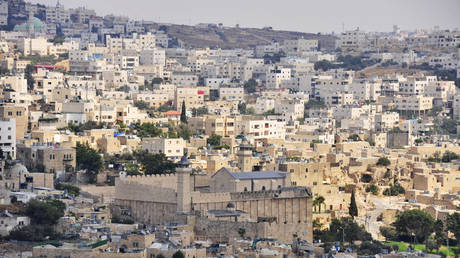
For decades, the geopolitical reality of the West Bank was dictated by boundaries that were complicated, frustrating, but fundamentally understood. Under the 1997 Hebron Agreement, a fragile baseline was established. The Palestinian Authority maintained planning and construction powers over the historic core of the city, an area where the ancient stone houses hold the weight of millennia and the shared, agonizingly contested spiritual heritage of the Ibrahimi Mosque and the Tomb of the Patriarchs.
That baseline is gone.
By administrative decree, the planning powers that dictated who could build, who could repair, and who could maintain the infrastructure around this volatile flashpoint were stripped from Palestinian hands and transferred directly to Israeli authorities. It is part of a broader, systemic restructuring. Earlier this year, a series of security cabinet decisions quietly dissolved the transaction-permit requirements that once acted as a legal filter for property sales in the territory, while simultaneously declassifying land-ownership registries.
To read these developments in a standard news briefing is to encounter a list of bureaucratic adjustments—changes to zoning boards, the re-establishment of land-purchasing mechanisms, and the shifting of administrative oversight. But bureaucracy is rarely just bureaucracy. In a landscape defined by the struggle for soil, administrative ink functions exactly like concrete. It determines whose roots are allowed to grow and whose are deemed an obstacle to the state.
Consider a hypothetical shopkeeper named Tariq, whose family has sold spices a short walk from the historic shrine for generations. For Tariq, the transfer of construction authority is not a debate over abstract legal jurisdiction. It is a question of daily survival.
When a structural wall in an ancient market begins to crack, or when a water line fails beneath the cobblestones, the entity that holds the power to approve the repair holds the power to dictate whether Tariq can open his doors. If the local municipality no longer possesses the legal authority to grant a renovation permit, the bureaucratic machinery stalls. The space becomes functionally uninhabitable. It is a slow, quiet pressure—an environment where the simple act of maintaining a home or a business becomes an agonizing legal gamble.
The objective, openly articulated by Israeli Finance Minister Bezalel Smotrich during the announcement of a new settlement expansion, is the implementation of "practical sovereignty." It is the deliberate erasure of the legal and physical distinctions that separated Israel from the West Bank. By dismantling the administrative framework of the 1990s, the current governing coalition is embedding a reality where the concept of a future, independent Palestinian state is not merely politically difficult—it is physically impossible.
The statistics compiled by international observers over the past three years paint a stark picture of this acceleration. Between early 2023 and the spring of 2026, organizations like the United Nations and Amnesty International have documented the full or partial displacement of over one hundred Palestinian herding and Bedouin communities across Area C and the South Hebron Hills. More than 3,400 homes and agricultural structures have been demolished. At the exact same time, the budget for the Ministry of Settlement and National Missions expanded by over 120 percent, fueling the advancement of tens of thousands of new settlement housing units.
This is not a sudden accident of war. It is a highly organized, heavily funded strategy of spatial restructuring.
The true weight of an administrative shift is measured by what happens when the cameras turn away.
When the legal guardrails intended to prevent fraudulent property claims are removed, the vulnerability of rural landowners spikes exponentially. For communities living in the Jordan Valley or the hills surrounding Hebron, the law was never a perfect shield, but it was a reference point. Now, with the Custodian of Government Property empowered to execute large-scale land acquisitions directly, the ground beneath these communities is shifting beneath their feet.
The international community routinely issues statements of deep concern, warning that these actions jeopardize the viability of a two-state solution. But on the ground, that language feels entirely detached from reality. The two-state solution is an abstract concept discussed in Geneva and New York. In Hebron, reality is a new checkpoint, an approved blueprint for a settler school expansion in the middle of a Palestinian neighborhood, and the steady, unstoppable rewrite of who belongs to the land.
The human element of this conflict is often lost in the macro-narratives of regional warfare and geopolitical alliances. We focus on the spectacular explosions because they are easy to broadcast. But the enduring transformation of the West Bank is occurring in the quiet rooms where land registries are opened, in the government offices where signature lines are erased, and in the markets where an old key no longer fits a new reality.
The line in the dust has not just been crossed. It has been wiped clean.