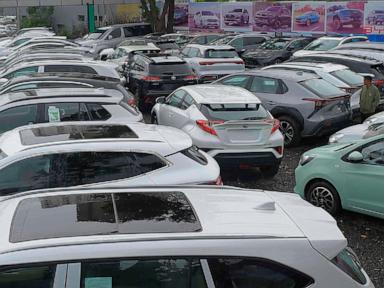
The headlines are glowing. Ethiopia has banned the import of internal combustion engine (ICE) vehicles. EV adoption is skyrocketing. Fuel shortages are supposedly the "catalyst" for a green revolution. It sounds like a triumph of policy over friction. It sounds like a blueprint for the rest of the continent.
It is a fantasy.
What we are witnessing in Addis Ababa isn't an environmental awakening or a tech-forward leapfrog. It is a desperate, top-down survival tactic by a state running out of foreign exchange reserves. Calling this an "EV transition" is like calling a shipwreck an "underwater exploration mission." The narrative that Africa is ready for a mass-market electric pivot ignores the brutal realities of grid stability, the economics of the used car market, and the physics of energy density.
The Foreign Exchange Trap
The media loves the "green" angle because it’s easy to sell. The truth is much colder: Ethiopia cannot afford to buy gas. When you spend nearly $6 billion annually on fuel imports—a massive chunk of your GDP—you aren't banning gas cars to save the planet. You are banning them because your bank account is empty.
By forcing EVs into the market, the government is attempting to shift the energy burden from imported liquid fuels to the domestic power grid. On paper, this makes sense. Ethiopia has massive hydroelectric potential, notably the Grand Ethiopian Renaissance Dam (GERD). But a grid is not just a generator.
Energy sovereignty is a noble goal, but you cannot legislate a transition before the infrastructure exists to support it. Importing a fleet of EVs into a country with frequent load shedding and a fragile distribution network creates a new kind of crisis. We are swapping a fuel queue for a charging queue, but with one major difference: you can carry a jerrycan of petrol. You cannot carry a bucket of electricity to a dead car on the side of a mountain road.
The Myth of the Leapfrog
Silicon Valley loves the term "leapfrogging." They point to mobile banking in Kenya as proof that Africa can skip landlines and go straight to 5G. They argue the same will happen with cars. Skip the gas station, go straight to the charger.
This is a fundamental misunderstanding of physics. Moving bits of data for a bank transaction requires negligible energy. Moving two tons of steel and glass up a 10% grade in the Ethiopian Highlands requires massive, sustained power.
Most EVs currently flooding the Ethiopian market are low-end Chinese imports. They are built for flat, paved, urban environments. When these vehicles hit the secondary market in three years, the batteries will be degraded by heat and erratic charging cycles. Who is going to replace a $7,000 battery pack in a car owned by a family whose annual income is less than that?
In the West, we have the luxury of subsidies and scrap programs. In most of Africa, cars live for 30 years. They are repaired, welded, and resurrected. You cannot "shade-tree mechanic" a proprietary BMS (Battery Management System) or a fried inverter. We aren't building a sustainable fleet; we are building a massive e-waste graveyard.
The Grid is the Bottleneck
Let’s talk about the math that the "EV led by Ethiopia" articles ignore. To support a 10% EV penetration in a city like Addis Ababa, the local distribution transformers need a massive upgrade.
$$P = V \times I$$
When a block of houses all plug in their cars at 6:00 PM, the current ($I$) spikes. If the voltage ($V$) drops due to grid instability, the charging time balloons or the hardware fails. Most of the residential wiring in African urban centers wasn't designed for the sustained high-amperage draw of a Level 2 charger.
In my time consulting for infrastructure projects across the Rift Valley, I’ve seen millions wasted on "smart" solutions that ignore the "dumb" reality: the wires in the ground are too thin. If you can’t keep the lights on for a surgery in a regional hospital, you shouldn't be bragging about your EV import stats.
The Hidden Carbon Cost of Desperation
There is a dark irony in the "green" narrative. When the grid fails—and it does—wealthy EV owners don't just sit in the dark. They turn on diesel generators to charge their "clean" cars.
Imagine the thermal efficiency of that chain. You burn diesel in a small, inefficient generator to create electricity, lose 20% of that energy in the conversion and charging process, and then use that power to move an EV. You would have been significantly more "green" just driving a high-efficiency Toyota hybrid.
We are seeing a "Greenwashing of Necessity." The policy isn't driven by an environmental mandate; it’s driven by a balance-of-payments crisis. By labeling it as a climate move, the government can court international climate finance and ESG (Environmental, Social, and Governance) funds. It’s a brilliant bit of branding, but it’s a lie.
Stop Solving the Wrong Problem
The obsession with private EVs is the "lazy consensus." If the goal is actually mobility and reducing fuel dependency, the answer isn't a $30,000 electric SUV for the elite.
The real disruption happens at the fringes:
- Electric Micro-mobility: Two-wheelers and three-wheelers (bolstered by battery swapping) are the only segment that actually makes sense for the current grid.
- Public Transit Electrification: One electric bus does the work of forty private cars.
- LPG and Synthetic Fuels: We need to bridge the gap with fuels that don't require a trillion-dollar grid overhaul today.
The current "success" in Ethiopia is a high-stakes gamble. If the grid doesn't keep up, or if the used car market collapses because of unrepairable electronics, the backlash against "green" tech will set the continent back twenty years.
We need to stop applauding the ban on gas cars as a sign of progress. It is a sign of a broken economy trying to innovate its way out of bankruptcy. Real progress isn't a mandate; it's a reliable 220V outlet in every home. Until that exists, the EV revolution in Africa is just a glossy brochure for a building that hasn't been built yet.
Stop buying the hype. Watch the grid. The lights are flickering for a reason.