European fishing giants are playing a shell game with ship registrations to bypass catch limits in the Indian Ocean. It’s a move that keeps their nets full while local fishing communities watch their resources vanish. While officials talk about sustainability at high-level summits, the reality on the water is a messy tangle of legal loopholes and corporate maneuvering.
A recent investigation by Bloom Association highlights a disturbing trend. French and Spanish fishing companies are "reflagging" their vessels. They move a ship’s registration from a European country to a coastal nation like Mauritius or the Seychelles. This isn't about moving operations or supporting local economies. It’s a cynical tactic to access extra tuna quotas that are technically reserved for developing nations.
If you think this sounds like a technicality, you’re wrong. It’s a direct hit to the health of the ocean and the fairness of global trade.
The mechanics of the reflagging trick
The Indian Ocean Tuna Commission (IOTC) sets limits on how much yellowfin and skipjack tuna can be pulled from the water. These quotas are meant to prevent overfishing. European Union (EU) flagged ships have a specific slice of that pie. When that slice is gone, the ships should stop fishing.
Instead, they change their flag.
By registering a Spanish-owned vessel in the Seychelles, that ship no longer counts toward the EU’s quota. It starts eating into the Seychelles' allocation. The ownership hasn't changed. The profits still flow back to Europe. The only thing that changes is the piece of paper on the bridge and the color of the flag on the mast.
This isn't just one or two rogue boats. We're talking about a systematic shift. Bloom’s report found that nearly all the industrial tuna fleet in the Indian Ocean is controlled by European interests, regardless of what flag they fly. It creates a "phantom fleet" that makes a mockery of international conservation efforts.
Why this isn't just business as usual
You might hear industry reps say this is about "local investment" or "developing regional capacity." Don't buy it. If these companies wanted to develop local capacity, they’d be training local crews and building local processing plants that weren't just tax-haven fronts.
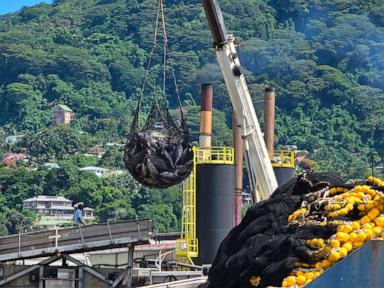
Most of these reflagged ships are massive purse seiners. These are floating factories. They use Fish Aggregating Devices (FADs)—essentially high-tech buoys that attract everything in the water. When the nets close, they don’t just catch tuna. They catch sharks, turtles, and juvenile fish.
Coastal nations in the Indian Ocean rely on these waters for food security. When European-owned ships use up the local quotas, they’re taking food off the plates of people in East Africa and South Asia. It’s a modern form of resource extraction that looks a lot like the old kind.
The failure of the Indian Ocean Tuna Commission
The IOTC is the body responsible for managing these stocks. But it’s often paralyzed by the influence of the EU. The EU is a powerful member with a massive lobbying arm.
Smaller nations often feel pressured to align with EU interests because of trade deals or aid packages. It’s a lopsided power dynamic. When the Seychelles or Mauritius "hosts" a European fleet, they get license fees. It looks like a win for their national budget in the short term. In the long term, they're selling off the future of their own seas for a fraction of what the tuna is actually worth on the global market.
Yellowfin tuna in the Indian Ocean is already overfished. Scientists have been screaming about this for years. If the current pressure stays the same, the stock could collapse. Reflagging is the secret valve that keeps the pressure high even when the official rules say it should be decreasing.
Following the money to Europe
The firms involved aren't small family operations. We're talking about massive Spanish and French conglomerates. These companies benefit from EU subsidies. They use European technology. They sell to European supermarkets.
When you buy a can of tuna in Madrid or Paris, there’s a high chance it was caught by a ship that changed its "nationality" just to stay on the water longer. The lack of transparency is staggering. Most consumers have no idea that "Product of Seychelles" might actually mean "Caught by a Spanish company using a legal loophole."
France and Spain have a responsibility to police their own companies. They can't claim to be leaders in ocean conservation while their national firms are leading the charge in quota evasion. The hypocrisy is thick enough to choke a sea turtle.
Data doesn't lie about the impact
Look at the numbers. The industrial purse seine fleet in the Indian Ocean is dominated by about 50 vessels. More than half of these now fly flags of convenience or coastal state flags despite being owned by EU companies.
The catch data shows that these reflagged vessels often catch more than they did when they were EU-flagged. Why? Because the oversight in some coastal states is weaker. There are fewer observers on boats. There’s less satellite monitoring. It’s a race to the bottom where the environment is the biggest loser.
What needs to happen right now
The "blind eye" approach from the European Commission has to end. We need a system where the "beneficial owner" of a vessel is what determines the quota, not the flag. If a Spanish company owns the boat, that boat’s catch should count against Spain’s quota. Period.
We also need a total ban on reflagging for the purpose of quota hopping. It's a transparent scam. If a ship changes flags, there should be a mandatory multi-year waiting period before it can access the new country’s quota. That would stop the "flag of the month" club that currently exists.
Immediate steps for transparency
- Public registries: Every tuna boat’s true owner must be listed in a public, searchable database.
- Vessel tracking: Mandatory, unhackable satellite tracking for all industrial fishing ships.
- Consumer pressure: Supermarkets need to stop stocking tuna from companies flagged for these practices.
- Support for coastal states: Developing nations need financial support that doesn't depend on selling out their fishing rights to foreign fleets.
If you care about the ocean, start looking at the labels and asking where that fish really came from. Supporting organizations like Bloom or the Blue Marine Foundation helps keep the pressure on. The era of the "phantom fleet" needs to end before the Indian Ocean is fished clean. Stop accepting corporate excuses for what is clearly a coordinated raid on global resources.
Demand that your representatives support the "Beneficial Ownership" rule in international fishing. Write to the big canned tuna brands and ask them for a list of the vessels they source from. If they won't give it to you, stop buying their product. The only thing these firms understand is the bottom line. Hit them where it hurts.