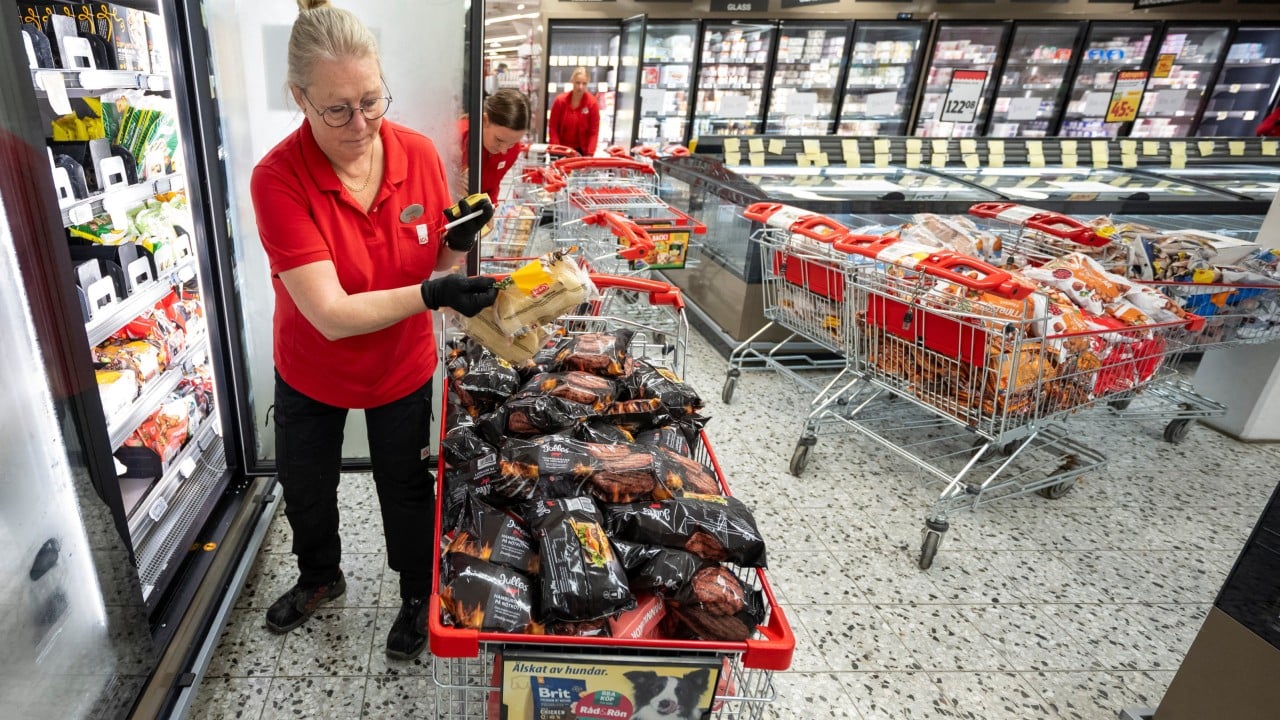
Your smart refrigerator isn't just keeping milk cold anymore. It's an internet-connected computer with heating elements inside your kitchen walls.
That reality hit home across Europe in October and November 2026. Hackers broke into commercial refrigeration systems at hundreds of supermarkets across at least a dozen countries, forcing the units into continuous defrost cycles. Food spoiled by the ton. In Normandy, supermarket coolers spiked to 80°C (176°F), melting equipment and sparking fires. Three French blood banks nearly lost transfusion plasma when attackers tried to crank their storage fridges to 110°C.
Juhan Lepassaar, executive director of the European Union Agency for Cybersecurity (ENISA), didn't mince words when unveiling the agency's biennial threat report in Brussels. "Today it was fridges, tomorrow it could be routers, the day after tomorrow it could be home appliances and so forth," Lepassaar warned.
Most news coverage treats his quote like a sci-fi headline. They're missing the technical and regulatory story underneath it. The exact architectural flaws that let attackers cook supermarket inventory in France, Belgium, and Sweden already sit inside millions of consumer kitchens.
Why Commercial Fridge Hacks Are a Blueprint for Home Attacks
People assume industrial grocery store freezers and residential kitchen appliances live in completely different technological worlds. They don't. Both rely on cheap, embedded internet-of-things (IoT) controllers built by third-party component suppliers that prioritize remote convenience over basic access control.
During the October 11 and November 2 waves of European supermarket attacks, intruders didn't need zero-day exploits or Hollywood-style code breaking. Security researchers noted the intrusions were remarkably simple to execute. In Sweden, major grocery chain ICA traced the vulnerability to exposed Danfoss refrigeration controllers. At the French Blood Establishment, supplier Coolworld pointed to a flaw inside a third-party component.
Here's why that matters for your house.
1. Remote Maintenance Backdoors Are Everywhere
Commercial technicians use cloud dashboards to check compressor temperatures without driving to a store. Appliance manufacturers build the exact same remote diagnostic tunnels into Wi-Fi ovens, smart washers, and connected refrigerators. When those cloud portals or exposed controllers lack strict authentication—or still run on factory-default credentials—anyone scanning the open internet can send commands straight to the hardware.
2. Defrost Cycles and Heating Elements Are Physical Weapons
Software bugs usually steal data. Smart appliance bugs create physical heat. Every modern frost-free refrigerator contains an electric defrost heater designed to melt ice off the evaporator coils. In the European supermarket attacks, hackers triggered continuous defrost commands while bypassing standard low-temperature alarms. Overnight, while buildings sat empty, cooling boxes turned into ovens.
Think about what sits in your own home right now:
- Smart ovens and ranges with remote preheat features via smartphone apps
- Wi-Fi dryers and washing machines with high-wattage heating coils
- Connected space heaters and thermostats tied to cloud accounts
- Smart refrigerators with automated defrost circuits and ice-maker heaters
3. Nation-State Hackers Want Disruption, Not Just Ransom
Lepassaar pointed out a shift in how state-aligned groups—citing actors linked to Iran, Russia, China, and North Korea—operate against civilian targets. French authorities publicly accused the Iranian-linked group Shahid Kaveh of orchestrating the supermarket campaign.
"In my view, nation-state threat actors don't need to take down a power grid to cause fear," Lepassaar said. "Spoiling the food on supermarket shelves gets the message across."
Attacking consumer routers and household appliances scales that psychological disruption effortlessly. Compromised home routers already form massive botnets used to knock websites offline. Hijacking consumer appliances adds physical damage and household panic to the mix.
What Most People Get Wrong About Smart Home Security
I've audited enough home networks to know the standard consumer mindset: "Why would hackers care about my dishwasher?"
Nobody is targeting you personally. Automated scanners sweep the entire IPv4 address space every few minutes looking for open ports, outdated firmware, and unpatched cloud APIs. If your smart fridge or home router responds with a known vulnerable signature, a script compromises it in milliseconds.
Another huge misconception is thinking your home Wi-Fi password protects your appliances. It doesn't. Most smart appliances don't wait for incoming connections from the internet—which your router's firewall would normally block. Instead, the appliance initiates an outbound connection to the manufacturer's cloud server. Once a hacker breaches that cloud infrastructure, exploits a flawed mobile app API, or hijacks your router's DNS settings, your local firewall does nothing to stop malicious commands from riding right down that trusted connection.
Manufacturers also bear massive blame here. For years, appliance makers treated software as an afterthought slapped onto sheet metal. A refrigerator lasts 12 to 15 years. Most manufacturers stop pushing firmware security patches after two or three years—if they ever build an update mechanism at all.
How Europe's Cyber Resilience Act Changes the Rules
Lepassaar used the Brussels briefing to push manufacturers toward "security by design" rather than bolting fixes onto broken hardware after a crisis. He pointed to upcoming European Union regulations—specifically the EU Cyber Resilience Act (CRA)—alongside plans to double ENISA's staffing and budget.
While Lepassaar admitted those resources would "never" be enough on their own, the regulatory timeline is already forcing hardware companies to scramble:
- September 11, 2026: Mandatory vulnerability and incident reporting under Article 14 of the CRA officially took effect. Manufacturers selling connected products in the EU now face a strict 24-hour deadline to submit an early warning through ENISA's Single Reporting Platform whenever they discover an actively exploited vulnerability.
- December 11, 2027: Full enforcement begins. Any connected device—from baby monitors and routers to smart refrigerators—that fails Annex I security-by-design standards loses its CE mark and cannot legally be sold in the European market. Non-compliant companies risk fines up to €15 million or 2.5% of global annual turnover.
Because global appliance brands don't build separate firmware architectures for Europe and North America, these rules will eventually raise baseline security worldwide. Eventually. Between now and late 2027, millions of insecure devices remain on store shelves and inside people's homes.
How to Lock Down Your Connected Appliances Today
You don't need to rip your smart fridge out of the wall or throw away your router. You do need to stop treating appliances like dumb metal boxes. Take these steps this week to cut off the easiest attack paths:
- Put smart appliances on a dedicated guest or IoT network. Log into your router and enable a separate guest Wi-Fi network with client isolation turned on. Move your fridge, washer, smart plugs, and TVs onto that network so a compromised appliance can't pivot to your laptop or phone.
- Audit remote-control app permissions. Open the companion apps for your oven, fridge, and thermostat. Disable remote ignition, remote preheating, or cloud-control features you never actually use. If an appliance works fine without Wi-Fi—and 90% of them do—disconnect it from your router entirely.
- Update your router firmware and kill UPnP. Your router is the choke point Lepassaar explicitly warned about. Log into its admin panel, install pending firmware updates, replace any default admin passwords, and disable Universal Plug and Play (UPnP), which lets devices punch holes through your firewall automatically.
- Enable multi-factor authentication (MFA) on appliance accounts. Your Samsung, LG, GE, or Bosch app login is a direct gateway to physical hardware in your house. Turn on MFA and use a unique password generated by a password manager.
- Check support lifecycles before buying new hardware. Before spending thousands on a connected kitchen appliance, look up how long the manufacturer guarantees security updates. If they won't put a firm support window in writing, buy the non-connected model instead.
Check your router settings tonight and kick unnecessary appliances off your Wi-Fi—it takes ten minutes and closes the exact door hackers just walked through across Europe.
For a deeper look at how the European supermarket breaches unfolded and what ENISA's warning means for household tech, watch the Euronews report on EU cyber chief warnings over home appliance hacks.