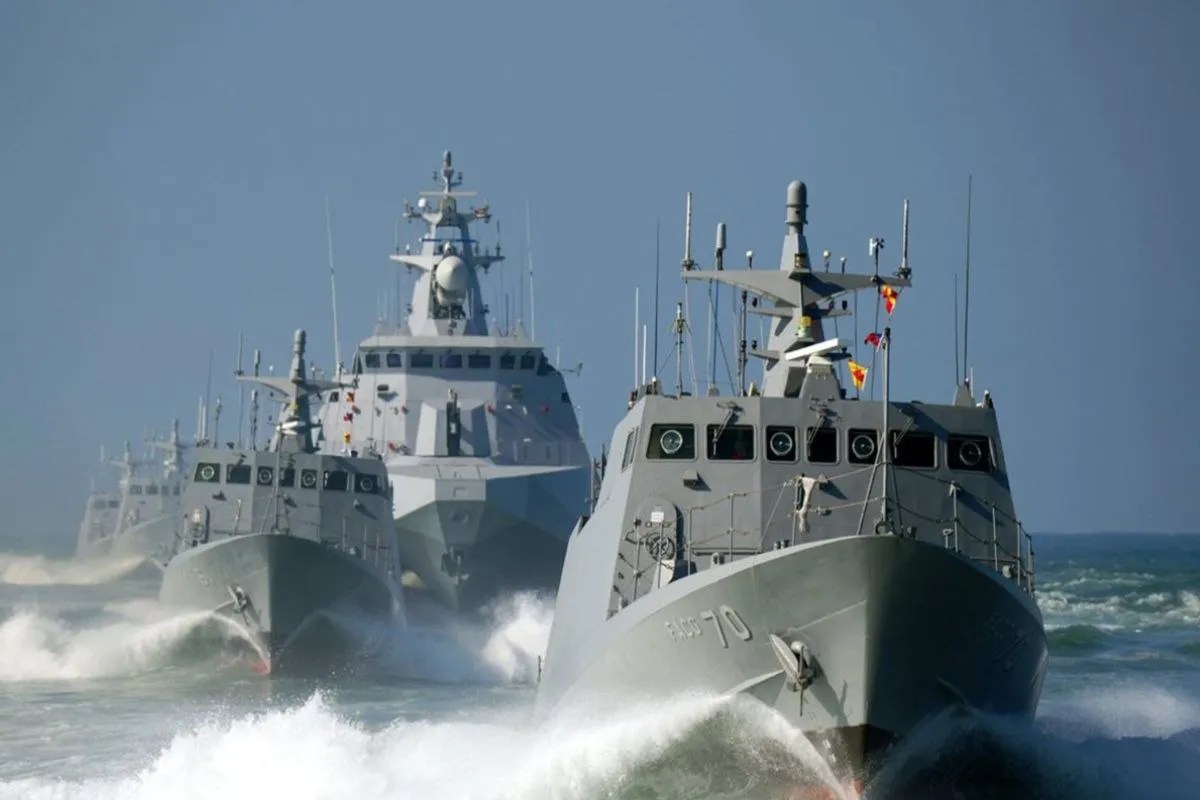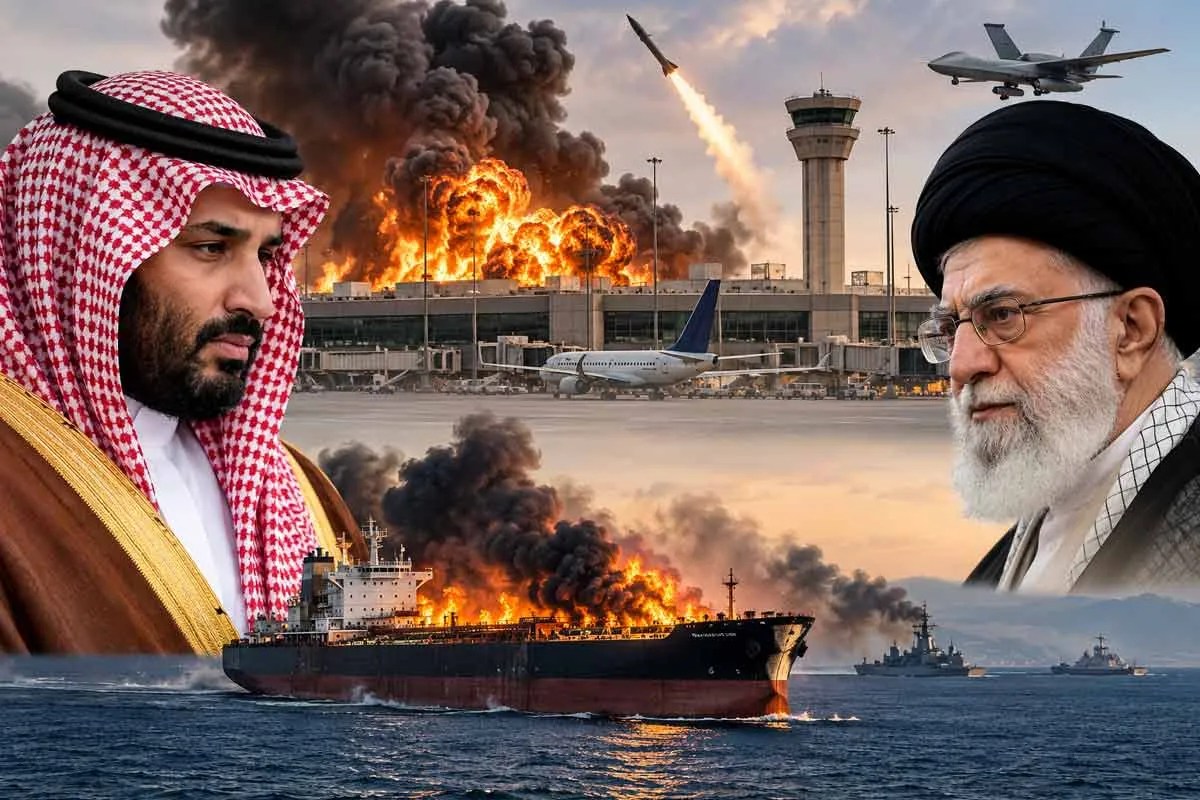
The media treats geopolitical escalation like a predictable soap opera. A drone hits a tarmac in Riyadh, an oil tanker catches fire in the Strait of Hormuz, a press release arrives from Tehran dismissing Washington's latest diplomatic posture as empty noise
Why Every Geopolitical Headline About Riyadh and Hormuz is Completely Missing the Plot
news
Panic sells. Calm doesn't.
That is the entire business model behind every headline hyperventilating over drone debris near Riyadh and a burning tanker in the Strait of Hormuz. Turn on the news or open a standard briefing and you get the standard, lazy consensus: the Middle East is on the brink of an unstoppable regional conflagration, energy corridors are choking, and the global economy is two seconds away from total systemic collapse because Washington’s deterrence strategy supposedly failed.
It is a neat, terrifying narrative. It is also entirely wrong.
If you trace the actual behavior of central banks, shipping insurers, and state-backed energy conglomerates over the last forty-eight hours, you will see a massive disconnect between media hysteria and physical reality. The markets are not panicking. The logistics networks are not fracturing. What we are witnessing is not a descent into chaos, but the noisy, violent, yet remarkably predictable operational friction of a cold war being fought entirely through proxies and asymmetric signaling.
Every single time a crude-carrying hull catches fire or an interception over the Saudi capital makes the morning wire, armchair strategists scream that diplomacy is dead and escalation is exponential. They treat every incident as a step function toward Armageddon. They ignore the baseline physics of modern statecraft.
Let us look at the structural mechanics of these flashpoints instead of swallowing the popcorn-munching panic.
The Myth of the Hormuz Chokehold
The lazy consensus loves to paint the Strait of Hormuz as a fragile glass thread holding up the entire global energy architecture. The standard line is that Tehran can choke off twenty percent of the world’s petroleum supply at a moment's notice, sending oil past two hundred dollars a barrel and starving Western industry.
It sounds dramatic. It also ignores thirty years of naval architecture, pipeline diversification, and strategic hedging.
Iran knows precisely what happens the minute they attempt a total, sustained closure of the Strait. It is not a military victory; it is economic suicide. Their own crude exports—primarily funneling to non-Western buyers under heavy sanctions—exit through those exact same waters. Furthermore, the Gulf states spent billions building bypass pipelines, like the East-West Petroline in Saudi Arabia and the Habshan-Fujairah pipeline in the UAE, specifically to route millions of barrels around the bottleneck of the Persian Gulf directly to the Red Sea and the Gulf of Oman.
When a tanker takes a hit or reports an engine-room fire near the Strait, insurance underwriters spike their war-risk premiums. That is real. That costs money. But it is a financial tax, not a physical blockade. Shippers grumble, pay the surcharge, and keep moving crude. To mistake a spike in insurance rates for the physical severing of global energy trade is to confuse a traffic jam on the highway with the complete demolition of the bridge.
The Iranian strategy is not total annihilation; it is calibrated friction. They operate in the gray zone, just below the threshold that triggers a massive, regime-ending kinetic response from the United States or its regional partners. Every drone launched or missile tracked is an act of political communication, not an opening salvo of World War III.
Why Riyadh is Not Burning
Then we have the recurring fixation on Riyadh. Whenever an interceptor streaks across the Saudi night sky, the commentary immediately pivots to vulnerabilities in Gulf defense architecture and the supposed failure of American deterrence.
Look at the actual mechanics of the defense. Saudi Arabia’s integrated air defense network, built on billions of dollars in Patriot and modern tracking hardware, did its job. Interceptions work. Debris falls where physics dictates it must fall, often creating localized damage or grass fires that make for great cinematic television, but the strategic target remains intact.
To call these interceptions a failure because a piece of shrapnel hits a perimeter fence is like calling an armored vest useless because it left a bruise from a bullet. It is fundamentally unserious analysis.
The kingdom is not a sitting duck waiting for a knockout punch. Riyadh’s entire strategic calculus under Vision 2030 relies on regional stability. Crown Prince Mohammed bin Salman’s economic diversification plans cannot survive a prolonged, devastating total war on Saudi soil. That is precisely why Riyadh has spent the last three years normalizing diplomatic channels with regional adversaries, including Tehran.
The diplomatic back-channels are working precisely because both sides know the alternative is mutual economic devastation. But nuance does not generate click-through rates. A headline reading "Riyadh Maintains Quiet Backchannel Diplomacy Despite Minor Drone Interception" doesn't capture eyeballs like "Riyadh Under Attack."
The Washington Blind Spot
The real failure here is not military or tactical; it is intellectual. Washington insiders and mainstream pundits are trapped in a twentieth-century mental model of deterrence. They think in terms of clear escalatory ladders: you hit us, we hit you harder, until one side surrenders.
That model broke down years ago.
We are living in a multipolar, asynchronous security environment. Non-state actors and middle powers play a game of calculated pinpricks. They test boundaries, measure responses, and leverage economic pressure without ever crossing the line into total war. When American officials call a counter-strike "insufficient" because it didn't eliminate every proxy threat overnight, they are judging a complex chess match by the rules of a street brawl.
Precision strikes and diplomatic warnings are not signs of weakness; they are surgical tools designed to manage escalation, not extinguish it entirely. In the shadow-war playbook, you cannot eliminate friction. You can only manage it.
If you are a business leader, an investor, or a supply chain strategist planning your moves based on the latest hyperventilating cable news segment, you are steering your ship by looking at lightning instead of the compass. Stop pricing in the apocalypse every time a drone buzzes a refinery or a tanker gets singed in the Gulf.
The real story isn't that the Middle East is sliding into the abyss. It’s that the system is absorbing the shocks, absorbing the blows, and adapting faster than the pundits can write their panic-driven copy.
Ignore the noise. Look at the balance sheets. The system is holding.