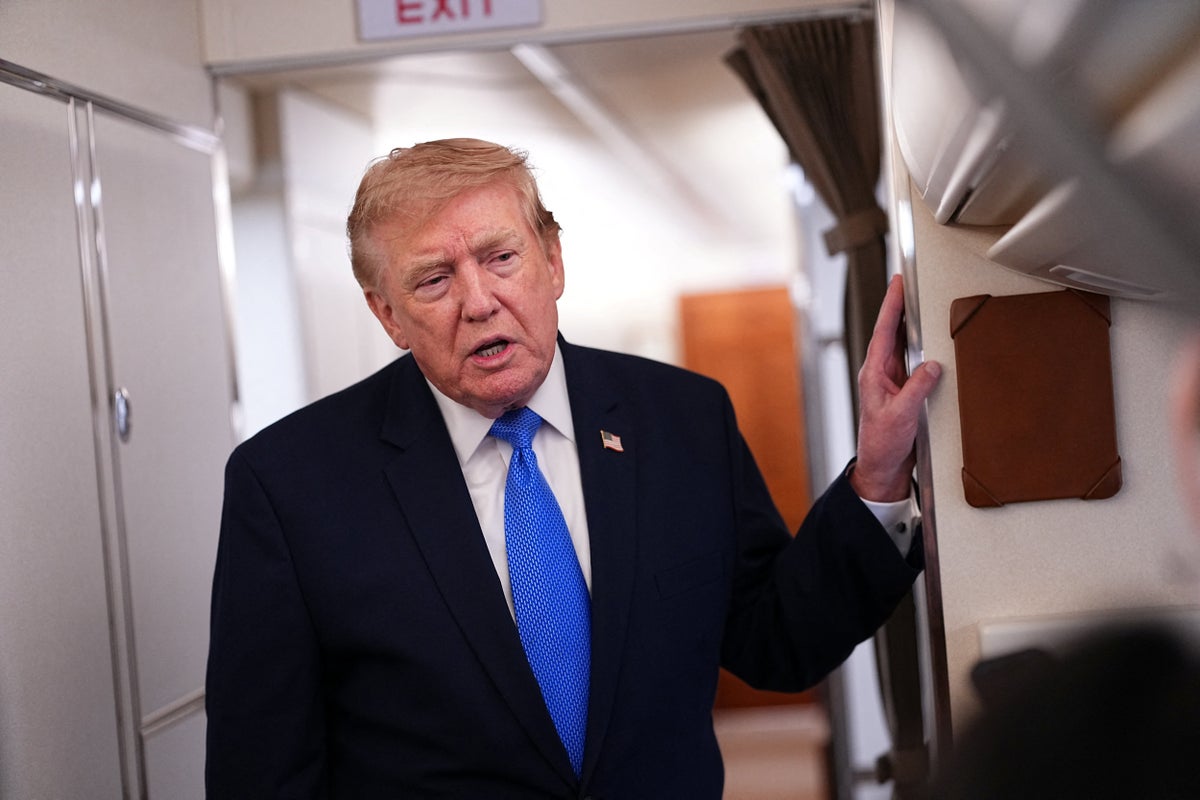
We love our grand narratives. We lap up the headlines about canceled airstrikes, near-death escalations, and apocalyptic hyperbole because they fit nicely into a comic book script. When a former commander-in-chief claims a aborted military retaliation would have ranked as the biggest strike since the Second World War, the predictable media machine grinds into motion. Pundits foam at the mouth. Hawks nod solemnly. Doves hyperventilate. Everyone scrambles to pick a side in a manufactured debate about whether restraint or aggression is the true path to salvation.
It is all a distraction.
I have spent years watching defense contractors, state department insiders, and cable news talking heads obsess over the theater of deterrence while ignoring the operational plumbing beneath their feet. The lazy consensus assumes that a single dramatic operation—or the sudden, theatrical cancellation of one—dictates the entire trajectory of global conflict. That framing is completely broken. It treats grand strategy like a reality television show where a dramatic cliffhanger changes the nature of reality.
Let us dismantle the mythology right now.
The Fallacy of the Single Catalyst
The core error baked into almost every analysis of high-stakes military standoffs is the belief in the decisive moment. We are conditioned to think that history pivots on a single red button pushed or withheld. When a leader boasts that a called-off strike was historic, the public treats it as a metric of scale. How many missiles? How many targets? How massive was the fireball?
This is a childish way to view statecraft.
Real power does not reside in the spectacular, one-off pyrotechnics that make the evening news. It lives in the slow, grinding machinery of sanctions enforcement, cyber penetration, proxy financing, and supply chain choke points. A strike—even a massive one—is merely a punctuation mark in a sentence that has been running for decades. Focusing on the canceled operation is like arguing about the dramatic exclamation point while ignoring that the entire paragraph is written in a language you do not understand.
When a government threatens annihilation and then pulls back at the eleventh hour, the casual observer thinks they are witnessing either weakness or supreme wisdom. Both assessments are lazy. The withdrawal or execution of tactical force is rarely about mercy or fear. It is a cold calculus of second-order effects that the press corps is rarely equipped to calculate.
The Economics of Modern Deterrence
Let us look at the actual mechanics of modern friction. Nations do not go to war because a president's ego is bruised, nor do they stay their hand because of a sudden wave of humanitarian empathy. They calculate the balance sheet.
Imagine a scenario where a state actor decides to absorb a minor kinetic provocation because the alternative—a full-scale regional conflagration—wipes out three percent of global maritime trade overnight, crashing their own currency before the first carrier group even reaches the theater.
That is not peace. That is arithmetic.
The media refuses to talk about the math because math does not generate clicks. Outrage generates clicks. A headline shouting about the biggest military action since 1945 gets millions of eyeballs. A sober breakdown of how maritime insurance rates dictate Middle Eastern foreign policy puts people to sleep. But if you want to understand why superpowers rattle sabers and then walk away, you have to follow the ledger, not the rhetoric.
I have sat in rooms where military planners map out escalation ladders, and let me tell you a secret: nobody cares about the aesthetic grandeur of a strike. They care about supply chain resilience. They care about whether the price of oil will spike past the threshold that triggers domestic political revolt. They care about whether an adversary's asymmetric proxies in the cyber domain will retaliate by turning off the power grid in a allied capital.
When a strike is called off, it is usually because someone finally ran the numbers on the blowback and realized the ROI was negative.
The Myth of Predictable Escalation
Another favorite delusion of the pundit class is the escalation ladder. The theory goes that if you take step A, the enemy takes step B, you respond with step C, and soon everyone is trading nuclear weapons. It is a neat, linear model that gives analysts something to draw on whiteboards.
It is also complete fiction.
Real conflict is a messy, multi-dimensional web. Actions do not trigger predictable reactions; they trigger chaotic, asynchronous ripples. A kinetic strike on an anti-air battery might prompt a silent, devastating ransomware attack against a domestic fuel pipeline three weeks later. Which event was bigger? The fiery explosion captured by a satellite, or the quiet economic paralysis that keeps citizens from filling their gas tanks?
By hyper-focusing on the theatrical threats of massive military operations, the public loses sight of the gray-zone conflict that never stops. The real war is being fought every second of every day through code, currency manipulation, proxy positioning, and information warfare. The dramatic airstrikes are just the fireworks meant to keep the audience distracted while the real work happens in the dark.
Stop treating foreign policy like a spectator sport. Stop waiting for the next big blast or the next historic cancellation to validate your worldview. The players on the global stage are not operating on emotion or cinematic flair. They are playing a multi-generational game of resource dominance, and the loudest voices in the room are usually the ones who understand it the least.
The next time a politician brags about how close they came to unleashing unimaginable destruction, do not ask how big the blast would have been. Ask who benefited from the theater.