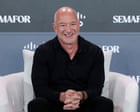
When an Amazon executive claims direct involvement in casting the next James Bond, the industry noise misses the structural reality of intellectual property governance. Rumors and public statements surrounding Jeff Bezos, Amazon MGM Studios, and the purported casting of Robert Pattinson as 007 are not celebrity gossip; they are data points illustrating a fundamental power shift in franchise management. Evaluating this situation requires separating unverified tabloid assertions from the binding corporate mechanics established during Amazon's $8.5 billion acquisition of Metro-Goldwyn-Mayer in 2022.
To understand how a lead actor is actually selected for the Bond franchise, one must map the intersection of creative control, capital allocation, and corporate ego. Standard entertainment reporting treats casting as a linear creative choice made by a studio head. In reality, the 007 property operates under a dual-lock governance structure that restricts unilateral executive intervention, regardless of who signs the checks.
The Structural Reality of Eon Productions and Amazon MGM
The primary flaw in narratives claiming Jeff Bezos single-handedly selected Robert Pattinson lies in a misunderstanding of the corporate charter governing James Bond. When Amazon acquired MGM, it did not purchase outright, unilateral creative control over the character. It purchased a 50 percent financial stake in the franchise's underlying rights, paired with distribution privileges.
The remaining 50 percent—and, critically, absolute creative veto power—resides with Eon Productions, controlled by Barbara Broccoli and Michael G. Wilson. Under the longstanding joint venture agreement between Danjaq (Eon's parent company) and MGM, Eon holds contractual authority over:
- Script approval and narrative direction: No screenplay enters production without explicit sign-off from Eon leadership.
- Director and key personnel hiring: Eon selects the creative architects of each installment.
- Principal casting: The selection of the actor portraying James Bond requires mutual agreement, with Eon historically acting as the primary filter before a candidate is ever presented to the distributing studio.
- Release windows and format: Eon has consistently blocked attempts to dilute the theatrical exclusivity of the core films through streaming-first releases or unauthorized television spin-offs.
For Jeff Bezos to be "heavily involved" in casting Robert Pattinson, two distinct operational realities must exist simultaneously. First, Barbara Broccoli and Michael G. Wilson would have had to initiate or validate Pattinson as their preferred choice. Second, Amazon leadership would have exercised its co-approval rights during final talent negotiations, likely tied to back-end compensation structures and multi-picture commitments.
Claims that a tech founder bypassed a sixty-year-old family-run production entity to dictate casting ignore the legal architecture of the Danjaq-MGM partnership. Any executive involvement from Amazon's upper echelon occurs at the financial approval gate, not the creative discovery phase.
Deconstructing the Claim and Factual Baseline
Analyzing the premise—"Jeff Bezos says he was 'heavily involved' in casting Robert Pattinson as new 007"—requires strict adherence to verifiable facts versus speculative industry chatter.
Established Facts:
- Ownership: Amazon closed its acquisition of MGM in March 2022, absorbing the studio's catalog and its 50 percent stake in the Bond film rights.
- Creative Stalemate: Following the release of No Time to Die in 2021, development on the twenty-sixth Bond installment stalled for years due to documented friction between Amazon's desire for an expanded cinematic universe and Eon's commitment to singular, event-driven theatrical releases.
- Talent Profile: Robert Pattinson fits the historical demographic and professional profile Eon favors for a franchise reboot: a British actor in his late thirties, possessing established critical credibility, global box-office recognition, and a willingness to pivot away from previous franchise associations (Twilight, The Batman).
Unverified Assertions and Hypotheses:
- Official Casting: Neither Eon Productions nor Amazon MGM Studios has issued an official press release confirming Robert Pattinson as the next James Bond. Until Eon makes a formal announcement, any casting claim remains speculative or premature.
- Executive Attribution: Public attribution of casting decisions to Jeff Bezos aligns with a recognizable pattern of executive signaling—where major stakeholders claim proximity to high-prestige creative wins—rather than standard operational practice at Amazon MGM Studios, which is run day-to-day by Mike Hopkins and Jennifer Salke.
If Bezos did comment on involvement in such a decision, the mechanism would be capital authorization. A-list talent of Pattinson's caliber commands substantial upfront fees, first-dollar gross participation, and scheduling protections across rival studio commitments (such as Warner Bros.' The Batman sequels). Approving an unprecedented talent expenditure package requires sign-off from the highest tiers of Amazon's corporate hierarchy. In corporate parlance, authorizing a nine-figure talent commitment translates easily into "heavy involvement" when recounted informally.
The Economics of Franchise Rebooting
Casting James Bond is not an artistic exercise; it is a capital preservation strategy. The Bond franchise functions as an annuity for its rights holders, provided each generational transition succeeds without damaging brand equity. When a lead actor departs, the studio faces acute transition risk.
A successful Bond casting must optimize three competing financial variables:
1. Customer Acquisition Cost (CAC) vs. Brand Recognition
Casting an unknown actor reduces upfront salary expenses, keeping production budgets contained. However, an unknown lead increases marketing expenditure, as the studio must spend heavily to establish audience familiarity. Conversely, casting an established global star like Robert Pattinson drastically lowers marketing friction. Audiences already possess a clear mental model of the actor's screen presence, allowing the studio to focus promotional capital on the spectacle rather than introducing the protagonist.
2. Multi-Picture Amortization
Eon and Amazon do not cast an actor for a single film; they underwrite a ten-to-fifteen-year asset lifecycle spanning three to five installments. The upfront cost of securing a top-tier actor is amortized across a decade of theatrical box office, home entertainment licensing, and lucrative brand partnerships. Luxury watchmakers, automotive manufacturers, and apparel brands pay tens of millions of dollars in promotional tie-ins based directly on the perceived cultural cachet of the actor wearing the tuxedo. A recognizable, fashion-forward actor like Pattinson immediately maximizes commercial endorsement yields before a single frame of film is shot.
3. Opportunity Cost and Scheduling Lock-In
The primary financial risk of hiring an established franchise actor is scheduling congestion. Unlike Sean Connery, Pierce Brosnan, or Daniel Craig—all of whom were relatively unencumbered by competing tentpole commitments when cast—Pattinson is already anchored to DC Studios' The Batman franchise. Securing him for 007 requires Amazon to pay a premium to buy out his availability windows, creating potential production bottlenecks if rival studios delay their shooting schedules.
The Principal-Agent Problem in Studio Acquisitions
The friction surrounding who gets credit for casting 007 exemplifies the principal-agent problem in corporate media mergers. Amazon (the principal) acquired MGM to bolster Prime Video's subscriber retention and elevate its prestige in Hollywood. However, Amazon relies on Eon Productions (the agent) to execute the creative work that generates the asset's value.
Because Eon controls the creative inputs while Amazon bears the primary capital risk for production and marketing, misalignment is inevitable:
- Amazon's Objective: Maximize content volume, accelerate production timelines, and integrate the IP into a broader ecosystem of consumer retail, streaming subscriptions, and spin-off series.
- Eon's Objective: Protect long-term brand scarcity, maintain strict quality control, and preserve the theatrical prestige of the core film series, even if that requires five-year gaps between releases.
When rumors surface that Amazon's founder is directly involved in casting, it signals an attempt by the capital provider to assert operational dominance over the creative gatekeeper. Whether true in a literal day-to-day sense or exaggerated for public consumption, the narrative serves a specific corporate function: it reassures shareholders and the market that Amazon is actively managing its $8.5 billion investment rather than remaining a passive financier held hostage by a reluctant joint-venture partner.
Limitations of High-Profile Casting Strategies
Assuming the hypothesis holds and Amazon and Eon are moving forward with a high-profile star like Robert Pattinson, the strategy carries distinct structural vulnerabilities that cannot be mitigated by executive oversight.
Audience Typecasting and Franchise Fatigue
The historical formula for Bond relies on the actor disappearing into the role. Sean Connery, Roger Moore, and Daniel Craig became synonymous with 007 because they lacked overwhelming prior associations with other iconic characters. Casting an actor who has already headlined two massive global franchises (Twilight and The Batman) introduces cognitive dissonance. Viewers may struggle to separate the performer's established screen persona from the Bond archetype, weakening the immersive quality that drives repeat theatrical viewings.
Escalating Above-the-Line Costs
Modern blockbuster budgets regularly exceed $250 million before marketing. Bringing in an A-list lead inflates above-the-line costs from the outset of the new era, leaving minimal margin for error if international box office returns—particularly in contracting markets like China—fail to rebound to Skyfall or No Time to Die levels. When an actor enters a franchise with maximum industry pricing power, the studio surrenders its ability to capture asymmetric upside on the first installment.
Creative Interference Risks
When top corporate executives become personally invested in specific casting choices, objective quality control degrades. If a production encounters script issues or tonal mismatches during principal photography, studio leadership is less likely to mandate costly reshoots or course corrections if doing so implies their marquee casting choice was flawed. Executive ego becomes entangled with creative execution, turning a business decision into a personal reputation defense.
Evaluating Future Franchise Signals
To accurately track the trajectory of the next James Bond installment without falling prey to engineered PR narratives or unverified social media claims, observers must monitor verifiable operational milestones rather than executive anecdotes.
- Director Attachment: Eon Productions always locks in a director and a shooting script before finalizing principal casting, as the actor must align with the specific tonal direction of the reboot. Watch for official trade announcements (via Variety, The Hollywood Reporter, or Deadline) naming a director first.
- Production Start Dates at Pinewood Studios: Physical stage bookings at Pinewood Studios in the United Kingdom represent hard capital commitments. Until soundstages are reserved, pre-production has not meaningfully begun.
- Danjaq Corporate Filings: New corporate subsidiaries registered in the UK under Danjaq or Eon (historically named "B26" for Bond 26) signal the formal transition from development to active financing.
Until Eon Productions issues a formal press conference introducing the actor alongside Barbara Broccoli and Michael G. Wilson, any claim of executive involvement in casting Robert Pattinson—or any other candidate—should be treated strictly as corporate positioning. In the governance of James Bond, capital provides the platform, but Eon still holds the keys.