The light in Los Angeles has a specific, golden weight to it, but for Elena, it had become a physical burden. Two years ago, she was a high-functioning paralegal in Santa Monica, a woman who measured her life in billable hours and sunrise jogs along the Strand. Today, her world is the size of a queen mattress. The simple act of boiling water for tea feels like summiting Everest without oxygen. This isn’t just tired. This is a cellular betrayal.
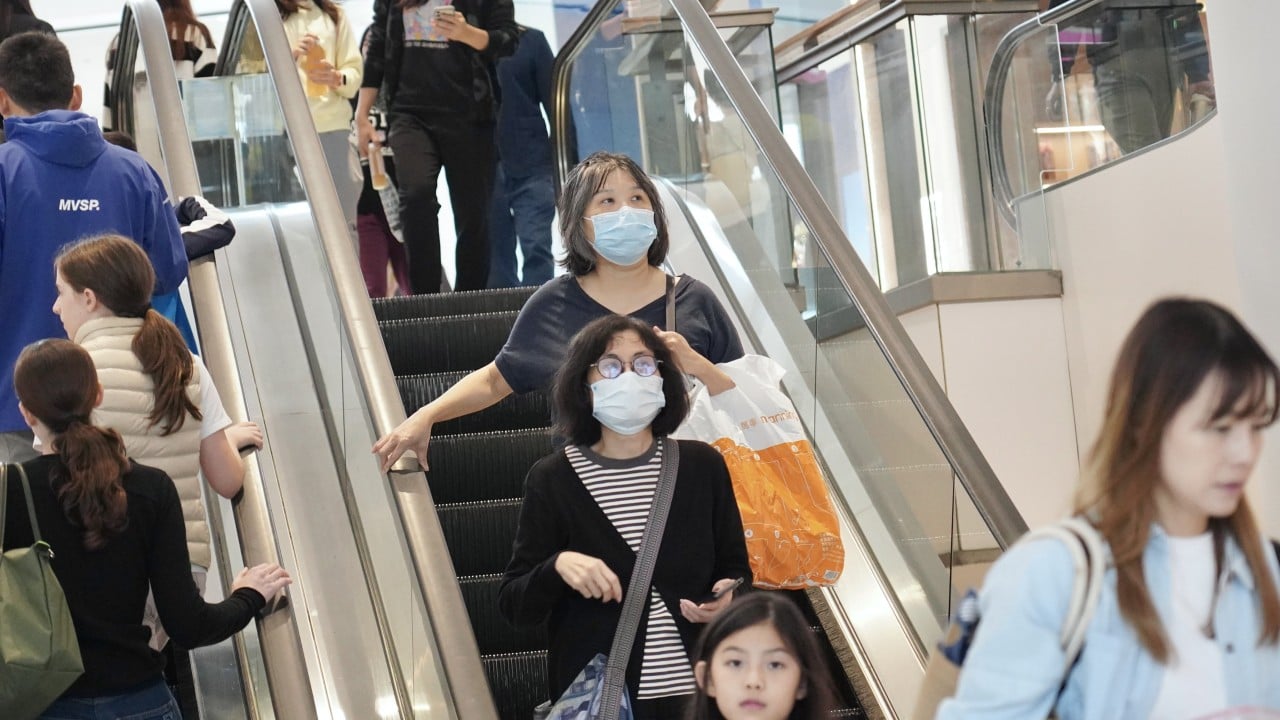
Elena is one of the thousands across Los Angeles County living in the shadow of Long COVID, a condition that has morphed from a medical mystery into a quiet economic and social catastrophe. While the rest of the world has scrubbed the sanitizers from their entryways and tucked their masks into the back of junk drawers, Elena and a growing legion of "Long Haulers" are stuck in a loop of March 2020.
They are the ghosts in the machinery of a city that prizes hustle above all else.
The Mathematics of a Breakdown
In a county of ten million people, the statistics are staggering, yet they remain strangely invisible. When you look at the data provided by the Los Angeles County Department of Public Health, the numbers suggest that roughly one in ten people who contracted the virus are still grappling with symptoms months or years later.
Do the math. That is hundreds of thousands of neighbors, coworkers, and friends.
The economic engine of Southern California relies on movement. It relies on the barista at the silver-lake cafe, the film tech in Burbank, and the logistics manager in Long Beach. When that engine loses a cylinder, things start to smoke. But for the individual, the cost isn't just a dip in the GDP. It is the terrifying reality of a bank account hitting zero while the brain fog makes it impossible to even fill out a disability form.
Consider a hypothetical but common trajectory: A freelance graphic designer catches a "mild" case of the virus. Two weeks later, the fever is gone, but the heart palpitations start. Every time they sit at the computer, their pulse spikes to 130 beats per minute. Their vision blurs. The client emails pile up. Then come the "crashes"—a state known as Post-Exertional Malaise. One afternoon of grocery shopping leads to three days of being unable to lift a spoon.
Savings evaporate. Health insurance, often tied to the very jobs these people can no longer perform, vanishes. In a city where the median rent for a one-bedroom apartment can swallow a full-time salary whole, "broke" is a destination that arrives with lightning speed.
The Weight of Being Disbelieved
The physical pain is one thing. The silence from the medical community is another.
Early on, many patients in Los Angeles reported being told by doctors that their symptoms were merely "anxiety" or the byproduct of "pandemic stress." Imagine your body is on fire, your lungs feel like they are filled with wet sand, and the person with the stethoscope tells you to try meditation. It is a secondary trauma.
The science is finally catching up, pointing toward micro-clots, persistent viral reservoirs, and an immune system that has forgotten how to turn itself off. But science moves at the speed of a glacier, while the rent is due on the first of the month.
There is a profound disconnect between the "Post-Pandemic" narrative and the reality of the Long COVID clinics at UCLA or Cedars-Sinai. These centers are overwhelmed, with waitlists stretching into the horizon. For the uninsured or those under-insured in the vast, underserved stretches of the Eastside or South L.A., these specialized clinics might as well be on Mars.
A City of Invisible Borders
The crisis has exposed the jagged cracks in our social safety net. Los Angeles is a city of extreme contrasts, and Long COVID has only deepened the divide.
If you are a tech executive with the ability to work from home and a robust PPO plan, Long COVID is a grueling challenge that you might eventually manage. You can afford the supplements, the private specialists, and the time off. But what happens to the bus driver? What happens to the hotel housekeeper who has exhausted her sick leave?
For these residents, being "ignored" isn't a feeling; it’s a policy.
The federal and state disability systems were never designed for a mass-disabling event of this scale. They require objective, "standard" testing—scans that show a tumor, blood tests that show a specific deficiency. But Long COVID is a thief that leaves no fingerprints on a standard metabolic panel. It hides in the mitochondria. It lurks in the autonomic nervous system.
When the system demands "proof" of an invisible illness, the sick are forced to become amateur litigators for their own lives. They spend their limited energy fighting for a few hundred dollars a month in aid, often losing the battle because they lack the cognitive "spoons" to navigate the bureaucracy.
The Social Erosion
We talk about the economy and the medical bills, but we rarely talk about the erosion of the self.
Relationships buckle under the weight of chronic illness. Friends who were there for the initial "get well soon" flowers eventually drift away when the invitations to brunch are declined for the twentieth time. The social fabric of Los Angeles—built on being "seen" and being "active"—doesn't have a place for someone who needs to lie in a dark room for fourteen hours a day.
There is a specific kind of grief that comes with mourning a version of yourself that is still technically alive. Elena looks at her running shoes in the closet and sees artifacts from a lost civilization. She watches the traffic on the 405 from her window and feels like she is watching a movie in a language she no longer speaks.
The stakes are not just financial. They are existential. We are witnessing the hollowing out of a generation’s vitality.
The Cost of Looking Away
Why is this being ignored?
Because to acknowledge the scale of Long COVID is to acknowledge that the danger never truly left. It is to admit that our "return to normal" was built on a foundation of discarded people. It is much easier to believe that the pandemic is a chapter in a history book than to look at the person struggling to walk up a flight of stairs and realize the book is still being written.
But looking away has a price.
When thousands of people drop out of the workforce, the cost is passed on to everyone. It shows up in labor shortages, in rising insurance premiums, and in the increased strain on public services. More importantly, it shows up in the moral ledger of the city. A society is measured by how it treats those who can no longer contribute to the "hustle."
The solutions aren't mysterious, but they require a will that has been lacking. We need a streamlined disability process that recognizes the unique presentation of post-viral illness. We need massive investment in clinical trials for treatments that go beyond "pacing" and "breathing exercises." We need a housing safety net that doesn't let a medical catastrophe turn into a homelessness crisis.
The Long Walk Back
The sun continues to set over the Pacific, painting the sky in shades of violet and bruised orange. The city roars on, indifferent to the quiet struggles happening behind the blinds of thousands of apartments.
Elena sits on her balcony for ten minutes today. That is her victory. Yesterday she could only manage five. She is learning to live in the increments, to find meaning in the smallest of spaces. But she shouldn't have to do it alone.
She isn't a statistic. She isn't a "residual effect" of a global event. She is a person whose life has been paused, waiting for a city and a medical system to finally look her in the eye and admit that she is there.
The tragedy of Long COVID in Los Angeles isn't just the virus itself. It is the realization that in the rush to get back to the way things were, we decided that some people were simply the price of admission.
Somewhere in a small apartment in Echo Park, a light goes out early. Not because the occupant is sleeping, but because the effort of keeping the eyes open has become too expensive to pay. The city continues its loud, neon dance, while the silence of the sick grows louder every single day.