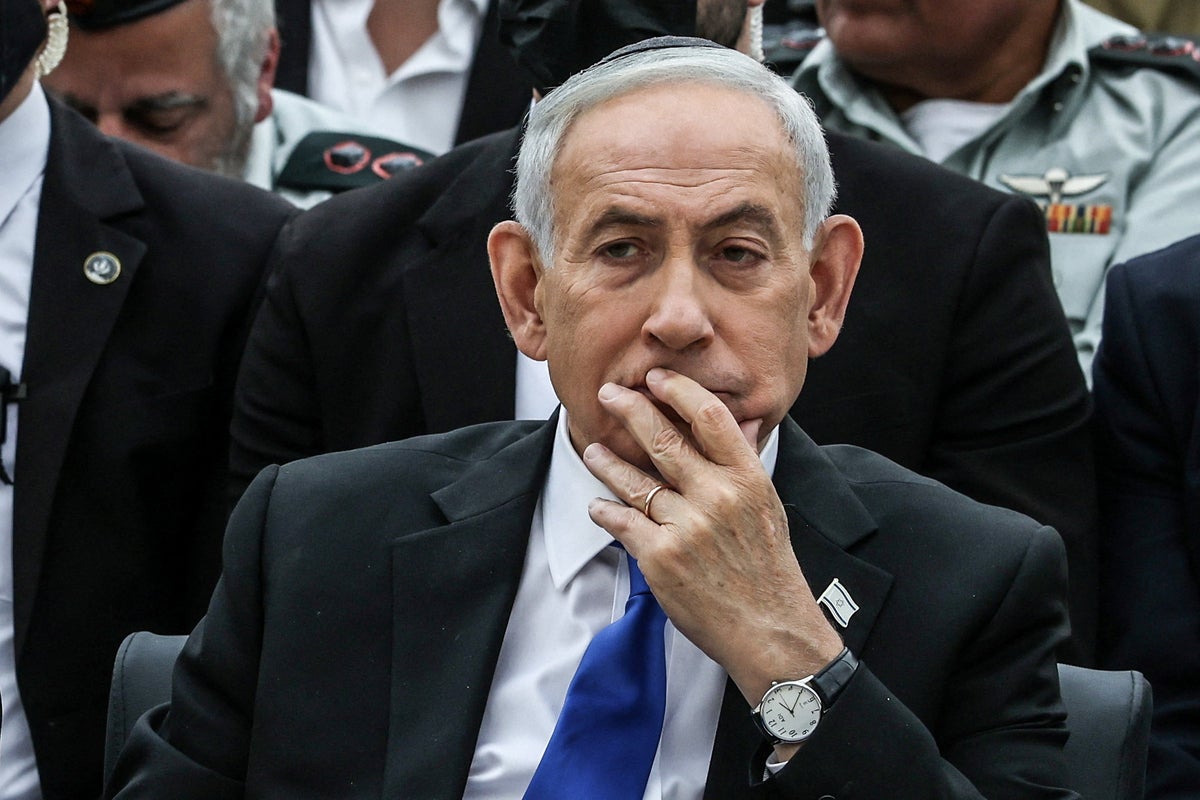
Israeli Prime Minister Benjamin Netanyahu sent shockwaves through the Middle East by declaring he covertly visited the United Arab Emirates on March 26 during the height of the US-Israeli war with Iran. The Prime Minister's Office hailed the secret rendezvous with UAE President Sheikh Mohamed bin Zayed Al Nahyan in the oasis city of Al-Ain as a historic breakthrough. Within hours, Abu Dhabi completely rejected the narrative, calling the claims entirely unfounded. This public clash exposes a raw fracture in the anti-Iran coalition, revealing how the immense pressure of regional warfare is pushing normalization to its absolute breaking point.
The Al Ain Disconnect
The official Israeli account spares no detail. Former prime ministerial aides went public to describe a reception featuring the honor of kings, claiming Sheikh Mohamed personally drove Netanyahu from the tarmac to the palace. According to Israeli officials, this unannounced diplomacy occurred during Operation Roaring Lion, a period defined by intense military exchanges between the US-Israeli alliance and Iran.
The Emirati Ministry of Foreign Affairs responded with a icy rebuttal. Abu Dhabi stated unequivocally that no such visit took place, nor did the country host any secret Israeli military delegations. The UAE insisted that its relationship with Tel Aviv is conducted strictly within the transparent framework of the 2020 Abraham Accords, rejecting what it termed misleading political narratives.
This is not a simple misunderstanding. It is a calculated, high-stakes collision of national interests. Netanyahu needed to demonstrate to his domestic audience and regional adversaries that Israel is not isolated, proving that the multi-front war with Iran has cemented a solid bloc of regional partners. Abu Dhabi, conversely, faces an entirely different set of survival calculations.
Air Defenses and Secret Strikes
While the political leaders trade public denials, the underlying security architecture tells a far more complex story. US Ambassador to Israel Mike Huckabee confirmed that Israel deployed an Iron Dome air defense battery along with specialized military personnel directly to the UAE during the conflict. This unprecedented overseas deployment followed an urgent phone call between Netanyahu and the Emirati president after Iranian missile and drone strikes targeted critical Gulf infrastructure.
The intelligence sharing ran deep. Mossad Director David Barnea made at least two covert trips to the UAE during the 40-day war to coordinate military defense operations. Security cooperation is no longer a theoretical benefit of a diplomatic treaty; it is an active wartime mechanism.
The friction arises because the UAE is playing a highly dangerous double game. While relying on Israeli tech to intercept Iranian drones, the Wall Street Journal reported that the UAE secretly launched its own retaliatory airstrikes using Mirage 2000-5F fighter jets against an Iranian refinery on Lavan Island in early April. Abu Dhabi wants the military benefits of the alliance but cannot afford the public blowback of being seen as Israel's wartime launchpad.
Tehran Seizes the Fracture
The public row immediately drew a fierce reaction from Tehran. Iranian Foreign Minister Abbas Araghchi claimed that Iran's intelligence services had tracked these movements weeks ago. He issued an ominous warning on social media, declaring that collusion with Israel is an unforgivable gamble and promising that those who work with Tel Aviv to sow division will be held to account.
For Iran, the public denial by the UAE is a diplomatic victory. It allows Tehran to project power and intimidation over the smaller Gulf states, reinforcing the narrative that partnering with Israel carries an unacceptable security cost.
REGIONAL WARTIME ALIGNMENTS
┌────────────────┐          ┌────────────────┐
│     ISRAEL     │          │      UAE       │
├────────────────┤          ├────────────────┤
│ Wants public   │          │ Demands covert │
│ validation of  │◄────────►│ cooperation to │
│ alliance to    │          │ protect energy │
│ deter Iran.    │          │ infrastructure.│
└────────────────┘          └────────────────┘
        ▲                           ▲
        │                           │
        └─────────────┬─────────────┘
                      ▼
            ┌────────────────┐
            │      IRAN      │
            ├────────────────┤
            │ Employs threats│
            │ and leverage to│
            │ break the bloc.│
            └────────────────┘
The Cost of Political Exposure
The core issue is that Netanyahu violated the first rule of Gulf diplomacy: absolute discretion. For years, the Abraham Accords functioned precisely because the most sensitive security arrangements stayed in the shadows. By exposing the alleged Al-Ain meeting to score quick political points at home, the Israeli leadership compromised the diplomatic cover the UAE requires to manage its volatile relationship with Iran.
The UAE shares a maritime border with Iran and hosts billions of dollars in vulnerable oil, gas, and commercial infrastructure. It cannot simply detach itself from its geographic reality. If the price of using the Iron Dome is public submission to Netanyahu's political messaging, the Emiratis may decide the cost of the alliance is simply too high to bear.
The rift shows that shared fear of Iran can bring Israel and Arab states into the same war room, but it cannot force them to share the same script. Security coordination will likely continue out of sheer necessity, but the trust required to transform the Abraham Accords into a true regional alliance has suffered a devastating blow.

:max_bytes(150000):strip_icc():focal(819x186:821x188)/Murdaugh-Family-e90854a716884d608fb6fd925e18d840.jpg)
