Brussels wants another extension. Of course it does. Extending UNIFIL past 2026 is the easiest press release in foreign policy.
It costs diplomats nothing. It requires no painful reckoning with why a peacekeeping force created in 1978 has spent nearly half a century watching armed actors treat the Blue Line like a suggestion box. If you enjoyed this article, you should look at: this related article.
Competitor coverage on the European Union hoping for a renewal of UNIFIL's mandate in southern Lebanon beyond 2026 treats diplomatic optimism as strategy. It assumes that keeping blue helmets on the ground automatically equals stability, deterrence, or progress toward a functioning state.
That is lazy consensus. Worse, it is a crutch. For another perspective on this story, check out the recent coverage from NBC News.
When European officials call for extending UNIFIL past 2026, they are not proposing a breakthrough. They are preserving a habit. A comforting ritual where international institutions sign off on continuity because admitting failure in Beirut and Brussels is politically inconvenient.
The Myth of Blue Helmets as a Shield
Ask anyone who has spent years tracking Levantine security affairs what happens when diplomats confuse presence with power. I have watched governments pour billions of euros and dollars into stabilization missions, buffer zones, and monitoring frameworks that look immaculate on briefing slides and collapse the moment real pressure hits.
Presence is not deterrence. Observation is not enforcement.
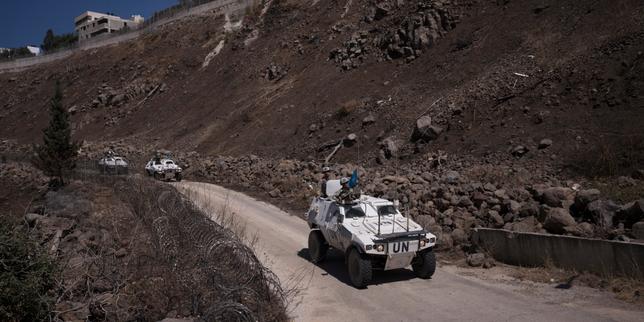
UNIFIL was established under Security Council Resolutions 425 and 426 in 1978, then expanded dramatically after the 2006 war under Resolution 1701. On paper, its job includes monitoring the cessation of hostilities, supporting the Lebanese Armed Forces as they deploy south of the Litani River, and helping create an area free of unauthorized armed personnel and assets.
In reality, the gap between the mandate on paper and the facts on the ground has been a running joke in intelligence circles for years.
Let us define the terms precisely before anyone romanticizes what peacekeeping actually does. Peacekeeping under classic UN doctrine relies on consent, impartiality, and minimal use of force—usually in self-defense or defense of the mandate. It is designed to supervise an existing truce between willing parties. Peace enforcement or active disarmament requires robust operational authority, political backing, and a local state willing and able to back it up.
Calling a lightly armed observer-and-patrol mission a security guarantee when a non-state actor holds superior local firepower is a category error. You cannot use a referee's whistle to stop a brawl when one side owns the stadium.
When Brussels pushes to extend UNIFIL past 2026 without confronting that structural mismatch, it mistakes motion for momentum.
Why 2026 Matters More Than Diplomat Speak Admits
The 2026 horizon is not just another calendar tick on a renewal cycle. It is a stress test of whether international actors have learned anything from repeated cycles of escalation along the Israel-Lebanon border.
Every time a crisis erupts and subsides, the same diplomatic script reappears. Condemn violations. Reaffirm Resolution 1701. Call for restraint. Renew the mandate.
Consider the incentive structure this creates. For political factions in Beirut that rely on armed leverage rather than state institutions, a predictable, non-coercive UN presence is manageable. It provides international cover, humanitarian aid channels, and diplomatic breathing room without forcing fundamental choices about sovereignty or monopoly on the use of force.
For European capitals, renewing UNIFIL past 2026 offers a way to stay visibly engaged in Middle Eastern security without taking on high-risk military commitments or spending domestic political capital on tough regional diplomacy.
Imagine a scenario where European leaders actually tied post-2026 funding and diplomatic support to verifiable milestones on Lebanese state authority, customs reform, and border control. Suddenly, the easy consensus evaporates. Hard trade-offs appear. Bureaucracies hate hard trade-offs.
So the default answer becomes extension. Extend the mandate. Hope the temperature drops. Pray the next shock waits until after the next budget cycle.
That is not statecraft. That is managing decline with better stationery.
What People Actually Ask About UNIFIL and Southern Lebanon
Whenever renewals come up, the same questions pop up in search bars and policy panels. Most of them start from the wrong premise.
Does extending UNIFIL actually stop cross-border escalation?
No—not by itself, and pretending otherwise sets everyone up for disillusionment.
Peacekeepers can document incidents, maintain communication channels, and occasionally lower friction at local flashpoints. Real strategic restraint comes from deterrence balances, political calculations in Tehran, Beirut, and Jerusalem, and the domestic cost of war. Blaming blue helmets when strategic actors decide to fight is unfair to the soldiers wearing them; claiming blue helmets prevent war on their own is dishonest.
Why doesn't UNIFIL just disarm militant groups in the south?
Because the mandate, rules of engagement, and political consensus required for forceful disarmament do not exist.
To disarm a deeply entrenched armed movement in rugged terrain woven into local communities, a force would need overwhelming combat capability, clear authorization, and a sovereign host government pushing in the same direction. Lebanon has struggled for decades with state weakness, economic collapse, and political paralysis. Asking an international peacekeeping force to do what the Lebanese state cannot or will not do is a recipe for bloodshed and mission collapse.
Is withdrawing UNIFIL completely the smart move?
Pulling out abruptly without a credible alternative creates a vacuum—and vacuums in the Levant fill fast with bad news.
Total withdrawal would strip away an established channel for deconfliction, early reporting, and civil-military coordination. Worse, it would look like Western abandonment of Lebanon at a moment when the country's institutions are already fragile.
Here is the contrarian truth most pundits dodge: the choice is not between blind renewal and reckless abandonment. The real choice is between zombie continuity and conditional, hard-nosed reform.
The Heavy Hitters Were Right About Limits, Wrong About Inertia
Seasoned diplomats and strategic thinkers—from former UN officials who have run Middle East missions to veteran regional analysts like Jean-Marie Guéhenno, who led UN peacekeeping operations, and scholars of Levant security—have long pointed out a basic truth: peacekeeping is a tool, not a substitute for politics.
When political leaders in Beirut and across the region refuse to resolve core questions of sovereignty and armed authority, external missions hit a ceiling. You can raise that ceiling slightly with better intelligence, mobility, and coordination. You cannot turn a ceiling into a foundation.
Where European policy goes wrong is treating the ceiling as the floor. Instead of asking what conditions must change after 2026 for a mission to make sense, Brussels treats extension as the end goal.
I have seen this movie play out in conflict zones from the Balkans to the Horn of Africa. Missions linger for years after their original premise has eroded because nobody wants to own the transition or absorb the blame if things worsen. Soon, the mission becomes part of the furniture—essential in theory, marginal in decisive moments.
The Downsides of Calling Brussels' Bluff
Being contrarian is easy when you do not have to manage a crisis at 3:00 a.m. So let us be honest about the risks of challenging a post-2026 UNIFIL extension.
First, diplomatic friction. Pushing for strict conditions or a time-bound restructuring rather than a clean rollover could trigger pushback from partners who value institutional stability and fear sudden shocks on the ground.
Second, loss of eyes and ears. Even an imperfect mission provides reporting, liaison mechanisms, and a presence that can complicate worst-case calculations or assist civilians during emergencies. Cutting it loose without replacement could leave policymakers flying blinder.
Third, domestic backlash in Lebanon. Any external demand tied to disarmament or state monopoly over weapons is politically explosive inside Lebanon. Ham-fisted pressure can backfire, rallying rival factions against outside interference rather than strengthening state institutions.
A serious contrarian position does not ignore those risks. It prices them in.
What Smart Policy Should Actually Do After 2026
If European leaders genuinely care about stability in southern Lebanon—rather than just looking busy—they need to stop treating mandate renewal as a victory lap.
- Tie support to measurable governance benchmarks. Link diplomatic backing, training, and assistance for Lebanese institutions to concrete progress on border administration, public accountability, and state authority—not vague pledges.
- Mandate honest performance metrics. Stop measuring success by patrol counts or press releases. Measure concrete deconfliction outcomes, freedom of movement for monitors, and alignment with broader diplomatic tracks.
- Prepare a real post-2026 transition plan. Whether the mission is streamlined, re-tasked, or gradually handed over to stronger local and regional arrangements, build the off-ramp before a crisis forces a messy exit.
- Separate humanitarian aid from security illusions. Keep helping vulnerable Lebanese communities survive economic hardship, while refusing to pretend aid payments substitute for a security strategy.
Southern Lebanon does not suffer from a shortage of diplomatic wishes. It suffers from unresolved power dynamics and hollowed-out state institutions.
Extending UNIFIL past 2026 without changing the rules of the game just buys another stretch of borrowed time. And borrowed time always comes due with interest.