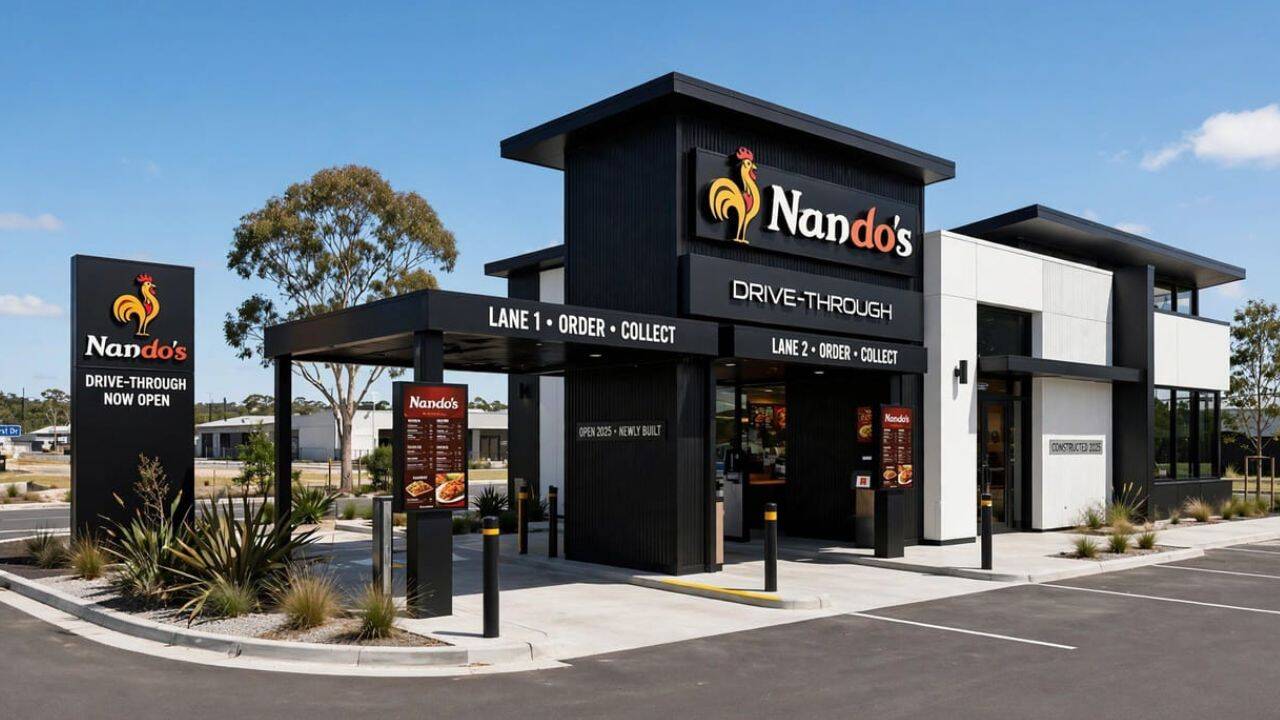
Commercial real estate investors are constantly hunting for safe havens, and the latest multi-million dollar deals involving quick-service restaurant assets prove that drive-thrus are king. When a newly built Nando’s drive-through property in Cranbourne North, Victoria, sold for a staggering $5.845 million, it caught the attention of serious private buyers across Australia.
Let's look at why these deals happen, what the numbers actually reveal about the current market, and why commercial retail investments anchored by major food brands command such high premiums. Recently making headlines recently: Why the $175,000 Malibu Rental Headline Misses the Real Billionaire Asset Play.
The Numbers Behind the $5.845 Million Nando's Deal
The 1,141-square-metre property on Thompsons Road in Cranbourne North wasn't just a standard retail transaction. It sold to a private New South Wales investor on a sharp 5.3 per cent yield.
What makes a yield like that attractive in a volatile economic climate? Predictability. Further insights into this topic are detailed by The Wall Street Journal.
The asset comes locked into a long-term corporate head-office lease backed by Nando's Australia. It generates an annual rental income of $319,035, featuring built-in annual rent increases of 3 per cent. For an investor looking to hedge against inflation without dealing with messy tenant turnover, this setup hits every mark.
This sale wasn't even an isolated outlier. Earlier in the year, a similar newly constructed drive-through Nando's asset in Munno Para, South Australia, pushed the ceiling even higher by selling for $6.2 million on a 5.16 per cent yield, returning roughly $320,000 annually.
Why Drive-Thrus Outperform Traditional Retail
Traditional retail shopfronts in strip malls face constant pressure from e-commerce and changing foot traffic patterns. High street retail can suffer overnight if a neighboring anchor tenant packs up and leaves.
Drive-through quick-service restaurant assets operate differently.
- Convenience is permanent: Consumer behavior heavily favors drive-thrus and click-and-collect models. People want friction-free food acquisition.
- Corporate lease backing: These aren't mom-and-pop tenants running a single franchise location. The leases are frequently backed directly by major corporate entities, offering immense financial stability.
- Fixed rental growth: The standard 3 per cent annual bumps compound quickly, protecting the landlord's real yield year over year.
Investors aren't just buying bricks and mortar. They are buying a guaranteed monthly cash flow stream backed by global brand recognition and prime suburban land footprints.
The Shift Toward Suburban Retail Hubs
For years, commercial property investors obsessed over inner-city office towers and CBD retail blocks. The post-pandemic shift changed that calculus entirely. Growth corridors in outer-suburban hubs like Cranbourne North and Munno Para see massive daily traffic volumes as populations expand outward.
When thousands of cars pass a major Thompsons Road frontage every single day, fast-food real estate becomes practically recession-proof. People still eat out, grab lunch on the go, or pick up dinner for the family, regardless of broader economic jitters.
What Investors Should Watch Next
If you are eyeing the quick-service retail market, you need to look past the headline price tag and focus closely on the lease structure. A high headline figure means nothing if the remaining lease term is short or if the rent relies on an unproven independent operator rather than a major national brand.
Look for long-term initial terms of 10 to 15 years, clear options extending decades out, and transparent escalation clauses. The days of speculative commercial buying are taking a back seat to cold, hard cash-flow certainty. Secure assets with strong corporate covenants will continue to dominate investor demand.