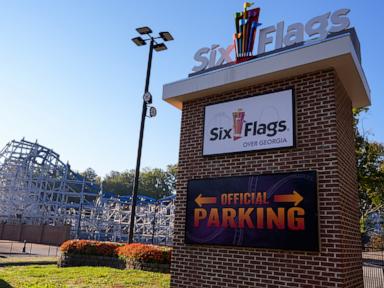
Another fatal fall at an amusement park has triggered an emergency wave of ride closures, laying bare a systemic failure that extends far beyond a single park gate. When a visitor loses their life on a roller coaster, the immediate public reaction focuses on the mechanics of the specific restraint system involved. Investigators pull logs, engineers inspect bolts, and park operators issue statements expressing profound grief. Yet, stopping a fleet of coasters across multiple jurisdictions is merely a reactionary bandage over a fractured oversight model. The hard truth remains that the modern amusement park industry operates on a patchwork of state-level regulations, underfunded inspector offices, and corporate pressures that prioritize throughput over structural redundancy.
Every major roller coaster incident leaves behind a familiar sequence of events. First comes the shock, followed swiftly by the emergency suspension of similar rides nationwide as governing bodies scramble to project competence. Regulators demand compliance audits, while operators defend their maintenance records. But this cycle ignores the fundamental economic reality driving modern theme parks. Margins depend on capacity. Every hour a multi-million-dollar attraction sits idle during peak operating seasons represents devastating financial loss. That pressure trickles down from executive boardrooms to frontline maintenance crews who face immense pressure to keep cars moving.
Independent ride safety analysts have long pointed out that the oversight ecosystem is fundamentally mismatched with the scale of modern engineering. Amusement parks are building faster, taller, and more complex steel structures than ever before, utilizing magnetic braking systems, complex hydraulic restraints, and computerized launch sequences. Meanwhile, the state inspectors tasked with verifying the safety of these marvels are frequently overburdened, underqualified for hyper-specialized electronics, or reliant on the very parks they audit for technical guidance. When a park self-reports its compliance, the system relies on an honor code where the financial incentive heavily favors silence over caution.
Consider the regulatory void that characterizes much of the industry. Unlike commercial aviation or civil infrastructure, where federal mandates and uniform standards dictate every operational threshold, amusement parks exist in a regulatory wasteland. A ride deemed acceptable under one state's inspection checklist might face entirely different criteria fifty miles away across a state line. Some jurisdictions employ dedicated full-time engineering staffs to review ride designs; others rely on seasonal inspectors whose primary background might be electrical contracting or general building inspection. This lack of standardization means that safety is frequently dictated by geography rather than universal engineering best practices.
The human element compounds these structural flaws. Maintenance technicians work grueling overnight shifts in subterranean maintenance bays, often understaffed and racing against strict morning opening deadlines. When a sensor reports a minor fault or a restraint latch shows early signs of wear, the decision to repair immediately versus monitoring the component until the next scheduled downtime becomes a high-stakes gamble. Corporate management often views maintenance as a cost center rather than an operational shield, leading to lean staffing models where a single missed detail can cascade into catastrophic failure.
Restraint technology itself represents a paradox of modern design. Older rides relied on mechanical pull-down lap bars backed by simple physical locks, offering redundancy through simplicity. Modern hyper-coasters utilize complex hydraulic and electronic restraint systems designed to maximize passenger comfort and accommodate varying body types while maintaining security during extreme negative gravitational forces. When these electronic systems fail or when a sensor misreads a locked position, the consequences are severe. The transition from purely mechanical safety to computer-monitored automation has not eliminated risk; it has merely shifted the vulnerability from physical wear to software anomalies and sensor miscalibration.
Public statements from park conglomerates following fatal incidents invariably emphasize their unyielding commitment to safety. They point to millions of safe annual rides as statistical proof that tragedies are isolated anomalies. Statistically, this argument holds weight. Flying in a commercial airliner or driving a car carries measurable risks, and roller coasters remain mathematically safer than many everyday activities. But that metric offers little comfort to a family mourning a preventable loss. Statistical safety does not absolve an operator from gross negligence or systemic oversight failures. When a catastrophic failure occurs, the statistical average is cold comfort.
Reforming this industry requires a complete dismantling of the current inspection paradigm. Voluntary compliance and reactive shutdowns are insufficient tools for managing high-speed kinetic energy systems carrying human passengers. Lawmakers must confront the cozy relationship between park lobbyists and state regulatory boards, pushing for federally mandated safety standards that apply universally regardless of park size or location. Independent, third-party engineering audits funded by mandatory operator fees—rather than state budgets—would remove the financial conflict of interest that currently compromises inspection integrity. Furthermore, mandatory whistleblower protections for maintenance technicians would ensure that safety concerns can be raised without fear of retaliation or termination.
The wave of closures sweeping across the industry following the recent Georgia tragedy will eventually recede. Rides will reopen, crowds will return, and the media cycle will shift to the next breaking story. Unless structural reforms take root in the soil of corporate accountability and rigorous public oversight, the machinery of profit will continue to outpace the evolution of safety. The next tragedy is not a matter of if, but when, unless the industry is forced to value human life above the relentless pursuit of capacity.