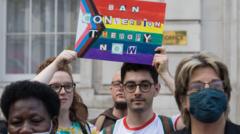
The headlines scream with moral clarity. "Jail time and unlimited fines planned under conversion practices ban." It sounds like a triumph of human rights, a long-overdue cleaning of the societal house. Activists cheer. Politicians pat themselves on the back for standing on the right side of history. The public nods along, convinced that a simple piece of legislation can excise cruelty from the human heart.
They are wrong. They are dangerously, catastrophically wrong.
The current rush to criminalize conversion practices is a masterclass in good intentions yielding disastrous unintended consequences. By focusing on punitive theatrics—threatening decades of jail time and bankrupting fines—legislators are not protecting vulnerable individuals. They are driving the most dangerous practices deeper underground while paralyzing the very professionals who could offer genuine, evidence-based support.
I have spent twenty years navigating the intersection of clinical psychology, state policy, and human rights. I have watched well-meaning statutes disintegrate upon contact with reality. When you outlaw a poorly defined psychological concept using the blunt instrument of criminal law, you do not eradicate the behavior. You merely change its address.
The Illusion of the Total Ban
The fundamental flaw in the competitor’s narrative is the naive belief that a law can neatly isolate and eliminate "conversion therapy" without collateral damage. The term itself is an elastic political catch-all, not a precise medical diagnostic.
Historically, the most egregious forms of conversion therapy involved overt physical abuse: aversion therapy, forced institutionalization, and chemical castrations. These are already illegal. Assault, battery, coercive control, and medical malpractice are heavily penalized under existing criminal codes across the democratic world. If a rogue practitioner applies physical force or psychological torture to a minor, they belong in a cell today, under current statutes.
What do these new, sweeping bans actually target? They target speech. They target conversation. They target the messy, ambiguous zone of exploration between a client and a counselor.
Imagine a scenario where a seventeen-year-old youth enters a therapist's office experiencing severe gender dysphoria or confusing sexual attractions. The youth is distressed, seeking to understand the root of this anxiety. Under a rigidly drafted, heavy-handed ban, the therapist faces a terrifying legal minefield. If the therapist asks probing questions about the youth's history, trauma, or social environment, could that be interpreted as an attempt to "change or suppress" their identity?
If the answer is even a tentative yes, the therapist faces a career-ending fine or a prison sentence.
The result is chillingly predictable. The best, most ethical clinicians will simply refuse to treat these clients. Why risk your license and your freedom on a nuanced conversation? The field will be abandoned by cautious professionals and left entirely to two groups: ideologues who will merely rubber-stamp a client's immediate self-diagnosis without exploration, and underground zealots who operate entirely outside the law, completely unbothered by state bans because they already view themselves as religious martyrs.
Dismantling the Premise of the "Standard" Defense
Proponents of these draconian laws like to point to professional consensus. They cite statements from major psychological associations declaring that conversion therapy does not work and causes harm.
This is true. The data is clear: forcing or manipulating someone to change their core sexual orientation is ineffective and psychologically damaging.
But the legislation being pushed goes far beyond banning coercive pseudo-science. It blurs the line between harmful coercion and legitimate, exploratory therapy.
Let us address the standard questions that dominate this debate with brutal honesty.
Can someone's sexual orientation be forcibly changed through therapy?
No. Decades of clinical data show that sexual orientation is robust and resistant to forced modification. Attempts to do so lead to depression, anxiety, and increased suicidality.
Does an exploration of identity constitute conversion therapy?
Legally, under the proposed bans, it very well might. And that is the crisis.
When a law penalizes the intent to suppress or change an identity, it criminalizes the internal motivation of the practitioner, which is impossible to prove objectively. If a client expresses a desire to reduce their distress regarding their attractions, and a therapist helps them manage that distress rather than immediately celebrating the attraction, has the therapist broken the law?
By removing the requirement of proven harm or coercion and replacing it with a vague prohibition on "suppression," these laws turn every therapy room into a potential courtroom.
The Hypocrisy of the Exemptions
Look closely at the legislation being proposed globally, and you will find glaring, hypocritical loopholes designed to appease powerful voting blocs. Most drafts include carve-outs for "consenting adults" or "non-coercive religious counseling."
Think about the sheer illogic of this compromise. If conversion practices are inherently dangerous, fraudulent, and psychologically lethal—akin to medical quackery or physical abuse—then consent should be irrelevant. The state does not allow a citizen to consent to being physically assaulted or treated by an unlicensed surgeon.
By allowing exemptions for religious settings or consenting adults, governments admit that they cannot actually police private belief or voluntary association. They create a system where a licensed, regulated, insured therapist can be jailed for having a nuanced discussion with a teenager, while an unregulated religious leader can tell that same teenager they are damned to hell, provided it happens under the banner of spiritual guidance.
The law ends up punishing the regulated while emboldening the unregulated. It is an inverted reality that leaves the vulnerable more exposed than before.
The Cost of Legal Overreach
The downside to this contrarian view is obvious: it requires us to tolerate legal ambiguity. It forces us to accept that the criminal justice system is too blunt a tool to fix every fractured human interaction. That is a bitter pill for activists who want total victory and absolute statutory proclamations.
But the alternative is worse. We have seen what happens when criminal law invades clinical practice. In jurisdictions that have rushed these bans through without precise definitions, the clinical community has panicked.
Insurance companies are already raising premiums or outright denying coverage for therapists who work with LGBTQ+ youth. Professional bodies are advising their members to avoid documenting any discussions that touch on identity exploration, destroying the clinical record-keeping vital for long-term patient care.
We are systematically stripping away the safety nets for young people navigating complex identities. We are replacing nuance with fear, and clinical expertise with statutory compliance.
Stop trying to fix deep-seated societal prejudices by turning judges into therapists and therapists into suspects. The current legislative path does not protect the vulnerable; it merely sanitizes the public square while leaving the actual victims to suffer in silence, isolated from the very professional help they desperately need.
The law cannot mandate acceptance. It can only mandate silence. And in that silence, abuse thrives.