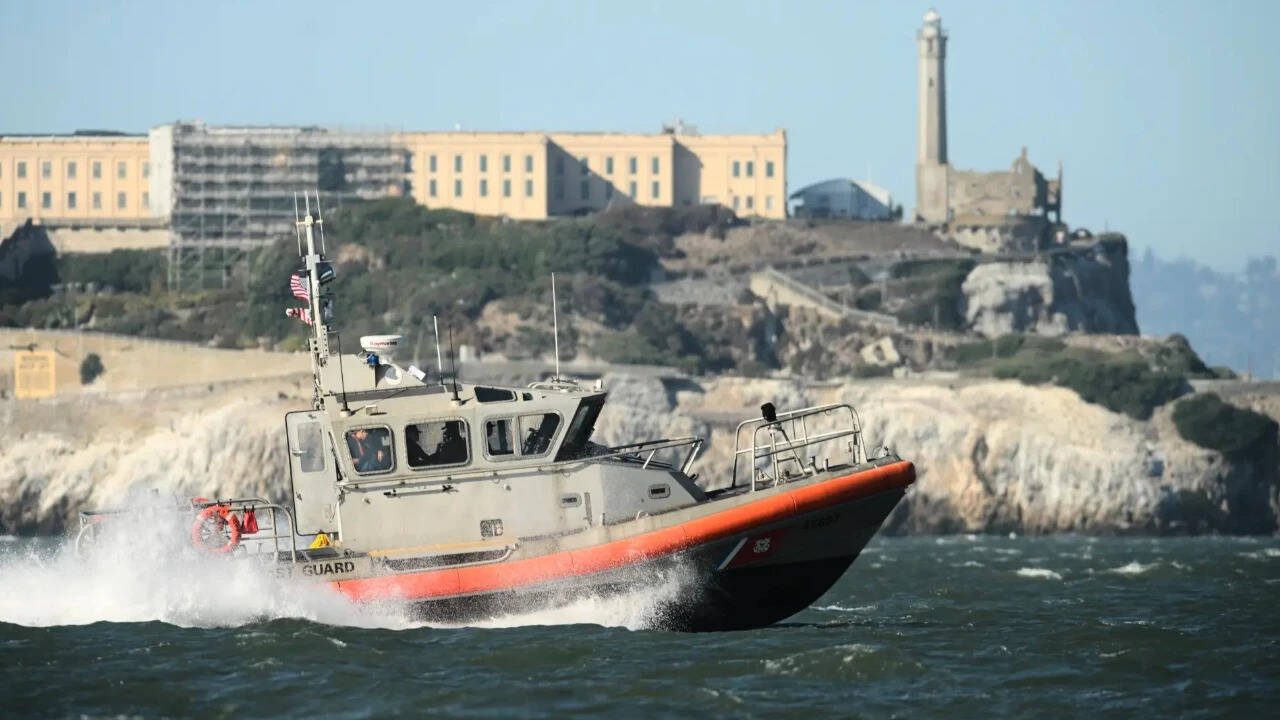
A standard recreational pontoon boat, completely ill-suited for the violent, unpredictable currents of the Central San Francisco Bay, capsized near Alcatraz Island, leaving one person dead and two others missing. This tragedy is not an isolated piece of bad luck. It is the predictable consequence of a growing, unregulated trend: inexperienced boaters taking inland lake craft into some of the most treacherous tidal waters on the Pacific Coast.
To understand how a weekend outing turned fatal, we must look beyond the immediate emergency response. The real story lies in the physics of the bay, the design limitations of modern pontoon boats, and a systemic failure in boating education that allows flatwater vessels to mingle with commercial shipping lanes and extreme tidal rips.
The Illusion of Stability on Dangerous Waters
Pontoon boats have undergone a massive marketing transformation over the last two decades. Once viewed as slow-moving swim platforms for quiet lakes, modern "tritoons" now feature massive outboard engines, luxurious upholstery, and high speeds. They are marketed as family-friendly SUVs of the water.
But they are still pontoons.
These vessels derive their stability from two or three aluminum tubes. While highly stable in calm, flat water, they behave erratically in choppy conditions. When a pontoon boat encounters the short, steep chop characteristic of San Francisco Bay, it faces two distinct mechanical vulnerabilities.
The Pitchpoling Risk
Unlike a traditional V-hull, which slices through waves and rises over them, a pontoon’s flat bow structure can easily "stuff" into an oncoming wave. If the bow digs into a swell, the massive forward momentum, combined with the weight of passengers sitting up front, can pitchpole the boat or cause an immediate capsize.
Deck Trapping and Free Surface Effect
Pontoons feature solid, flat decks surrounded by aluminum fencing. If a large wave washes over the bow, the water cannot escape quickly. Hundreds of gallons of trapped water instantly shift the boat's center of gravity, causing a catastrophic loss of stability.
The Alcatraz Funnel
The waters surrounding Alcatraz Island are notoriously deceptive. On a sunny afternoon, the bay can look inviting from the shoreline. Underneath the surface, a massive hydrological engine is at work.
[Pacific Ocean] ---> [The Golden Gate] ---> [Alcatraz Bottleneck] <--- [Delta Runoff]
Every day, billions of gallons of water force their way through the narrow gap of the Golden Gate. As this incoming tide hits the shallower waters of the bay and collides with freshwater runoff from the Sacramento Delta, it creates localized, violent turbulence. The area just south of Alcatraz is a notorious collision point for these opposing forces.
When a strong ebb tide runs against a typical afternoon sea breeze, the waves stack up rapidly. Within minutes, a gentle two-foot swell can transform into a chaotic four-to-six-foot wall of water. To an amateur skipper in a low-freeboard pontoon, this transition is both sudden and inescapable.
The Regulatory Blind Spot
How did this boat end up there in the first place? The answer lies in lax rental and licensing laws.
In many jurisdictions, the barrier to entry for operating a high-powered vessel is shockingly low. While commercial captains must undergo rigorous testing, sea time verification, and physical examinations, a recreational boater can often rent or purchase a powerful craft with little more than a credit card and a brief online safety course.
These safety courses are designed for general education. They rarely cover the specific, high-stakes navigation required in a major commercial estuary.
- Tidal Currents: Most basic courses do not teach boaters how to read a tide table or calculate current velocity.
- Microclimates: A clear sky in the East Bay can mask a sudden gale-force wind tunneling through the Golden Gate.
- Right of Way: Recreational boaters often do not realize that large commercial container ships cannot stop or turn to avoid them.
This lack of specialized knowledge creates a dangerous gap between a boater's confidence and the actual environment they are entering.
Survivability in the Coldest Waters
When a vessel capsizes in the San Francisco Bay, the clock starts ticking instantly. The water temperature near Alcatraz rarely rises above 55°F (12°C).
At this temperature, the human body reacts with an involuntary gasp reflex upon sudden immersion. If a victim is not wearing a life jacket, this reflex often leads to immediate drowning. Within ten minutes, cold-incapacitation sets in, making it impossible to swim, hold onto a flotsam, or pull oneself back onto a overturned hull.
The search and rescue operation near Alcatraz faced these exact conditions. Despite rapid deployment from the Coast Guard and local fire departments, the window for survival in these waters is measured in minutes, not hours.
The tragedy near Alcatraz should serve as a stark warning to harbor masters, rental agencies, and recreational boaters alike. The bay is not a lake. Until regulations catch up to the reality of vessel design and boater education, inland craft will continue to wander into coastal waters they were never built to survive.