Deploying 1,000 federal personnel across 50 states creates a structural ratio of roughly 20 monitors per state, or fewer than one observer for every three counties in the United States. The political friction surrounding the Department of Justice’s election monitoring operation does not stem from physical saturation of polling sites; rather, it stems from the asymmetric signaling effects of federal law enforcement presence on voter turnout and local administrative autonomy.
To understand the operational reality of federal election monitoring—and why identical deployments generate opposing accusations of necessary fraud prevention versus systemic voter intimidation—requires stripping away partisan rhetoric and analyzing the legal mechanisms, resource allocation math, and behavioral game theory governing polling place oversight.
The Statutory Architecture of Federal Election Oversight
Federal intervention in state-run elections operates under a strict statutory ceiling. Under the U.S. Constitution’s Elections Clause, states hold primary authority over the time, place, and manner of elections. The Department of Justice (DOJ) cannot unilaterally assume control of polling stations or override local precinct captains. Instead, federal presence is bounded by specific statutory triggers, primarily the Voting Rights Act of 1965 (VRA) and the Civil Rights Act of 1960.
The operational distinction between federal observers and federal monitors dictates what these 1,000 personnel can actually execute on the ground:
- Federal Observers (OPM-Certified): Deployed strictly under federal court orders or specific certifications under Section 8 of the VRA. These individuals are trained by the Office of Personnel Management and possess legal authority to enter polling places, observe ballot casting, and monitor vote tabulation directly inside restricted areas.
- DOJ Monitors (Civil Rights Division Personnel): Attorneys and staff dispatched by the DOJ’s Voting Section. Unlike OPM observers, DOJ monitors do not have an automatic statutory right to enter polling locations if state law prohibits unauthorized personnel inside the voting enclosure. Their access relies entirely on pre-negotiated consent agreements with state Secretaries of State and local county clerks.
When a deployment of 1,000 personnel is announced across all 50 states, the vast majority of these individuals function as DOJ monitors rather than court-ordered observers. Consequently, their operational footprint is contingent upon state-level permission structures. In jurisdictions where state officials refuse access to the polling floor, monitors are legally restricted to observing exterior perimeters, parking lots, and public access points—the exact physical zones where accusations of voter intimidation most frequently originate.
The Resource Allocation Math of a 1,000-Person Deployment
Standard political coverage treats a 1,000-person deployment as a massive federal blanket covering the electorate. Quantitative analysis of American election infrastructure proves otherwise.
The United States contains over 3,100 counties and county-equivalents, operating approximately 100,000 distinct polling locations on Election Day, alongside thousands of early voting sites and ballot drop boxes. Distributing 1,000 personnel across this grid yields a baseline density of one monitor per 100 polling places. Even if the DOJ concentrates 80 percent of its manpower into seven swing states and major metropolitan counties, the physical coverage remains sparse.
This scarcity forces the DOJ to rely on targeted clustering rather than universal coverage. Resource allocation follows a predictable triage model based on three variables:
- Historical Litigation Vectors: Jurisdictions with active consent decrees, recent redistricting injunctions, or prior Section 2 VRA violations receive immediate baseline staffing.
- Demographic Volatility: Counties experiencing rapid shifts in voter registration rolls or high concentrations of language-minority populations covered under Section 203 of the VRA require specialized linguistic compliance checks.
- Administrative Friction Points: Municipalities that have recently overhauled local election boards, altered ballot drop-box protocols, or experienced documented chain-of-custody disputes during primary cycles.
Because 1,000 monitors cannot physically watch the majority of ballots being cast, the deployment functions as a mobile rapid-response network. Monitors are typically paired in two-person teams—often pairing a Civil Rights Division attorney with a representative from the local U.S. Attorney’s Office—tasked with rotating through high-priority precincts and responding to real-time hotline complaints.
The Mechanism of Asymmetric Deterrence
If physical coverage is mathematically insufficient to observe 99 percent of polling locations, why does a 1,000-person deployment trigger intense political resistance? The answer lies in asymmetric deterrence—the principle that the visible presence of state enforcement alters the cost-benefit calculation of different voter cohorts unequally.
In election administration, every enforcement mechanism carries a dual-edge risk profile:
- Type I Error (False Positive Enforcement): Over-policing or aggressive federal presence deters eligible voters from casting ballots due to fear of legal entanglement, immigration scrutiny, or confrontation at the precinct door.
- Type II Error (False Negative Enforcement): Under-policing allows localized administrative failures, unlawful voter challenges, or physical obstruction by partisan actors to proceed unchecked.
Democrats alleging voter intimidation focus entirely on minimizing Type I errors. From a behavioral economics perspective, voting is a low-reward, high-friction activity for marginal voters; the probability of a single vote deciding a federal election is statistically negligible, while the time and effort required to vote are immediate and certain. Introducing federal law enforcement personnel—particularly under an administration whose rhetoric emphasizes criminal prosecution of election offenses—raises the perceived psychological cost of voting for marginalized communities, naturalized citizens, and voters with past misdemeanor records who may be uncertain of their eligibility status. Even if DOJ attorneys are unarmed and dressed in business attire, the institutional branding of the Department of Justice acts as a deterrent signal.
Conversely, the DOJ’s operational justification focuses on minimizing Type II errors. By stationing federal attorneys in battleground jurisdictions, the administration signals to local election officials and partisan poll watchers that statutory violations—such as unlawful voter challenges, refusal to provide provisional ballots under the Help America Vote Act (HAVA), or failures to provide disability access—will meet immediate federal documentation and potential litigation.
Jurisdictional Friction and the Access Bottleneck
Deploying monitors across all 50 states inevitably collides with federalism. Because DOJ monitors lack inherent statutory authority to bypass state polling-place access laws, state attorneys general and secretaries of state hold effective veto power over interior precinct access.
This creates a bifurcated operational environment:
- Cooperative Jurisdictions: State officials grant DOJ monitors credentials equivalent to credentialed partisan poll watchers. Monitors enter the polling room, observe check-in procedures, verify that voter ID laws are applied uniformly, and inspect provisional ballot logs. Friction is resolved quietly through administrative channels between the DOJ team lead and the county registrar.
- Non-Cooperative Jurisdictions: State officials cite state statutes restricting polling floor access strictly to voters, election workers, and state-certified watchers. In recent election cycles, several states have explicitly barred DOJ monitors from entering polling buildings, forcing federal personnel to remain outside the 100-foot electioneering buffer zone.
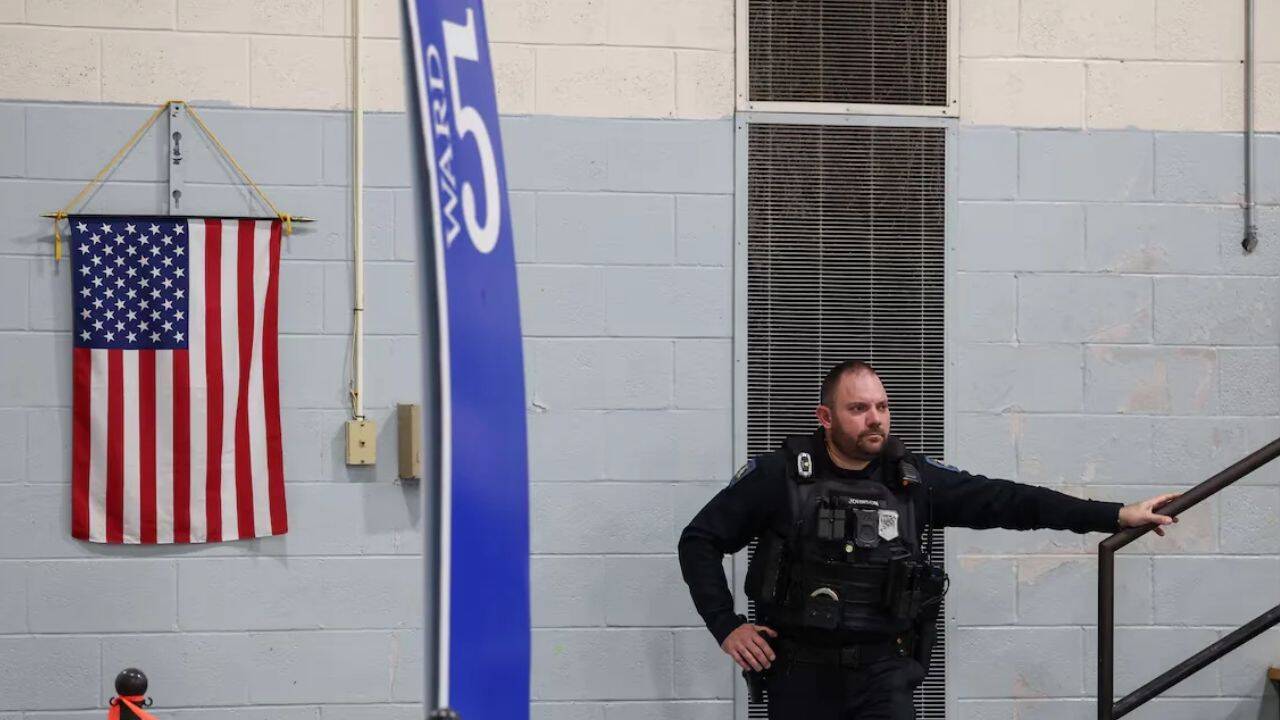
This exterior displacement creates a severe operational paradox. When DOJ monitors are barred from observing administrative compliance inside the building, they are forced to station themselves in parking lots and sidewalks. To an arriving voter, a pair of federal officials standing outside a polling entrance with clipboards and federal badges looks indistinguishable from law enforcement conducting surveillance. Thus, state-level resistance designed to limit federal overreach inadvertently maximizes the exact visual footprint that critics characterize as voter intimidation.
Operational Vulnerabilities in the DOJ Monitoring Model
Evaluating the deployment strictly as a systems management exercise reveals three structural vulnerabilities that limit its effectiveness regardless of which political party controls the executive branch:
- The Credentials Verification Gap: Local precinct workers are often volunteer citizens receiving minimal training on federal-state jurisdictional boundaries. When an unannounced DOJ team arrives at a precinct, poll workers frequently confuse DOJ attorneys with partisan challengers, FBI agents, or state auditors. This confusion causes temporary operational bottlenecks, freezing check-in lines while the precinct captain calls county headquarters to verify credentials.
- Evidence Collection vs. Real-Time Remediation: DOJ monitors are trained litigators, not election administrators. Their primary mandate is documenting statutory violations for post-election enforcement rather than correcting procedural errors in real time. If a precinct runs out of paper ballots or misapplies a signature-matching rule, a monitor can record the failure, but they cannot legally compel the poll worker to alter the procedure on the spot without obtaining an emergency federal court injunction—a process that takes hours while voters leave the line.
- The Signaling Distortion: Announcing a nationwide 50-state deployment generates national media amplification that far exceeds the physical reality of 20 monitors per state. Political operatives on both sides weaponize the announcement: one side frames it as proof of widespread systemic fraud requiring federal intervention, while the other frames it as a coordinated suppression campaign. Both narratives degrade baseline public trust in the local election workers who actually execute the vote.
Strategic Play for Election Administrators and Legal Observers
For state election directors, municipal clerks, and nonpartisan legal defense coalitions operating within this environment, reacting to the political narrative of a 1,000-person DOJ deployment is a misallocation of bandwidth. Operational resilience requires treating federal monitors as a predictable external variable and executing three specific protocols prior to Election Day:
First, codify interior access agreements in writing 30 days prior to early voting. Ambiguity at the precinct door causes line delays. County registrars must issue standardized, laminated access directives to every precinct captain detailing precisely where DOJ monitors may stand, what documents they may inspect, and who holds the authority to resolve disputes. Eliminating ad-hoc negotiations at 7:00 AM prevents visible confrontations that spook arriving voters.
Second, decouple federal monitors from physical perimeter chokepoints. If state law prohibits DOJ personnel from entering the voting room, local administrators should designate a specific, clearly marked observation station immediately adjacent to the check-in desk or establish a dedicated administrative liaison away from the main entrance queue. Forcing federal personnel to linger in parking lots maximizes visual friction without yielding usable compliance data.
Third, implement parallel real-time telemetry. Because DOJ monitors focus on federal statutory compliance (VRA, HAVA, ADA) rather than operational throughput, local election boards and civic organizations must deploy independent line-length and machine-uptime tracking. The primary threat to voter participation is rarely direct physical intimidation; it is administrative friction—broken tabulators, understaffed check-in tables, and unclear provisional ballot instructions—that pushes waiting times past the voter’s abandonment threshold. Addressing throughput bottlenecks directly neutralizes both the operational failures federal monitors seek to document and the deterrent effects critics fear.