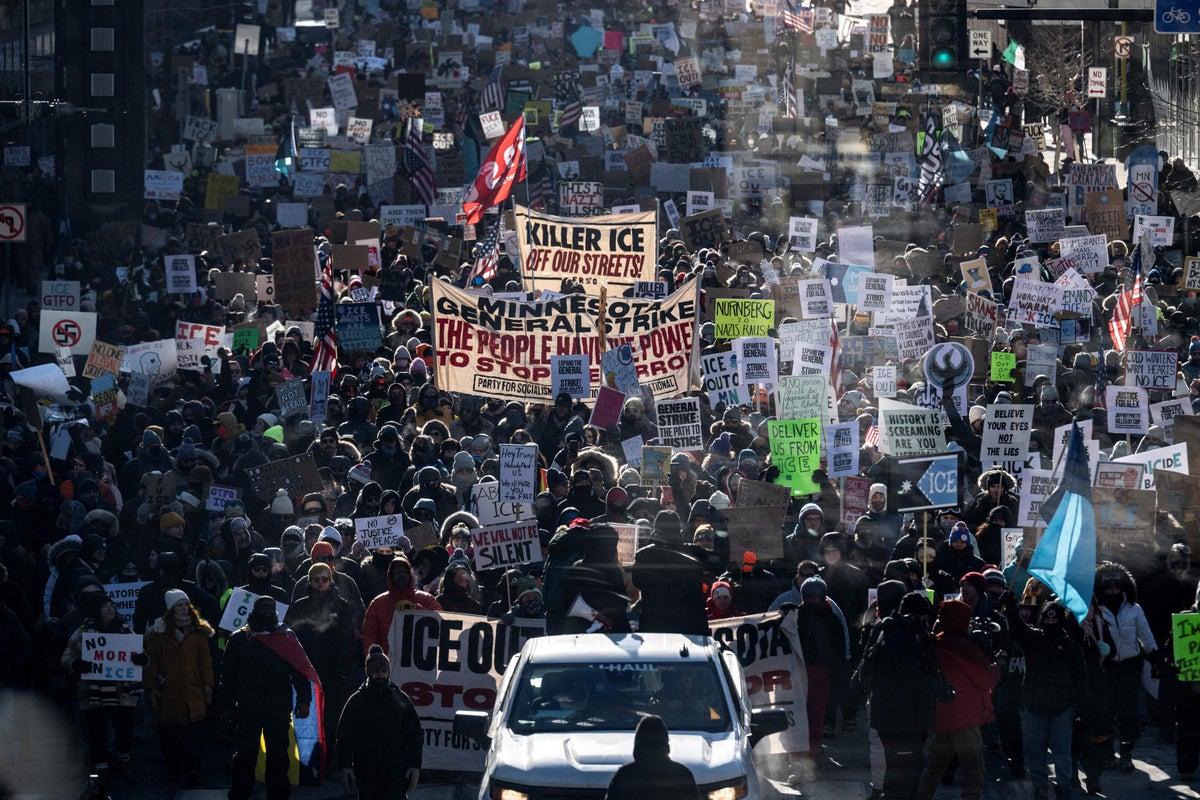
Federal prosecutors love a headline that suggests a highly organized, nationwide conspiracy. It justifies massive budgets, dominates the news cycle, and gives the public a neat, easily digestible villain. The recent round of federal charges leveled against 15 individuals in Minnesota following anti-ICE protests is a classic case study in this phenomenon. The mainstream media took the bait hook, line, and sinker, framing the event as a coordinated strike by a disciplined ideological franchise.
They are completely misreading the room. If you found value in this post, you should look at: this related article.
What happened in Minnesota was not the work of a sophisticated, top-down network executing a master plan. It was an organic, highly localized eruption of community anger, exacerbated by aggressive law enforcement tactics. Treating these decentralized, hyper-local outbursts as a unified national threat is a dangerous misunderstanding of modern civil unrest. It leads to bad policy, wasted resources, and a total failure to address the root causes of community friction.
The Illusion of the Monolith
The lazy consensus across the media landscape assumes that any protest involving black clothing and property damage is directed by a central command. This narrative is comfortable because it fits into an established political script. But anyone who has actually spent time analyzing the mechanics of modern protest movements knows that this is a fantasy. For another perspective on this story, check out the latest coverage from Al Jazeera.
Modern activism is flat, leaderless, and intensely local. There is no board of directors. There is no central treasury dispensing funds for plane tickets and tactical gear. When 15 people are arrested at a demonstration in Minnesota, they are almost always local residents reacting to local conditions, not an advance team deployed from a coastal headquarters.
By slapping a scary label on a disparate group of local actors, federal prosecutors elevate a chaotic neighborhood grievance into a national conspiracy. This does not make communities safer. It merely distorts the public's understanding of why people are taking to the streets in the first place.
The High Cost of Federal Intervention
When the Department of Justice steps into matters that are fundamentally local municipal disruptions, the entire dynamic shifts for the worse. Federalizing these cases brings massive resources to bear on offenses that would normally be handled by county courts. It replaces standard trespass or disorderly conduct charges with heavy-handed conspiracy statutes.
Consider the data on federal prosecutions of civil unrest. Historically, these high-profile roundups result in a massive expenditure of taxpayer dollars with remarkably low conviction rates for the actual "conspiracy" charges. The cases frequently unravel because prosecutors cannot prove the existence of the very organization they claimed to be dismantling.
- Resource Drain: Millions of dollars are diverted from investigating complex financial fraud or violent crime syndicates to prosecute low-level property damage.
- Sentencing Disparities: Local offenders face draconian federal guidelines that are completely disproportionate to the actual harm caused.
- Community Alienation: Flooding a city with federal agents breeds deep resentment, hardening the battle lines between residents and law enforcement rather than cooling the temperature.
This heavy-handed approach ignores a basic rule of conflict resolution: you cannot arrest your way out of systemic civil dissatisfaction.
The Myth of External Agitators
Whenever a city experiences significant unrest, local officials are quick to blame "outside agitators." It is an ancient political tactic designed to shield local leadership from accountability. If the troublemakers are from somewhere else, then the local system isn't actually broken.
The arrest records from the Minnesota protests shatter this myth. The vast majority of those charged reside within the state, often within the very zip codes where the protests occurred. They are neighbors, students, and workers who are deeply embedded in the local fabric.
Blaming an invisible, external force is a form of intellectual laziness. It allows policymakers to avoid asking the hard questions about why a specific community has reached a boiling point. It ignores the specific local triggers—whether a controversial municipal policy, a history of aggressive policing, or the visible presence of federal immigration facilities—that drive ordinary people to engage in disruptive behavior.
Dismantling the Counter-Terrorism Framework
Applying a counter-terrorism framework to domestic political protests is a catastrophic strategic error. This framework relies on identifying cells, tracking funding mechanisms, and neutralizing leadership. But when applied to a movement that possesses none of these things, the framework fails spectacularly.
In a truly decentralized environment, heavy-handed crackdowns do not deter participation; they catalyze it. Every aggressive federal overreach serves as a recruitment tool for the next demonstration. The harsher the response, the more it validates the core argument of the protestors that the system is fundamentally unjust.
To actually manage civil unrest, leadership must abandon the desire for dramatic, theatrical roundups and focus on the unglamorous work of local engagement. This means addressing the specific, tangible grievances of the community rather than fighting a phantom national army. It requires recognizing that a broken window at an ICE facility is a sign of local friction, not a declaration of war by a mythical entity.
Stop looking for the mastermind behind the curtain. There isn't one. There is only a fractured community, a flawed policy, and a federal apparatus desperate to justify its own scale.