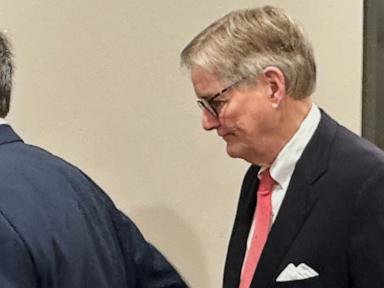
Everyone is celebrating a fifteen-year federal prison sentence as a triumph of justice. They are wrong.
When federal prosecutors and mainstream outlets frame the sentencing of a prominent Georgia Republican over a massive Ponzi scheme as the end of a cautionary tale, they are selling a comforting lie. The lazy consensus says the system worked. A bad actor weaponized political trust, stole millions, got caught, pleaded guilty, and is now headed to a federal penitentiary. Justice served. Case closed.
Except it is not closed. Not even close.
The premise that a harsh prison sentence acts as a deterrent in affinity fraud is fundamentally broken. In my years tracking white-collar collapses and dissecting post-mortem bankruptcy filings, I have watched the exact same script play out across every state line and political party. The names change. The partisan branding shifts. The mechanics remain identical. Focusing on the length of one man's prison sentence misses the structural rot that made the theft possible—and guarantees another one is already being pitched in a country club dining room right now.
The Myth of the Mastermind and the Reality of Affinity Fraud
Mainstream coverage loves a villain. It is easy to write a story about a charismatic political insider who duped wealthy donors and neighbors. It makes for clean journalism. It also completely misunderstands how modern financial fraud actually operates.
In forensic accounting and white-collar criminology, there is a precise term for this: affinity fraud. Unlike cold-call boiler rooms that rely on high-pressure sales tactics against strangers, affinity fraud exploits shared group identity. Religion, ethnicity, military service, and—most potently in modern America—partisan politics act as an instant substitute for due diligence.
When a prominent political figure walks into a room, they do not need to pitch an investment thesis. Their social proof is already established. They sit on the right boards. They take photos with the right candidates. They speak the exact tribal dialect of the room.
Victims do not hand over their life savings because the math makes sense. They hand it over because asking for audited financial statements feels like a personal insult to a trusted ally. To question the numbers is to question the tribe.
I have sat across the table from investors who lost seven figures in schemes that would not have survived ten minutes of scrutiny from a first-year analyst. These were not unintelligent people. They were surgeons, business owners, and retirees who built real wealth. Yet, the moment a peer wrapped a fraudulent promissory note in shared political grievances and insider status, their critical thinking evaporated. They traded basic financial hygiene for the intoxicating feeling of being on the inside track.
Why Fifteen Years Is a Rounding Error for Fraudsters
Let us dismantle the deterrence argument once and for all. Legal commentators routinely point to multi-decade sentences under federal wire fraud and securities statutes as proof that crime does not pay.
That logic assumes fraudsters conduct rational cost-benefit analyses before stealing. They do not.
According to research from criminologists who have interviewed convicted white-collar offenders—including pioneers like Donald Cressey, who formulated the Fraud Triangle (pressure, opportunity, rationalization)—perpetrators rarely view themselves as criminals at the outset. They view themselves as temporarily illiquid geniuses who just need a bridge loan from the next investor to make everyone whole.
By the time a Ponzi scheme reaches critical mass, the operator is trapped on a mathematical treadmill. To pay a promised 12% or 15% annual return to early investors without underlying revenue, the required capital inflow grows exponentially. The operator is no longer weighing a fifteen-year prison sentence against a quiet life. They are weighing immediate, total public humiliation today against buying one more month of survival.
A fifteen-year sentence is a statistical abstraction to someone trying to cover Friday's wire transfers. Furthermore, under federal sentencing guidelines, non-violent offenders in minimum-security camps often see their actual time served reduced through good-time credits and programs enacted under the First Step Act. To the public, fifteen years sounds like an eternity. To an insider watching the system, it is the cost of doing business when the music stops.
The Structural Blind Spots Regulators Refuse to Fix
If prison sentences do not stop these schemes, why do regulators keep relying on post-collapse prosecution instead of structural prevention? Because prevention requires confronting uncomfortable truths about how private capital is raised in the United States.
Most high-profile political Ponzi schemes do not happen on the New York Stock Exchange. They happen in the shadows of Regulation D—specifically Rule 506(b) and 506(c) exemptions under the Securities Act of 1933.
These exemptions allow companies to raise unlimited amounts of money from "accredited investors" without registering the securities with the Securities and Exchange Commission (SEC) and without providing the rigorous, standardized disclosures required of public companies.
Here is the flaw nobody in Washington wants to touch: wealth is not financial literacy.
Under federal law, if you make $200,000 a year (or $300,000 jointly) or have a net worth exceeding $1 million excluding your primary residence, the government assumes you are sophisticated enough to fend for yourself. You do not get the guardrails of public market regulation. You get a Private Placement Memorandum (PPM) filled with boilerplate legal disclaimers that essentially say, you could lose everything, and we are not responsible.
When a prominent political figure uses a Reg D exemption to raise capital from fellow donors, the regulatory safety net is entirely absent. There is no mandatory third-party custody verification. There is no real-time audit requirement. The SEC usually only finds out about the scheme years later, when a check bounces and an investor finally calls the enforcement division.
By the time federal prosecutors announce a guilty plea and a fifteen-year sentence, the money is already gone—burned on luxury real estate, private aviation, political donations used to buy more credibility, and interest payments to earlier victims.
The Uncomfortable Truth About "Victims" and Complicity
This is the part that gets people angry, and it is the exact nuance the mainstream press will never print. Not everyone who loses money in a Ponzi scheme is an innocent bystander.
In almost every major affinity fraud, there is a tier of early investors who knew—or willfully ignored—that the returns were impossible. When someone promises you guaranteed, double-digit returns with zero volatility in a low-interest-rate environment, the math is screaming at you that something is illegal.
Yet, early investors happily cash the checks. Worse, they become unpaid evangelists. They brag about their returns at fundraisers, church functions, and golf outings. They recruit their friends and family into the fund, validating the fraudster's legitimacy far more effectively than any marketing brochure ever could.
Under federal bankruptcy law, specifically 11 U.S.C. § 548 (fraudulent transfers), court-appointed receivers can—and do—sue those early "net winners" to claw back their fictitious profits so the money can be redistributed to later victims. I have watched former best friends sue each other into oblivion during clawback litigation, tearing entire communities apart long after the mastermind is sitting in a federal cell.
Treating every participant purely as a passive victim of a political con artist ignores the greed and willful blindness that fuel the engine. A Ponzi scheme is a co-dependent ecosystem. The fraudster supplies the lie, and the investor supplies the suspension of disbelief because the promised payout is too intoxicating to question.
What the Headlines Miss About Political Capital Laundering
There is another layer to political Ponzi schemes that makes them uniquely destructive compared to standard corporate embezzlement: reputation laundering.
In a standard financial scam, the perpetrator spends stolen money on sports cars and mansions. In a political affinity scam, the perpetrator spends stolen money on campaign contributions, gala sponsorships, and political action committees.
Why? Because in political circles, writing a $25,000 check to a state party or a high-profile candidate buys immediate proximity to power. That proximity is then photographed, framed, and hung on the fraudster's office wall. When the next prospective investor walks into that office, they do not see a man running an insolvent shell company. They see a man standing next to governors, senators, and party chairs.
The political establishment rarely vets the source of those donations. As long as the check clears and the donor complies with Federal Election Commission (FEC) or state ethics limits, the money is welcomed. The political apparatus inadvertently acts as an amplifier for the fraud, lending institutional credibility to a criminal enterprise in exchange for a fraction of the stolen proceeds.
When the scheme inevitably collapses, the politicians distance themselves, return a tiny portion of the tainted donations to a charity or receiver, and issue standard statements condemning the behavior. Nobody asks why the vetting process was non-existent, because nobody wants to slow down the fundraising machine.
How to Actually Protect Your Capital (And Why Nobody Does It)
To be clear, stripping away the blind trust of political and social networks comes with a real downside: friction. If you treat every business opportunity presented by a friend, fellow donor, or community leader with adversarial skepticism, you will miss out on legitimate private deals. High-net-worth networking thrives on speed and mutual trust. Demanding institutional-grade verification will make you unpopular at the country club, and it will get you excluded from some real, lucrative private placements.
That is a trade-off you should gladly accept.
If you want to ensure you never end up as a footnote in a Department of Justice press release, stop relying on character assessments and start enforcing cold, mechanical verification.
- Demand Independent Third-Party Custody. Never wire investment funds directly to an entity controlled by the person pitching the deal. Legitimate funds use recognized, independent custodians (like Charles Schwab, Fidelity, or BNY Mellon) and independent fund administrators to verify net asset values. If the promoter handles the bank accounts directly, walk away.
- Verify the Auditor, Not Just the Audit. Fraudsters routinely fabricate financial statements or hire tiny, two-person accounting firms that rubber-stamp whatever numbers they are handed. If a fund claims to be audited, call the accounting firm directly using a phone number you found independently—not the one on the brochure—and verify that they actually issued the opinion.
- Interrogate the Strategy's Capacity and Liquidity. Ask how the returns are generated and why the promoter needs your money. If an investment strategy genuinely yields 18% annually with zero risk, institutional giants on Wall Street would have already deployed billions of dollars into it, compressing the yield. Nobody brings a guaranteed goldmine to a local political fundraiser out of the goodness of their heart.
- Ignore the Political Halo. Treat shared ideology, church membership, or party affiliation as a red flag, not a green light. When someone leans heavily on shared values during a financial pitch, they are actively trying to bypass your analytical defenses. Separate your political convictions from your capital allocation entirely.
The Next One Is Already Running
Do not mistake a sentencing hearing for a solution.
The federal government has put one prominent Georgia Republican behind bars for fifteen years, and the pundits will spend the week dissecting the fall from grace. Meanwhile, the exact conditions that birthed the scheme—unregulated private placements, unvetted political fundraising, and tribal gullibility—remain completely intact.
Fifteen years is just the time it takes for the news cycle to forget the last collapse and prepare the ground for the next one.



