Everyone in Manila’s foreign policy establishment loves a good courtroom victory. They point to the July 2016 ruling by the Permanent Court of Arbitration in The Hague like it is a magic shield capable of stopping water cannons and steel-hulled coast guard cutters.
Now, the whisper networks and mainstream commentators are cheering on the idea of a second legal case against Beijing—this time targeting environmental destruction in the West Philippine Sea. The lazy consensus assumes that because the 2016 arbitration invalidated China’s nine-dash line on paper, dragging Beijing back to an international tribunal will somehow force them to pack up their dredged islands and go home.
That assumption is completely divorced from how maritime power actually works. Filing a second arbitration case against China will not protect a single square meter of coral reef, nor will it stop a single harassment campaign at Second Thomas Shoal. Worse, it risks handing Beijing the exact diplomatic escape hatch it has been looking for since 2016.
The Illusion of the Paper Shield
I have spent over a decade watching Southeast Asian ministries burn millions of dollars on legal retainers and diplomatic roadshows, mistaking moral high ground for physical deterrence. In 2016, the Philippines won a sweeping legal triumph under the United Nations Convention on the Law of the Sea (UNCLOS). The tribunal ruled that China had no historic rights to resources within the nine-dash line and condemned its island-building activities.
Look at the water today. Did that ruling stop Beijing from militarizing Mischief Reef, Subi Reef, and Fiery Cross Reef? No. Did it stop the China Coast Guard from ramming Philippine resupply vessels or blinding crews with military-grade lasers? Not for a single afternoon.
International law operates on consent and enforcement. Under UNCLOS, there is no global maritime police force waiting in the wings to execute a tribunal’s judgment. When a permanent member of the United Nations Security Council decides an arbitration panel lacks jurisdiction, the verdict becomes a press release. A very expensive, legally watertight press release.
By gearing up for a second lawsuit focused on marine environmental damage at Rozul Reef and Escoda Shoal, Manila is doubling down on a tool that has already proven incapable of altering Beijing’s physical behavior on the water. You do not bring a legal brief to a hull-ramming contest.
The Jurisdictional Trap Nobody Talks About
Proponents of a second case argue that environmental protection under Part XII of UNCLOS is an open door. Unlike sovereignty disputes—which tribunals cannot rule on—every signatory to UNCLOS has a binding obligation to protect and preserve the marine environment. On paper, it looks like an easy win.
Here is the trap the cheerleaders miss.
To prove that China is legally liable for destroying coral reefs at Sabina Shoal or harvesting giant clams at Scarborough Shoal, the tribunal must first establish who has the obligation to manage that specific maritime zone, or at minimum, treat the area as disputed waters where both parties owe duties of restraint. China boycotted the 2016 proceedings entirely, which allowed the tribunal to move forward without Beijing’s lawyers poking holes in the arguments.
What happens if Beijing decides not to boycott round two?
Imagine a scenario where China’s Ministry of Foreign Affairs hires top-tier maritime lawyers in London and Paris to show up in The Hague—not to accept the 2016 ruling, but to bog down the new tribunal in endless jurisdictional objections for the next five years. They would argue that any environmental assessment is inextricably linked to underlying territorial sovereignty and military activities, both of which are exempt from compulsory arbitration under China’s 2006 Article 298 declaration.
Even if Manila wins again in 2030, Beijing gets half a decade of diplomatic cover. Every time Washington, Tokyo, or Brussels criticizes Chinese aggression in the Spratlys, Beijing’s diplomats will calmly reply that the matter is currently sub judice—under active legal consideration—and demand that outside powers stop interfering while the court deliberates. Meanwhile, Chinese dredgers will keep pumping sand, and their maritime militia will keep swarming Philippine fishermen.
The People Also Ask Delusion
If you look at what people actually search for regarding the South China Sea, the questions reveal just how deeply the public has bought into legalistic myths. Let’s dismantle the most common ones directly.
Can the UN enforce the 2016 South China Sea ruling?
No. The Permanent Court of Arbitration is not even a UN body, though it administers cases under UNCLOS. Even if you took the dispute to the International Court of Justice, enforcement relies on the UN Security Council. China holds permanent veto power on that council. Expecting the UN to enforce a ruling against Beijing is like asking an arsonist to approve the fire department’s budget.
Will a second lawsuit force China to pay financial reparations for coral reef destruction?
Never. International tribunals can calculate environmental damages down to the last dollar, just as the ICJ did when it ordered Nicaragua to pay Costa Rica for environmental harm in 2018. The difference is that Costa Rica and Nicaragua wanted normalized relations and trade. Beijing views the South China Sea as a core national security interest and considers the entire arbitration mechanism illegitimate. You cannot garnish the sovereign assets of a nuclear superpower over a maritime tribunal award.
Does international law actually matter in the West Philippine Sea?
Yes, just not in the way legal commentators think. Lawfare is not a weapon that stops ships; it is a diplomatic glue that holds coalitions together. The 2016 award gave the United States, Japan, Australia, and the European Union a unified legal vocabulary to justify freedom of navigation operations and defense aid to Manila. You already have that legal foundation. You do not need to pay lawyers another thirty million dollars to prove that crushing coral reefs with giant steel hulls is bad for fish.
The Real Cost of Courtroom Distraction
There is a massive opportunity cost to fighting a multi-year legal war in Europe while losing physical control of features in your own Exclusive Economic Zone. Every ounce of bandwidth spent drafting memorials, flying expert marine biologists to The Hague, and lobbying diplomatic missions for statements of support is bandwidth stolen from actual deterrence.
Look at how Beijing operates. China’s strategy in the South China Sea is built on incremental physical presence—what strategists call "cabbage strategy" or gray-zone coercion. They wrap a disputed reef in concentric layers of fishing boats, maritime militia, coast guard vessels, and finally navy warships over the horizon. They change the facts on the water slowly enough that no single action triggers a mutual defense treaty, yet steadily enough that within a decade, the feature belongs to them.
When Manila responds to physical encroachment with a legal filing, it validates Beijing’s timeline. Lawsuits take years. Gray-zone seizure takes months. By the time a new tribunal issues a 500-page award condemning environmental degradation at Escoda Shoal, Escoda Shoal could already be a concrete airstrip with surface-to-air missile batteries.
The Honest Downside of Abandoning Lawfare
Before anyone accuses me of advocating reckless escalation, let’s be clear about the trade-offs. Walking away from a second lawsuit has real political costs, especially domestically in the Philippines.
First, legal action is politically popular at home. For any administration in Manila, suing China looks decisive on the evening news without risking the lives of Filipino sailors or triggering an economic boycott of Philippine banana and nickel exports. Doing nothing legally while lacking the naval hardware to match the People's Liberation Army Navy leaves a president vulnerable to domestic critics yelling that the government is weak.
Second, a second ruling would add another layer of diplomatic embarrassment for Beijing in the Global South, where China works hard to present itself as a champion of developing nations and environmental stewardship. Losing an environmental case damages Beijing's soft power in forums like ASEAN and the UN General Assembly.
Those are real benefits. They are also completely insufficient to save the West Philippine Sea. Soft power embarrassment does not put fuel in Philippine Coast Guard cutters or build hardened piers on Thitu Island.
What Manila Should Actually Do Instead
If the goal is to stop Beijing from turning the West Philippine Sea into a private lake and an ecological wasteland, Manila needs to abandon the courtroom and double down on asymmetric physical presence and radical transparency.
1. Weaponize Radical Transparency, Not Legal Briefs
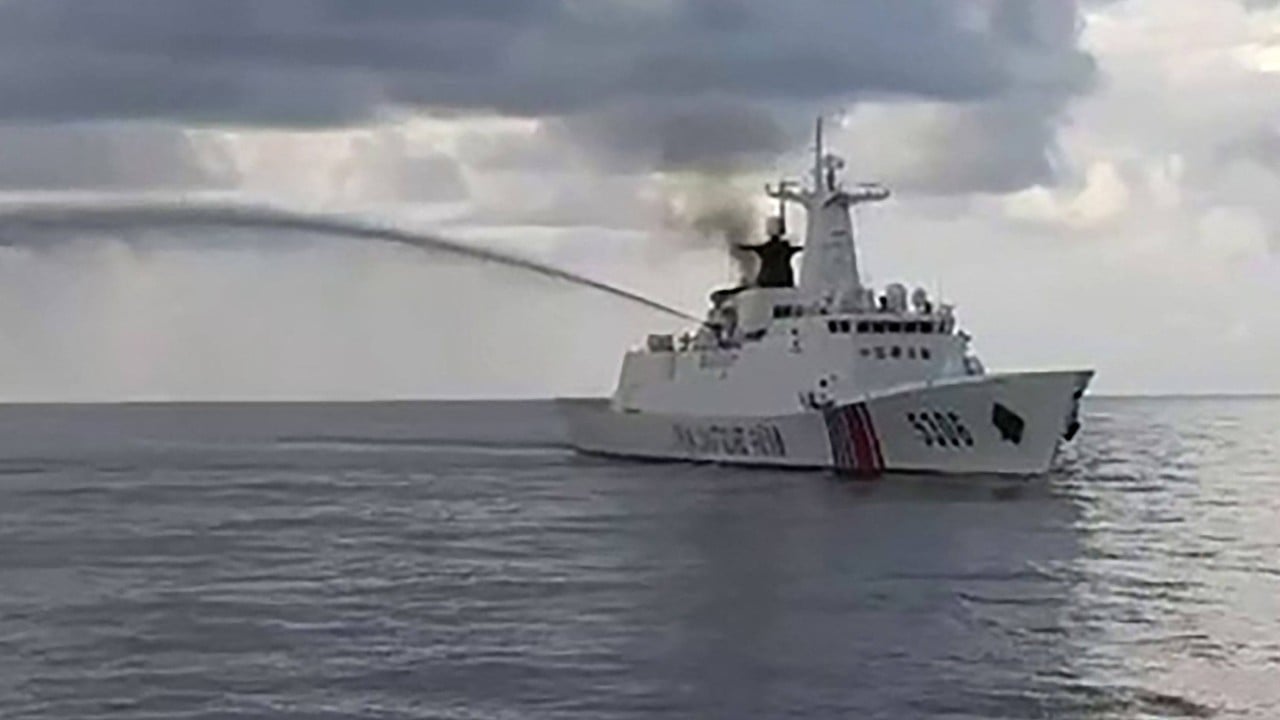
Manila’s most effective innovation over the past two years has not been a single legal memo—it has been putting journalists and high-definition cameras on every resupply mission. When the world sees real-time video of a massive China Coast Guard ship blasting a tiny wooden supply boat with a water cannon, Beijing loses the narrative war instantly. Expand this permanently. Put automated, satellite-linked environmental monitoring buoys and live-streaming drones across every disputed shoal. Turn ecological destruction into a daily, undeniable visual broadcast rather than a dense legal footnote five years from now.
2. Flood the Zone with Civilian and Coast Guard Presence
You cannot defend an Exclusive Economic Zone with three large cutters. Instead of spending tens of millions on European arbitration lawyers, divert every available peso into hulls in the water—specifically fast, ruggedized multi-role response vessels, unmanned surface vehicles, and subsidized fuel and satellite communications for the Filipino fishing fleet. Presence is nine-tenths of maritime jurisdiction. Beijing respects hulls, not submittals.
3. Build Permanent, Hardened Infrastructure on Existing Features
China built seven artificial islands because nobody physically stopped them. Manila sits on nine features in the Spratlys, many of them suffering from decades of neglected infrastructure. Stop worrying about whether pouring concrete violates a non-binding 2002 Declaration on the Conduct of Parties that Beijing shredded years ago. Upgrade the runways, build sheltered harbors, install coastal radar arrays, and station permanent marine research facilities on Thitu Island and Nanshan Island. A functioning marine science station staffed by Filipino and international researchers is a far stronger deterrent against reef destruction than an arbitration award.
4. Operationalize Minilateral Defense Networks
The 2016 ruling already gave Washington, Tokyo, and Canberra all the legal justification they need to operate alongside the Armed Forces of the Philippines. Stop asking the international community for statements of support for a new lawsuit and start demanding joint coast guard patrols, shared real-time maritime domain awareness, and pre-positioned logistics hubs in Palawan and Luzon.
Stop Confusing a Verdict with a Victory
International law is a mirror, not a sword. It reflects the reality of power on the ground; it rarely creates it. Manila already won the moral and legal argument in 2016, and the ruling sits on the permanent record of international jurisprudence forever.
Going back to The Hague for a second round will not clean up a single poisoned reef, recover a single square mile of fishing grounds, or deter a single Chinese captain from turning on his water cannons. If Manila wants to save the West Philippine Sea, it needs to stop writing briefs for judges in Europe and start putting steel, sensors, and sailors in the water.