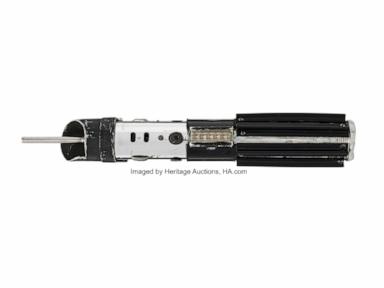
A screen-used lightsaber prop from the climax of The Empire Strikes Back is not a glowing plasma weapon; it is a low-cost machined metal cylinder whose multi-million-dollar hammer price exposes how extreme narrative scarcity overrides physical utility in alternative asset markets. Headlines framing a nearly five-million-dollar sale around a single iconic line—"I am your father"—treat cultural resonance as an automatic floor for valuation. That framing misses the structural mechanics that turn a few ounces of aluminum, plastic, and wire into an institutional-grade collectible. To understand why a film prop commands sovereign-tier pricing without generating cash flow, we must map how provenance verification, narrative centrality, and auction house market design interact. This article deconstructs the prop-sale headline into a repeatable analytical framework covering value drivers, verification constraints, auction dynamics, and portfolio limits.
Deconstructing the Competitor Narrative
Standard entertainment reporting treats a record-setting prop sale as a surprise windfall driven purely by fan devotion. The implicit logic runs along three thin lines: a famous movie scene creates high demand, a recognizable prop enters an auction, and a wealthy buyer pays a huge sum because they love the franchise. That sequence describes what happened on the surface while skipping every causal mechanism that allowed the transaction to clear at an extreme price.
What Standard Coverage Misses
Calling a lightsaber "used in a famous duel" flattens crucial distinctions between screen-used artifacts, hero props, stunt doubles, and promotional replicas. In film production, directors and prop masters routinely manufacture multiple versions of a hero item for different camera angles, choreography risks, lighting setups, and reshoots. Treating every screen-adjacent piece as interchangeable ignores the supply hierarchy inside a single production.
The second limitation in surface-level coverage is the conflation of scene fame with object attribution. A viewer remembers the emotional shock of a reveal in a film; a serious buyer must verify whether the exact physical unit in the display case was photographed during that sequence, handled by a specific performer, or modified after principal photography wrapped. Without that link, the emotional weight of the scene cannot legally or financially attach to the metal in front of the bidder.
Third, standard reporting treats the final headline number as a single-buyer whim rather than the output of a structured price-discovery mechanism. A near-five-million-dollar hammer or all-in result reflects competing bids across a narrow window of time, shaped by reserve prices, buyer premiums, catalog framing, and the rarity of comparable lots ever reaching the open market.
The Four Pillars of Screen Prop Valuation
Because a movie prop produces zero yield, carries storage and insurance expenses, and has no intrinsic industrial value, its valuation rests on four interlocking pillars: provenance certainty, narrative centrality, physical survival, and comparable supply scarcity. Weakness in any single pillar compresses price; alignment across all four creates convex upside.
Provenance Certainty as the Valuation Anchor
Provenance is the documented chain linking a physical object to a specific production event. In alternative assets, provenance acts like title clarity in real estate. If a chain of custody has gaps—such as years spent in an unlogged warehouse, informal crew transfers, or undocumented refurbishments—the market discounts the asset to reflect authenticity risk.
Known facts establish that major entertainment auction houses invest heavily in photographic matching, crew affidavits, studio archive records, and material analysis before placing a top-tier prop in a marquee catalog. Even then, absolute certainty is an educated hypothesis in cases where surviving production logs are incomplete or where multiple nearly identical props existed on set. Buyers pay top dollar not because doubt is zero, but because the cost of failing to acquire a verified trophy exceeds the perceived risk of misattribution.
Consider a hypothetical collector weighing two vintage cinema artifacts. Item A carries production paperwork, continuity stills showing a distinct scratch near the grip, and an unbroken transfer record from a department head. Item B looks identical on camera but arrived via a third-party dealer with only a verbal story. Item A commands a steep premium because its story is auditable; Item B faces a structural "story discount" regardless of visual appeal.
Narrative Centrality and Memory Anchoring
Not every prop from a beloved film holds equal cultural weight. Narrative centrality measures how tightly an object is bound to a turning point in the story's plot or emotional arc. A background blaster holstered by an extra may be genuinely screen-used yet remain culturally peripheral. A lightsaber wielded during a pivotal revelation sits at the center of audience memory.
This creates a strong memory-anchoring effect. When prospective buyers or syndicate backers evaluate a lot, they are not pricing raw aluminum. They are pricing the right to hold a physical anchor to a shared cultural moment that millions of people recognize instantly. High narrative centrality expands the pool of potential ultra-high-net-worth buyers beyond narrow prop specialists to include broader art, luxury, and entertainment patrons.
Physical Survival and Production Attrition
Movie sets are hard on props. Action sequences, choreography rehearsals, harsh lighting, and decades of casual storage degrade delicate components. Plastic grips crack, adhesives fail, batteries leak, chrome plating wears, and electronic elements stop functioning.
Physical survival matters for two reasons. First, visual fidelity to how the object appeared on screen preserves the illusion and authority of the artifact. Second, surviving components from an era before modern preservation standards are naturally scarce. When a prop survives intact—or retains verifiable original screen-used parts despite necessary conservation—it stands above heavily altered or composite pieces.
Supply Scarcity and Illiquidity
True scarcity in entertainment memorabilia is twofold. Primary scarcity comes from the limited number of props built for a specific shoot and the fraction that survived studio disposal or informal circulation. Secondary scarcity comes from holding behavior: once a premier prop enters a museum collection or a long-term private vault, it may not reappear on the open market for decades.
This illiquidity cuts both ways. Low floating supply supports high prices when two motivated buyers collide in a live room or on a phone line. It also means price discovery is episodic rather than continuous, leaving wide bid-ask spreads and limited liquidity if the buyer needs to exit quickly.
How Auction Mechanics Convert Scarcity into Price
A rare object does not price itself; an auction design translates scarcity and competition into a clearing number. High-profile entertainment auctions operate as staged tournaments where catalog presentation, bidding increments, and fee structures shape bidder behavior.
Catalog Framing and Anchor Effects
Auction houses curate catalogs to establish context and expectations well before the gavel falls. Placing a flagship hero prop near the top of a sale, pairing it with archival photography, and highlighting its connection to an unforgettable cinematic moment sets a high mental anchor. Bidders enter the room already calibrated to a multi-million-dollar tier rather than a mid-six-figure tier.
Competition Between Two Bidders
In English ascending auctions, the final price is rarely set by the single richest person in the world acting alone. It is set by the point at which the second-highest bidder drops out, plus one bid increment. A five-million-dollar outcome usually signals that at least two serious parties shared a conviction about the asset's upper boundary and pushed each other past conventional estimates.
The first bottleneck in these sales is thin depth at the top of the market. If only one buyer shows up for a niche prop, the asset may sell near the low estimate or pass unsold. When two or more deep-pocketed buyers compete for a universally recognized icon, price acceleration becomes non-linear.
Buyer Premiums and Total Cost of Ownership
Headline figures in media reports often blur hammer price and total buyer outlay. Auction houses charge a buyer's premium—a percentage added on top of the winning bid—alongside potential sales or use taxes depending on jurisdiction and delivery location. A buyer targeting a round total budget must calculate the hammer ceiling backward after accounting for fees.
After the hammer falls, the cost function shifts from acquisition to carry. High-value props require climate-controlled storage, specialized conservation, high-value transit insurance, and security. Unlike an equity share that deposits cash into an account, a physical prop demands ongoing cash outflows with no operating yield.
Operational Playbook for Evaluating Trophy Props
Anyone evaluating a high-tier entertainment artifact—whether as a collector, family office analyst, or advisor—needs a disciplined sequence rather than an impulse bid. Treating a prop like a financial asset starts with verification and ends with exit realism.
- Audit the provenance chain before setting a valuation range. Request every piece of supporting documentation, including production call sheets or archive notes if available, continuity photos, prior auction histories, and written statements from verified sources. Treat undocumented verbal claims as zero-weight hypotheses until corroborated.
- Classify the exact prop tier and screen role. Determine whether the item was a primary hero prop used in close-ups, a stunt or action variant built for impact, a modification from a later shoot or re-release, or a promotional/display piece. Match physical markings, wear patterns, and dimensions against frame grabs from the film.
- Assess conservation state and prior restorations. Inspect materials for degradation, active corrosion, battery damage, or unauthorized repairs. Distinguish between reversible conservation—which preserves historical integrity—and heavy restoration that replaces original fabric or alters screen-accurate geometry.
- Model all-in acquisition cost and holding drag. Calculate the maximum hammer price that keeps total landed cost (hammer plus buyer's premium, tax, crating, shipping, and insurance) inside your risk budget. Factor in multi-year insurance and storage costs before committing capital.
- Stress-test exit liquidity under a forced or delayed sale. Ask who the next buyer will be in five to ten years and through which channel you would sell. Assume longer holding periods and higher transaction friction than public equities carry.
Key Limitations and Where This Framework Breaks
No valuation framework turns a speculative collectible into a risk-free investment. Every model for pricing film memorabilia faces hard structural limits that practitioners must state plainly.
- No intrinsic cash flow or fundamental earnings floor. Unlike a business or real estate asset, a prop generates no revenue or dividends. Its floor depends entirely on continuing cultural relevance and collector demand.
- Shifting generational tastes. Cultural icons that command peak attention today can cool over multi-decade horizons as audience demographics turn over and new media franchises compete for mindshare. Relying on eternal nostalgia is an educated hypothesis, not a guarantee.
- Authenticity and attribution disputes. Even experienced experts can disagree over subtle differences between units made for the same production, or over modifications made years after filming. A dispute over provenance can freeze resale value.
- High transaction friction. Entering and exiting via major auction houses involves substantial commissions, logistics costs, and timing risk. Frequent trading destroys returns quickly.
Strategic Recommendation for Collectors and Advisors
Treat blockbuster film props as pure passion-plus-scarcity allocations rather than core portfolio holdings, and cap exposure strictly to capital you can lock up for a decade without yield. When pursuing a trophy asset, prioritize ironclad provenance and unmistakable narrative centrality over lower-priced pieces with ambiguous histories, because scarcity premiums concentrate heavily at the top tier while unverified middle-tier items carry severe liquidity risk. A disciplined buyer wins not by out-guessing every headline number, but by refusing to pay trophy prices without trophy-grade proof.